



Please leave your email address, So that we can get in touch with you as soon as possible.
SC200 Construction Hoist: Models, Variants, and Selection Tips for Site Managers
A close look at the SC200 platform and what you should check before choosing a configuration.
On a high-rise site, the vertical transportation loop is often the critical path. If crews wait for materials, the schedule stalls. That is why the construction hoist is not an accessory; it is production equipment.
The SC200 is one of the most common rack-and-pinion hoist platforms in the industry. The "200" refers to a nominal load capacity of 2,000 kg per cage. It is a practical reference point, but it does not capture the full range of configurations that share the SC200 name.
What the SC200 Name Actually Means
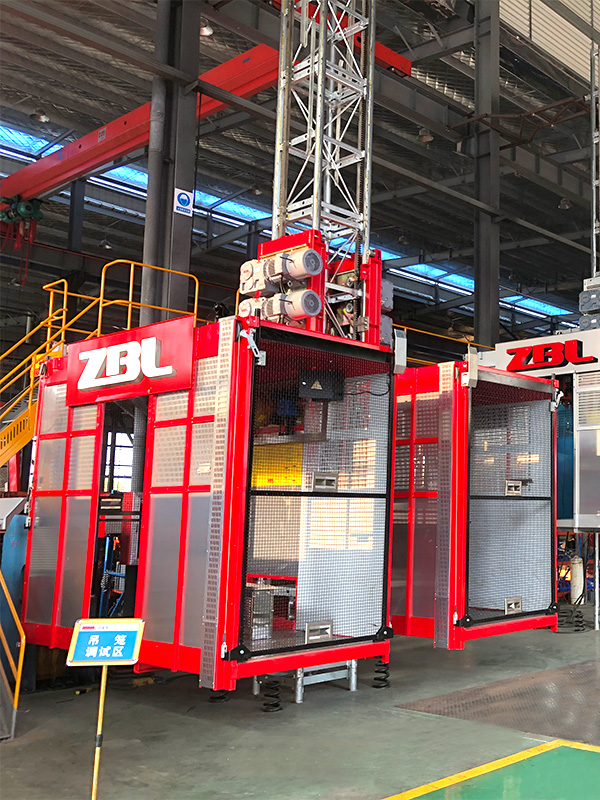
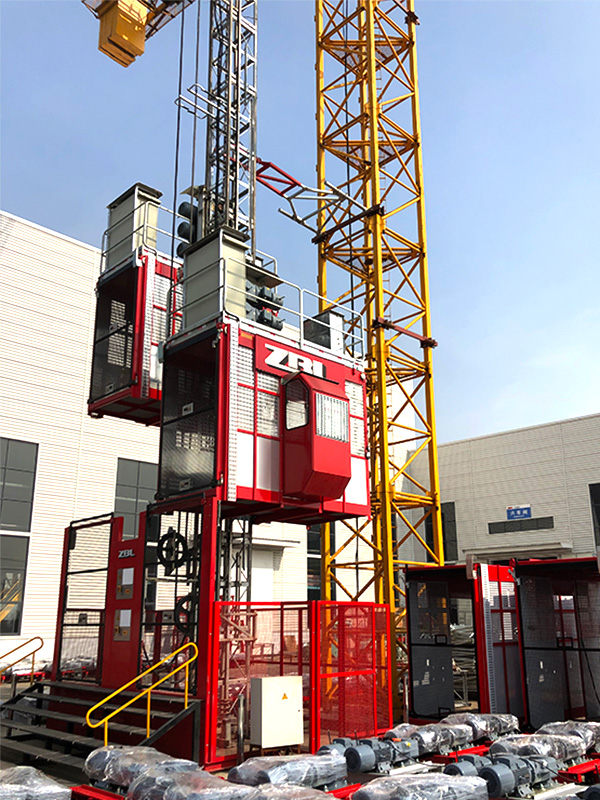
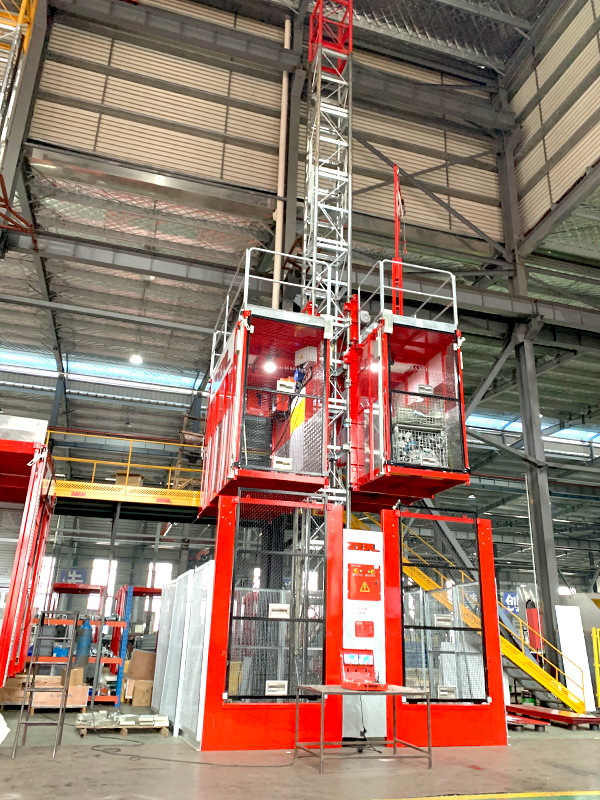
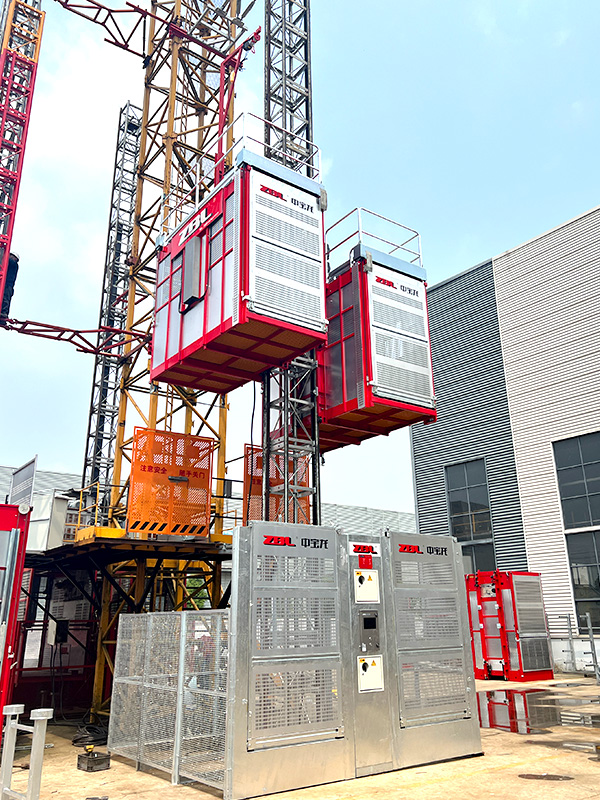
In a rack-and-pinion hoist, the cage moves along a mast with a rack. The pinion gears on the cage mesh with that rack, driven by an electric motor. The designation SC200 signals that the hoist has a rated load of 2,000 kg per cage, and the SC200/200 variant indicates two such cages sharing the same mast.
The two-cage layout matters on fast-paced sites. One cage can be reserved for workers and the other for materials, or both can handle peak-hour flows. The same basic drive, mast and safety architecture can be reconfigured for different site conditions, which is why the platform has expanded into multiple variants.
The SC200 Variant Families That Matter
The SC200 is not one fixed machine. Different combinations of speed, control and cage size allow it to be tailored to building height, material flow and labor availability.
| Variant | Characteristic | Best suited for |
|---|---|---|
| SC200 series | Standard 2,000 kg dual-cage platform | General personnel and material transport |
| SC200-200 variable-frequency low speed | Smooth acceleration, low-speed precise stopping | Urban sites, dense surrounding structures |
| Variable-frequency medium-high speed | Higher travel speed | Tall buildings, extended travel distances |
| SC200-200ZN intelligent | Automatic operation, remote monitoring | High-labor-cost sites, repeat workflows |
| Large cage 4.83 x 2 combination | Expanded cage area | Volumetric loads, large panels |
The standard SC200 series remains a strong starting point for mid-rise projects where cost control and mature technology are the priorities. It is the platform that most site teams already know how to operate and service.
Choosing the Right Configuration
Variable-frequency drive: what it changes
A variable-frequency drive alters the speed profile of the cage. Instead of sudden starts and stops, the cage ramps up and down smoothly. On a busy site, this reduces swinging loads, lessens wear on the mast, and makes floor-leveling easier for the operator.
The low-speed SC200-200 variable-frequency hoist is especially useful on sites where the working level changes often and precise positioning is needed. The soft start and controlled deceleration also protect the rack from shock loads that can appear during repeated short trips.
Speed vs. duty cycle
Speed becomes more important when the building height passes 80 to 100 meters. A medium-high speed hoist can save significant time over many trips, even when the payload is the same. The key is to evaluate the total number of trips per shift, not just the nameplate speed.
Smart control and automation
Some SC200 variants integrate floor-call control, automatic leveling, and data logs for maintenance scheduling. This is the SC200-200ZN intelligent hoist. On sites with repeat workflows or labor constraints, the operator can focus on supervision rather than manually stopping at every floor.
When comparing intelligent hoists, ask which functions are standard and which require additional sensors or a central control system.
What the SC200 Delivers on Real Projects
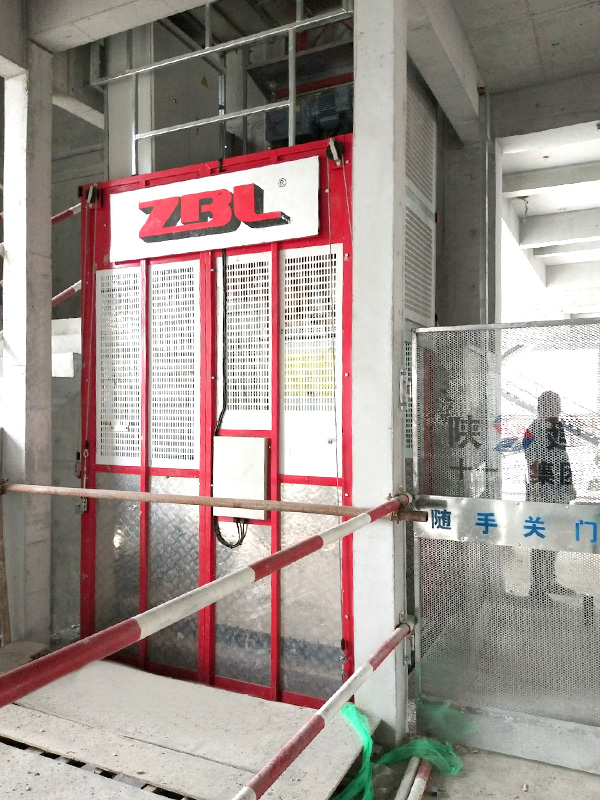
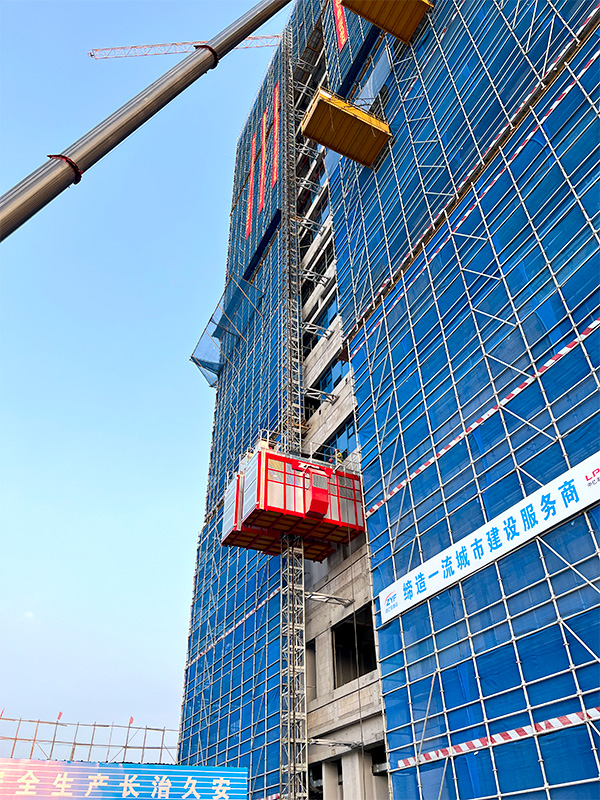
The SC200 platform is used across residential towers, cultural venues, transport hubs and mixed-use developments. In China, projects like the Xi'an Caojiatan Innovation Center have integrated intelligent hoist operation into a creative-industry campus, while city-scale developments such as Ningbo Eastern New Town and Suzhou High-Speed Rail New City rely on standard configurations for repetitive vertical transport.
The most successful hoist programs are not about buying the cheapest unit. They are about matching the duty cycle, site layout and labor model to the right configuration.
What to Check Beyond the Brochure
Fabrication quality determines the service life of the mast and cage. Look for manufacturers that use laser cutting, CNC bending, robot welding and a controlled painting line. These processes improve geometric accuracy and corrosion resistance.
Accessories such as mast sections, cage doors, transmission mechanisms and cable guides should be matched to the actual hoist model. Mixed sourcing from different suppliers can create compatibility issues that are difficult to trace later. A true SC200 solution is more than the cage; it is the whole installation package of structural components, drives and safety devices.
Do not install standard sections from one brand with a cage from another unless the manufacturer explicitly approves the combination. Small tolerance differences in the rack can accelerate wear and affect safety gear timing.
Maintenance, Safety and Uptime
A hoist is only as reliable as its maintenance program. Daily checks should cover the safety gear, brake, limit switches, rack lubrication and cage door interlocks. For power outages or electrical faults, the control system should have a clear manual or emergency operation mode. The SC200 series approach to power outages explains what to look for when evaluating emergency lowering procedures.
- Check rack and pinion wear every shift on heavy-duty sites.
- Test the safety gear reset procedure before each work period.
- Record vibration or noise changes; small differences often appear before a fault becomes critical.
Selecting the Right SC200 for Your Site
Start with the building height and material flow, then work through speed, control, cage size and service support. If the site is tight or the hoist operates close to occupied zones, choose a variable-frequency low-speed variant. If labor costs are high or operations are repetitive, an intelligent hoist may pay back through reduced staffing. For straightforward mid-rise projects, the standard SC200 series remains a well-proven workhorse.
The SC200 is a broad platform, not a single specification. By breaking the model down into variants and asking the right questions, you can avoid overbuying or under-specifying and keep vertical transport off the critical path.
