



Please leave your email address, So that we can get in touch with you as soon as possible.
Vertical Transport · Compliance · Site Operations
Construction Hoist Requirements
Compliance, verified capacity, inspection discipline, and honest equipment matching — the four pillars that keep a hoist installation legal, safe, and on schedule.
When a 24-story tower reaches the seventh floor, site logistics change overnight. The mast climber is too slow for full-height fit-out, the permanent elevators are months away, and every trade suddenly needs vertical transport. That is the moment construction hoist requirements shift from a compliance checklist item to a schedule-critical procurement decision.
The conclusion is straightforward. A compliant hoist installation rests on four pillars: adherence to recognized standards, a verified rated load, disciplined inspection with documented records, and equipment matched to the site's actual vertical transport demand. Each of these pillars carries specific, often quantified, requirements. Understanding them before the purchase order is issued — rather than after an inspector flags a problem — is what keeps a project moving.
The Regulatory Baseline: OSHA, ANSI, and the Codes That Govern the Site
In the United States, every construction hoist on a governed site falls under OSHA 29 CFR 1926.552. That standard covers materials, component specifications, safety devices, load testing, and certification records. Personnel hoists follow ANSI A10.4; material hoists follow ANSI A10.5. A unit that carries both workers and materials must meet the stricter personnel category.
The certification record deserves attention before the mast goes up. OSHA requires a written record of every inspection and test, its date, the functions and safety devices verified, and the tester's signature. That file must be available on request. A hoist without documentation is, in practice, grounded until testing is redone.
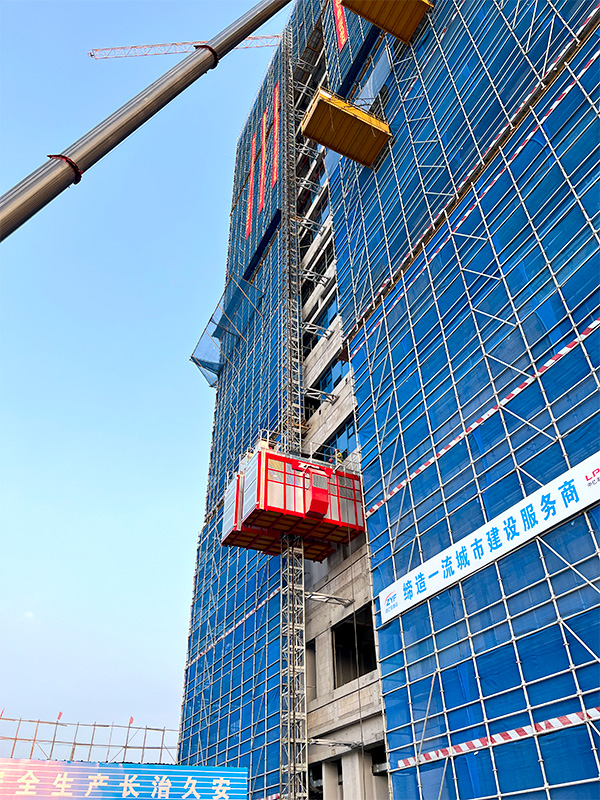
State and municipal codes add obligations. New York City's administrative code, for example, requires a temporary elevator or hoist once construction or demolition work exceeds 75 feet. On mid-rise and high-rise projects in most urban jurisdictions, a construction hoist is not an option — it is part of the baseline scope.
Local thresholds vary
The 75-foot trigger is a useful benchmark, not a universal rule. Confirm the local administrative code and the project's insurance conditions early; both can add testing, labelling, or documentation duties beyond the federal baseline.
Personnel Hoists vs. Material Hoists: Different Jobs, Different Compliance Paths
Selection begins with classification. Personnel hoists move workers; material hoists move tools, materials, and equipment. When one unit does both, it must meet the personnel category's stricter requirements. Confusing the two is one of the most dangerous sourcing mistakes on site.
| Aspect | Personnel hoist | Material hoist |
|---|---|---|
| Governing standard | ANSI A10.4 | ANSI A10.5 |
| Car design | Fully enclosed car with landing doors | Open platform or partial guard rails |
| Typical rated load | 1,360–2,720 kg (3,000–6,000 lb) | 2,000 kg and above, cargo-oriented |
| Typical speed | 40–96 m/min with VFD | 40 m/min; VFD optional on some models |
| Riding rules | Trained personnel only | Not for passengers unless dual-rated |
| Clearance to building | 457 mm (18 in) minimum | 457 mm (18 in) minimum |
The 18-inch clearance cited in industry guidance refers to structural proximity between the car and the building, not an invitation to bridge gaps. Landing gates, toe boards, and edge protection remain the installer's responsibility at every floor.
 SCH100/100 Variable Frequency Cargo Construction HoistThis cargo-rated hoist carries 1000 kg loads via wireless remote control, suited for low-rise buildings up to 30 m. It keeps personnel hoists free for crew transport.View Product →
For pure materials handling, a cargo-rated unit such as the SCH100-100 series shifts the economics. It carries heavier loads and keeps the personnel hoist free for the crew.
Never let workers ride a material-only hoist
A material hoist is not a personnel hoist. Riding one invites OSHA citations and, more importantly, turns a routine trip into a potentially fatal event. Where workers must be transported, specify a personnel-rated or dual-rated unit.
Capacity, Speed, and Safety Devices: What the Requirements Actually Pin Down
Rated capacity is the manufacturer's declared maximum, validated by a load test that exercises every function and safety device. That rating is a legal ceiling. Exceeding it invalidates the certification record and changes the braking behavior the system was tuned for.
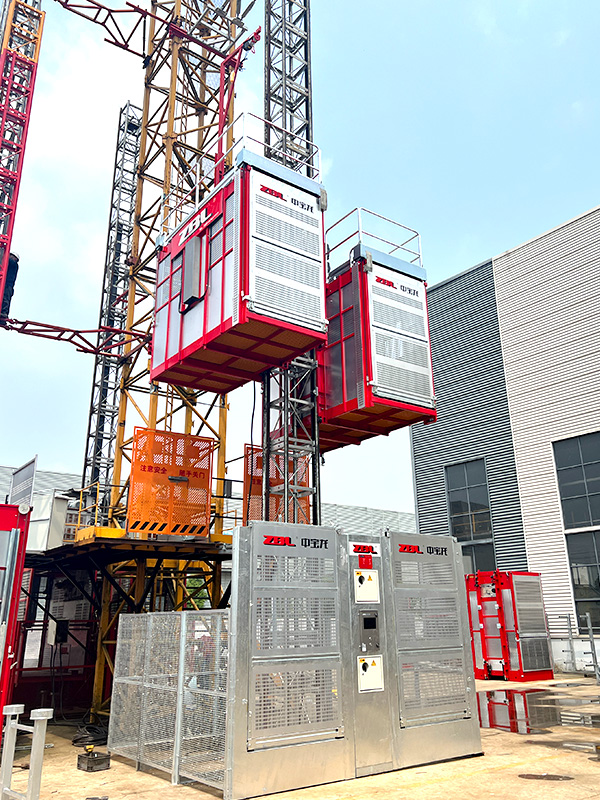
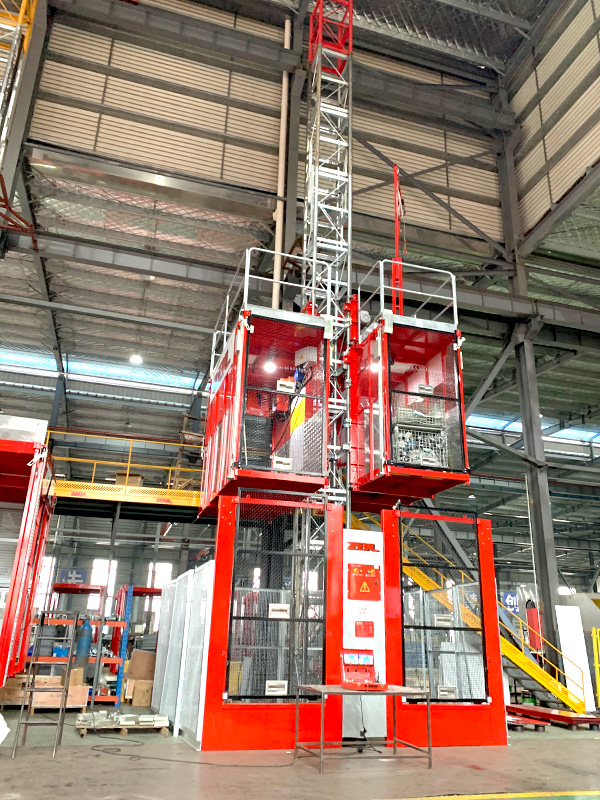
The widely used SC200 platform moves dual cages of roughly 2,000 kg each at up to 40 m/min in standard form. When the building gets taller, variable-frequency medium- and high-speed units running at up to 96 m/min cut cycle times significantly. The VFD accelerates and decelerates progressively, reducing mechanical shock and making the ride stable for sensitive loads. It also handles power interruptions predictably — an area where site expectations often exceed the regulatory baseline.
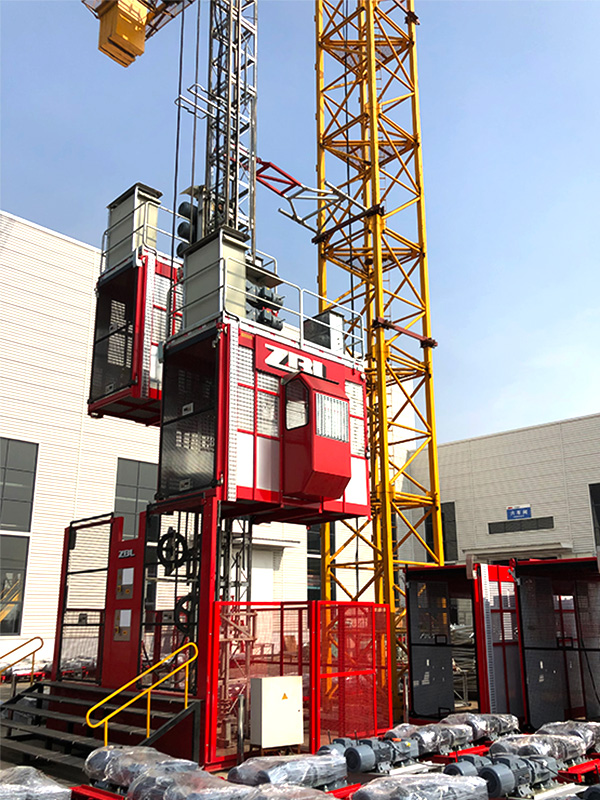 Variable Frequency Medium and High Speed Construction HoistWith speeds up to 96 m/min, this VFD-controlled hoist reduces cycle times for high-rise projects while providing smooth acceleration and predictable power handling.View Product →
Safety devices that must be verified
- Overspeed governor with a safety gear that locks onto the rack if descent exceeds the set speed.
- Electromagnetic parking brakes that engage automatically in a power failure.
- Door interlocks preventing car movement while any gate is open.
- Upper and lower limit switches that stop travel at the end of the mast.
- Emergency stop controls at car level and at each landing.
- Manual lowering or backup power to evacuate passengers during a mains outage.
The standards do not tell you which hoist to buy. They tell you the minimum that any hoist — and any site using one — must satisfy before the first worker steps on board.
Inspection, Testing, and Documentation: Where Many Sites Fall Short
Certification rests on two inspection levels: daily pre-work checks by the operator and periodic inspections under the applicable ANSI standard. The pre-work routine covers brakes, interlocks, limit switches, communications, and the visible condition of mast, rack, and tie-ins. The periodic audit digs into wear, deformation, and corrosion.
Load testing happens before first use and again after major repairs, mast repositioning, or activation of the safety gear. It is the only reliable proof that braking and overspeed systems still perform to design. Records must capture the date, the tester, and the result; most general contractors require them in the equipment submittal package.
Altitude and temperature change the rules
Above roughly 1,000 meters, air density affects motor cooling and braking behavior; extreme temperature swings affect door seals, interlocks, and lubricants. Tighten inspection intervals and confirm safety margins with the manufacturer. Our field notes on high-altitude and low-oxygen hoist operations cover the adjustments operators and maintenance teams should plan for.
Site Installation: Anchoring, Clearances, and Power
Before a hoist order is confirmed, the site must answer four physical questions:
- Foundation: does the pad support the combined dead and live loads shown in the manufacturer's foundation drawing?
- Tie-ins: are wall attachment points available for the full mast height at the spacing specified by the design?
- Landing zone: is there clear access on the building side, with minimum structural clearance and protected openings at every floor?
- Power: is three-phase supply available at the base with capacity for the drive and future maintenance loads?
These physical requirements bind the schedule as tightly as any regulation, because they determine whether the hoist can be installed, commissioned, and serviced without rework. A competent manufacturer supplies foundation-load and tie-in-spacing documentation as standard support; the civil works remain the project's responsibility.
Ask for the documentation early
A supplier that provides foundation diagrams, tie-in schedules, and electrical load data with the quotation saves weeks of engineering review. Treat that documentation as part of the construction hoist requirements, not as a post-order favour.
Matching the Equipment to the Project: Requirements Beyond the Minimum
A hoist that passes inspection is not automatically the right hoist. Project-level requirements add another layer: trip frequency, worker count, material mix, active floors, and site altitude. These determine whether a standard, high-speed, or intelligent unit is the better investment.
For a high-rise with intensive fit-out, the dual-cage SC200 configuration moves a full work crew in one cage while palletized material travels in the other. It is a dependable default because of parts commonality and straightforward anchor spacing. But the specification should follow the logistics plan, not the other way round.
Intelligent hoists go further. With floor-call recognition, load monitoring, and automated diagnostics, the SC200-200ZN removes a measurable share of operator error and produces cleaner inspection records. The Xi'an Caojiatan innovation centre project demonstrated exactly this: an intelligent unmanned hoist covering building-height transport with fewer stoppages and a leaner crew footprint. That operational consistency is the requirement that matters most for contractors facing skilled-labor shortages.
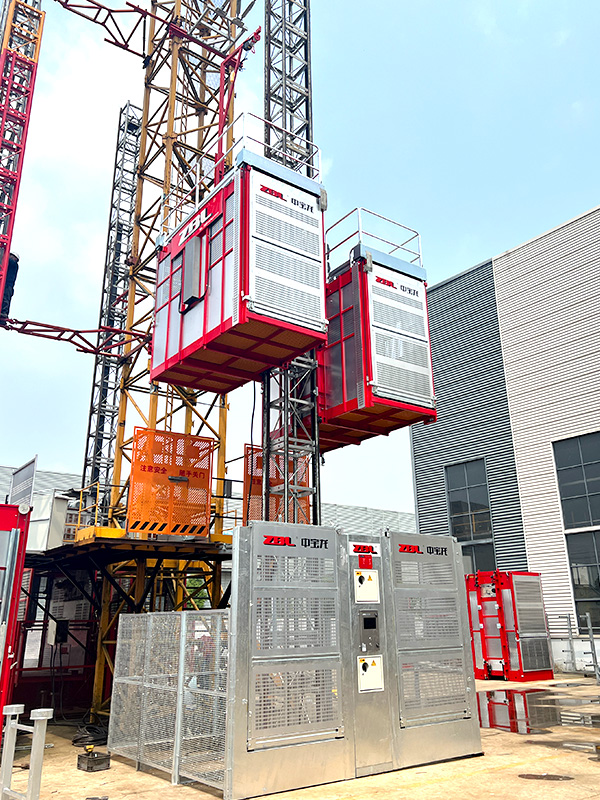 SC200/200ZN Intelligent Construction HoistThis intelligent hoist adds floor-call recognition, load monitoring, and automated diagnostics to reduce operator error and improve inspection records, as demonstrated in real projects.View Product →
The construction hoist requirements that matter are neither mysterious nor bureaucratic. They are the regulatory baseline, the verified capacity, the disciplined inspection routine, and an honest match between equipment and job. A hoist that satisfies all four — and a supplier who can document each one — turns vertical transport from a recurring risk into an operational advantage that shows up on every trip.
