



Please leave your email address, So that we can get in touch with you as soon as possible.
How many times has a construction elevator arrived at a jobsite only to sit on a flatbed truck while the contractor rushes to find a mobile crane, connect temporary power, and re-check the foundation bolts? In our experience as a construction hoist manufacturer, installation becomes the bottleneck when it is treated as a delivery event instead of an engineering activity. The conclusion is straightforward: a successful construction elevator installation depends less on the machine itself than on the planning that happens before the first mast section is lifted.
What Construction Elevator Installation Actually Includes
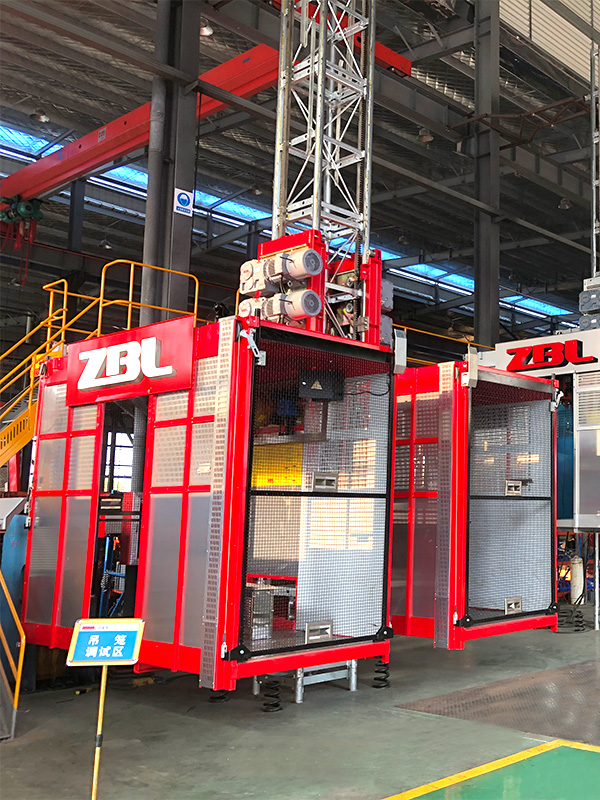
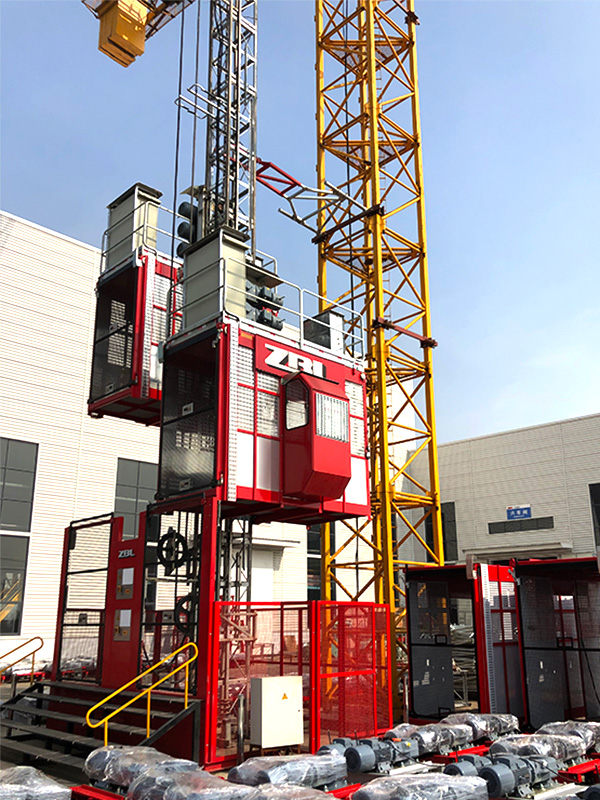
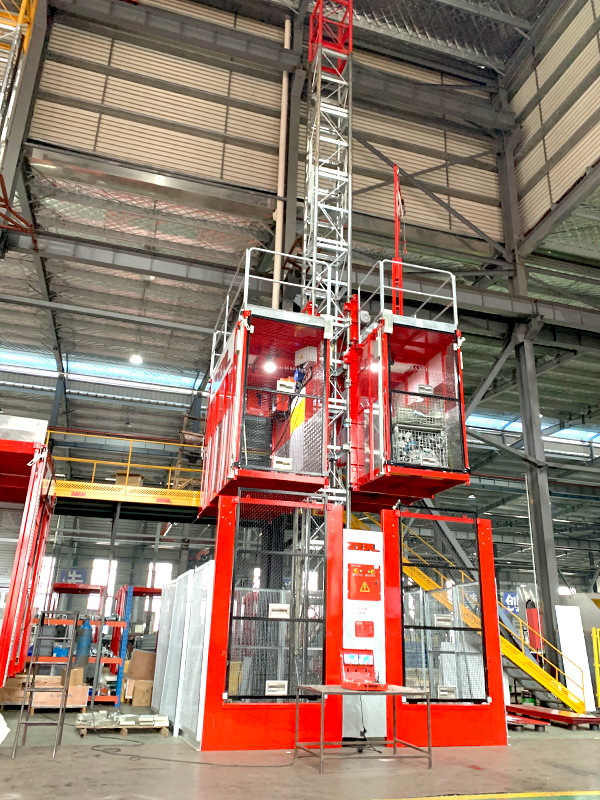
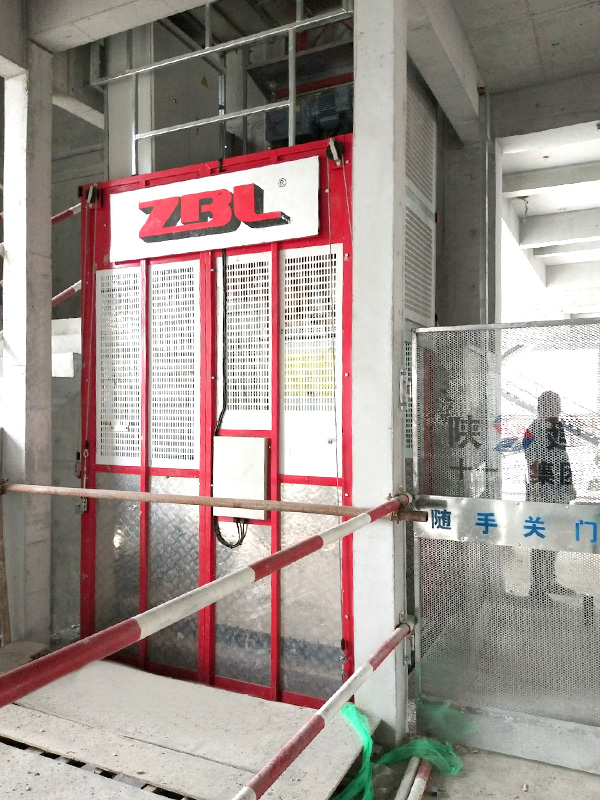
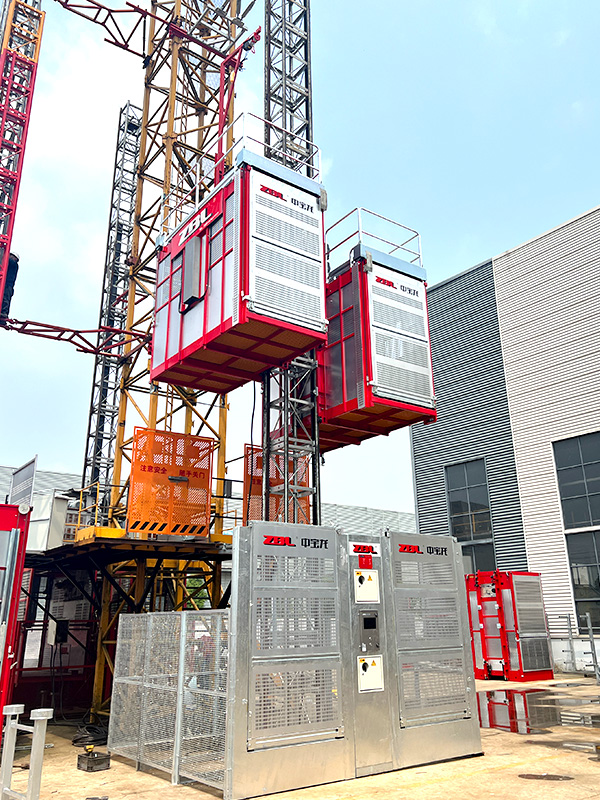
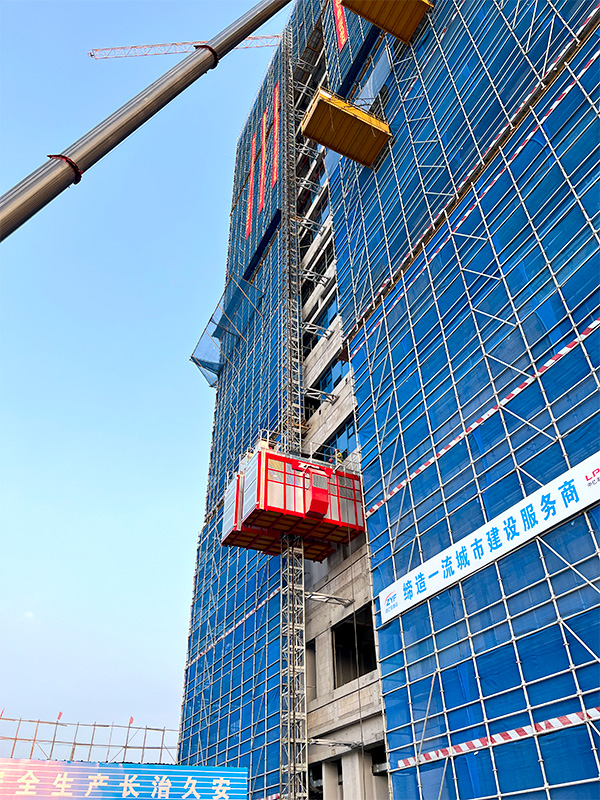
A construction elevator, also called a construction hoist, is a rack-and-pinion vertical transport system that is temporarily attached to a building facade, core, or freestanding tower. It carries workers and materials between ground level and the working floors, and it often stays in place until the building envelope is closed. The installation scope covers foundation preparation, mast erection, cage and drive assembly, tie-in anchoring, electrical connection, safety device adjustment, load testing, and commissioning.
Most rack-and-pinion hoists used in high-rise work follow the same installation logic. Crews that already know the SC200 series construction hoist platform can usually finish a typical single-cage installation in under a week. However, projects where the site conditions have not been verified typically add two or three extra days of lost time to the same installation.
 Custom SC200 Series Hoist for Construction Suppliers, ManufacturersJiangsu Zhongbaolong Construction Machinery Co., Ltd. is China custom SC200 Series Hoist for Construction suppliers and SC200 Series Hois...View Product →
Before Installation: Site Evaluation and Planning
The most important step happens before any steel is lifted. A construction hoist is only as safe as its foundation and its anchor points, so the site evaluation must answer four questions.
- Foundation capacity: the concrete pad must carry the hoist self-weight plus the rated load. For a typical SC200 double-cage machine climbing 100 meters, the reaction forces are significant, and the anchor bolt pattern is usually cast directly into the pad. Bolt position tolerance is often plus or minus 2 millimeters, so the drawing must be followed precisely.
- Clearance and access: the mast needs a clean vertical path, the cage needs clearance on both sides, and a mobile crane needs a safe position to lift mast sections and the drive mechanism into place.
- Power supply: most modern hoists use a variable-frequency drive. A 37 kW drive is common, and the site supply cable and protective device must match the motor rating, the required voltage, and the local electrical code.
- Tie-in anchor points: hoists taller than about 20 meters must be anchored to the structure at regular intervals, typically every 6 to 9 meters. If the facade at the proposed location cannot accept anchors, the hoist position may need to move.
We include installation drawings with every machine we ship, and our engineers check the anchor bolt layout and tie-in spacing during the design review. That step prevents the most common installation delays: foundation rework and anchor conflict with rebar or embedded services.
The Construction Elevator Installation Process, Step by Step
Once the pad has cured and the power supply is available, the installation sequence is consistent across most rack-and-pinion hoists.
- Foundation and base frame: grout the pad, position the base frame, align it level, and torque all anchor bolts to the specified value.
- Mast erection: stack mast sections using a mobile crane or the tower crane, checking verticality after every batch of sections. The typical check is within 1/1000 of the erected height.
- Cage and drive mechanism: lift the drive frame onto the mast, then install the cage and the drive pinions that engage the rack.
- Tie-in anchors: fix the hoist to the building at the specified spacing and torque every anchor bolt.
- Electrical and cable system: run the power cable through the cable guiding section, connect the control circuits, and install the traveling cable that follows the cage.
- Safety devices: fit the over-speed governor, buffers, limit switches, door interlocks, and the emergency stop circuit.
- Load test and inspection: test under 100 percent rated load for normal operation and 125 percent rated load for the safety gear before handover.
The sequence is not arbitrary. Mast verticality must be confirmed before the drive pinions run on the rack, because small alignment errors create uneven gear wear and vibration. Tie-in anchors should follow the mast upward as the building grows, not be installed later in one batch. Accessories such as a wall-mounted cage option or a custom cage door are fitted during the cage installation stage and must be selected before production, not discovered on site.
How Long Does a Construction Elevator Installation Take?
Timelines vary, but for a single-cage construction hoist on a commercial building, the figures below reflect typical crew schedules. The total time includes the load test and handover.
| Building height | Mast erection | Cage, drive and wiring | Safety devices and testing | Total |
|---|---|---|---|---|
| Up to 60 m | 1 to 2 days | 1 to 2 days | 1 day | 3 to 5 days |
| 60 to 120 m | 2 to 3 days | 2 days | 1 to 2 days | 5 to 7 days |
| Above 120 m | 3 to 5 days | 2 to 3 days | 1 to 2 days | 7 to 10 days |
These estimates assume that a mobile crane is available when needed and that the foundation has reached the required strength. If the installation crew has to share a tower crane with other trades, mast erection can take twice as long. Rain, wind, an unsigned electrical disconnection, or an untrained crew will extend the schedule further. The permanent passenger elevators in the same building often take weeks or months to install, but the construction elevator is usually needed in the early stage of the project, so its installation schedule should never be treated as a small sub-task.
Testing, Safety Checks, and Commissioning
A hoist that has not been load-tested has not been installed. Commissioning is where the mechanical, electrical, and safety systems are proved together, and it is the step that separates a reliable installation from a recurring headache.
- Load test: run the cage with 100 percent rated load, then with 125 percent rated load to verify the safety gear and the over-speed governor.
- Limit switches: confirm that the top and bottom limits stop the cage at the correct positions and that the final limits function independently.
- Door interlocks: verify that the machine cannot run while a cage door or landing gate is open, and that the emergency stop cuts all power.
- Daily inspection routine: after handover, the operator must check rack bolts, limit switches, the brake, and the cable guide every day. The checks described in our maintenance routine should start from the first morning of use.
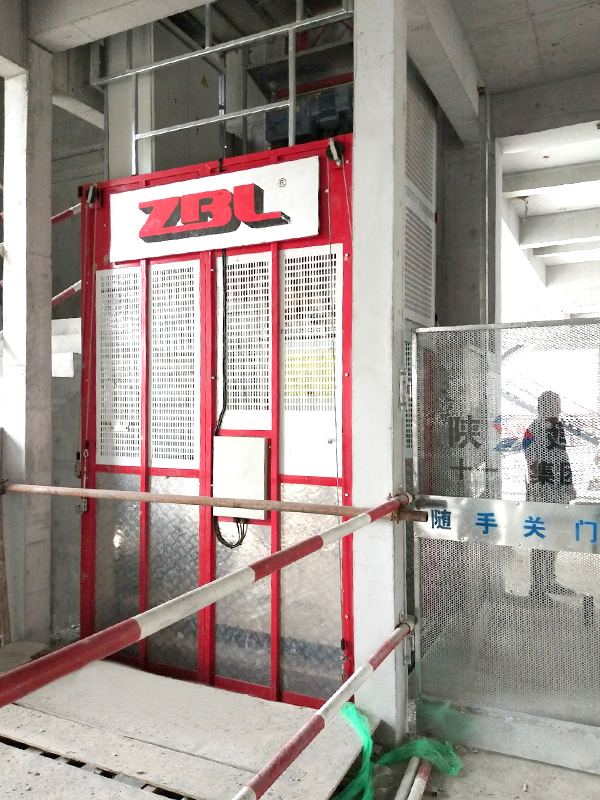
Intelligent control systems are reducing the amount of manual adjustment needed during commissioning. The SC200-200ZN intelligent construction hoist, for example, monitors the drive and safety circuits continuously and records fault data, which makes the handover documentation clearer and helps the site team diagnose issues without waiting for a service visit. A recent intelligent unmanned well-ladder installation at the Xi'an Caojiatan Innovation Center demonstrated how integrated control shortens on-site adjustment time and improves the overall commissioning experience.
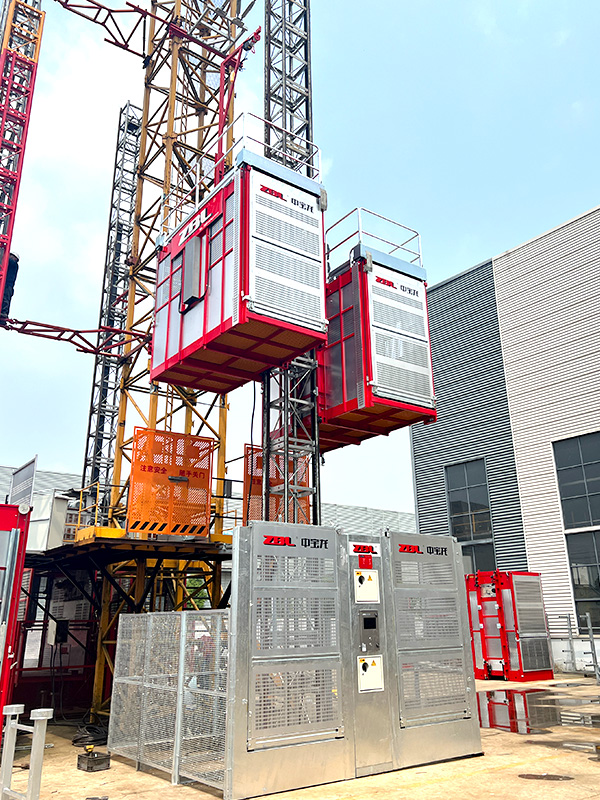 Custom SC200/200ZN Intelligent Construction Hoist Suppliers, ManufacturersJiangsu Zhongbaolong Construction Machinery Co., Ltd. is China custom SC200/200ZN Intelligent Construction Hoist suppliers and SC200/200...View Product →
Choosing the Right Hoist and Installation Partner
The best installation process starts with the right machine. A passenger-focused single-cage hoist is not ideal for a concrete-heavy project where the main demand is pallets of blocks, mortar, and formwork. For that kind of work, a cargo-oriented machine such as the SCH100-100 variable-frequency cargo construction hoist offers a larger cage and a simpler control layout, while still operating on the same rack-and-pinion principle.
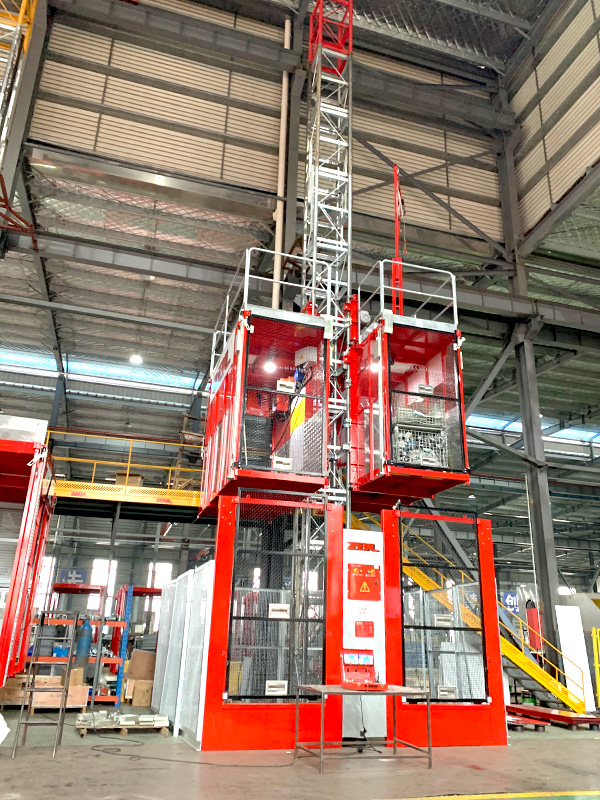 Custom SCH100/100 Series Variable Frequency Cargo Construction Hoist Suppliers, Jiangsu Zhongbaolong Construction Machinery Co., Ltd. is China custom SCH100/100 Series Variable Frequency Cargo Construction Hoist suppl...View Product →
The supplier matters as much as the model. A manufacturer that provides installation drawings, on-site supervision, spare parts, and after-sales service reduces the risk of a failed commissioning. We manufacture, install, rent, and service our equipment, so the same engineering team that designed the hoist is available when the installer has a question. That continuity shortens the learning curve, reduces the cost of mistakes, and keeps the installation program on track.
Construction elevator installation is a test of coordination as much as engineering. Confirm the foundation, the tie-in schedule, and the power supply before the truck arrives; follow the mast erection sequence in the order written; then test every safety function twice. When those steps are done properly, the elevator becomes an unremarkable part of the jobsite that keeps the project moving. The pay-off is a vertical transport system that simply works. And when it does need attention, the routine established during installation, including regular torque checks, proper lubrication, and a disciplined maintenance schedule, will keep it reliable. The best installations look uneventful because every risk was retired before it became a delay. That is the outcome worth planning for.
