



Please leave your email address, So that we can get in touch with you as soon as possible.
When comparing noise output, a rack-and-pinion construction hoist typically operates between 75–90 dB(A), while a hydraulic construction lift generally runs at 70–85 dB(A) under similar load conditions. The difference may appear marginal on paper, but on an active job site — where equipment runs for 8–10 hours continuously — even a 5 dB increase translates to roughly double the perceived sound intensity. Understanding this distinction helps project managers, site safety officers, and equipment procurement teams make informed decisions that affect worker health, regulatory compliance, and community relations.
How Noise Is Generated in Each Machine
The noise profile of any lifting equipment is shaped by its drive mechanism. Understanding the source helps explain why levels differ between a construction hoist and a hydraulic lift.
Construction Hoist Noise Sources
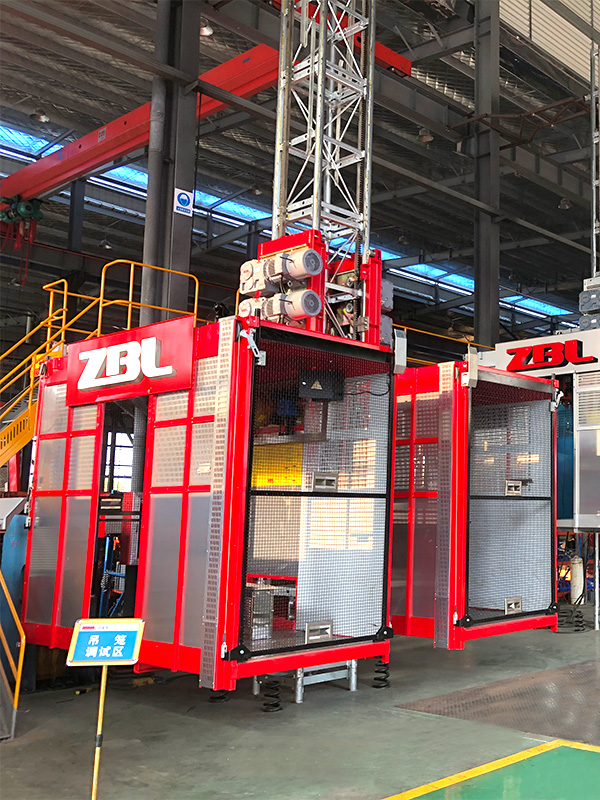
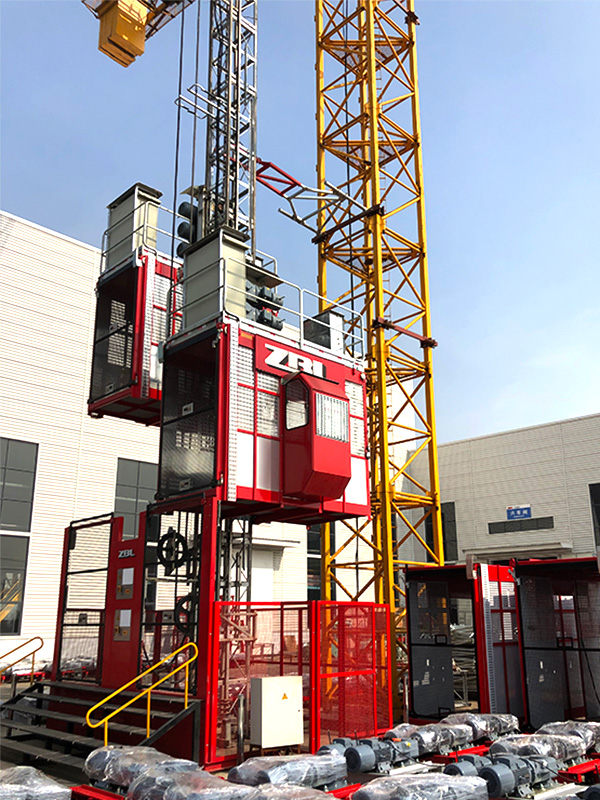
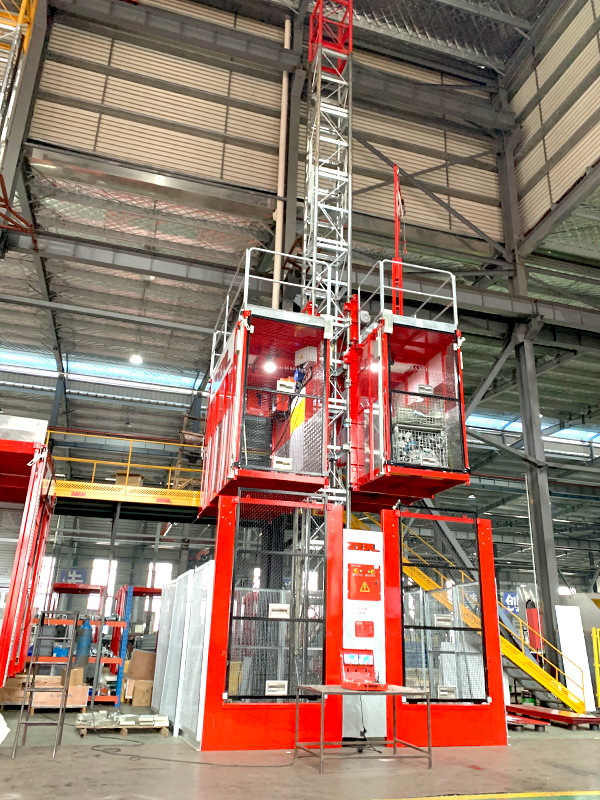
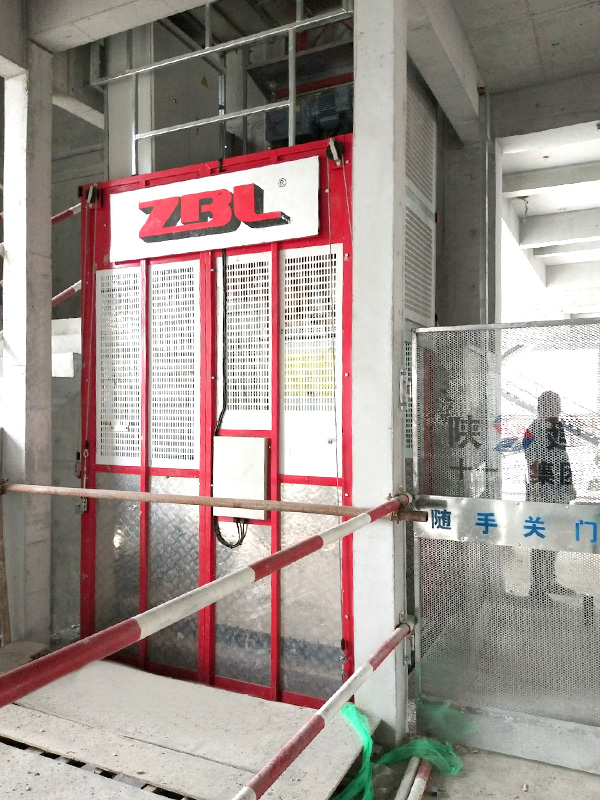
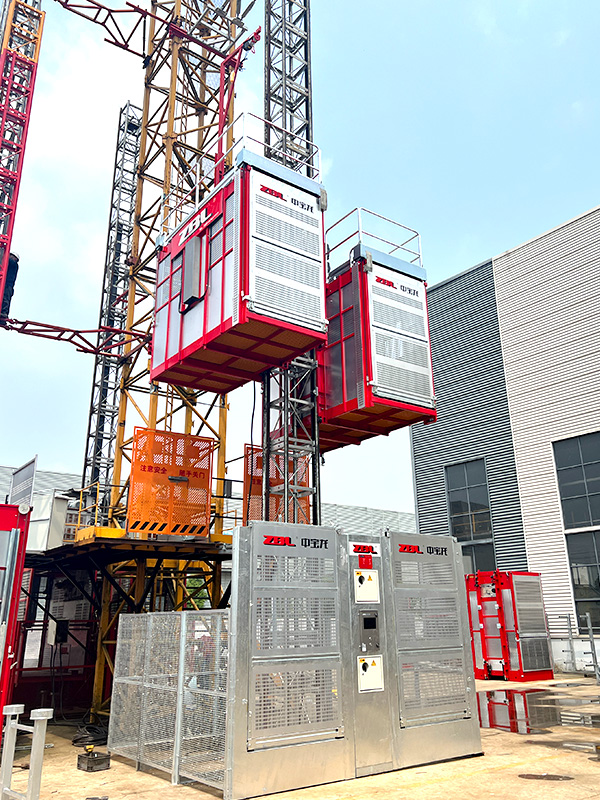
A rack-and-pinion construction hoist generates noise from several mechanical interactions:
- Gear mesh contact between the pinion and mast rack
- Electric motor and gearbox vibration
- Guide roller contact along the mast section
- Cage frame resonance during acceleration and deceleration
- Door opening and closing mechanisms
Models equipped with Variable Frequency Drives (VFDs) produce noticeably less noise during start-up and stopping — a key advantage over older fixed-speed models that spike to 88–92 dB(A) during acceleration.
Hydraulic Construction Lift Noise Sources
A hydraulic construction lift relies on a pump-driven fluid system, which generates noise through:
- Hydraulic pump operation (the primary noise source, typically 72–82 dB(A))
- Fluid flow turbulence through valves and hoses
- Relief valve activation under overload conditions
- Cylinder seal friction during extension and retraction
Because the hydraulic system distributes mechanical energy through fluid rather than direct gear contact, peak noise events are fewer. However, continuous pump operation at idle can sustain noise levels around 70–75 dB(A), which accumulates significantly over a full workday.
Side-by-Side Noise Comparison
The table below summarizes typical noise level ranges for both equipment types across different operating conditions, measured at 1 meter from the equipment per ISO 4871 standards.
| Operating Condition | Construction Hoist dB(A) | Hydraulic Construction Lift dB(A) |
|---|---|---|
| Idle / Standby | 60–65 | 68–75 |
| Start-up / Acceleration | 82–92 | 75–83 |
| Full Load Operation | 78–90 | 72–85 |
| Deceleration / Stop | 75–85 | 70–78 |
| With VFD Enabled (Hoist) | 75–83 | N/A |
A key takeaway: the construction hoist is louder during active travel cycles, but at idle, it is actually quieter than a hydraulic lift whose pump continues to run. For sites with frequent stop-start cycles, this matters for cumulative worker exposure.
Regulatory Noise Limits and Compliance Implications
Most jurisdictions impose strict noise exposure limits for construction workers and nearby communities. Key thresholds to know include:
- OSHA (USA): 90 dB(A) for an 8-hour TWA (Time-Weighted Average); mandatory hearing protection above 85 dB(A)
- EU Directive 2003/10/EC: Lower exposure action value at 80 dB(A); upper limit at 87 dB(A) including hearing protection
- UK Control of Noise at Work Regulations 2005: First action level at 80 dB(A), second at 85 dB(A)
- Community noise ordinances: Many urban sites restrict daytime construction noise to 75–80 dB(A) at the property boundary
Given that a construction hoist operating at full load can reach 90 dB(A), operators of hoist equipment in urban environments should conduct noise assessments and may need to implement engineering controls. Hydraulic lifts, operating slightly below this ceiling, may offer a marginal compliance advantage on noise-sensitive projects.
Impact on Workers and Surrounding Communities
Noise levels above 85 dB(A) over prolonged periods cause irreversible hearing damage. For operators and workers in close proximity to either machine, the risks are real. However, the construction hoist poses a higher risk during active lifting cycles due to its higher peak noise output.
For construction projects located near hospitals, schools, or residential neighborhoods, the 5–8 dB(A) advantage of the hydraulic construction lift during travel can be decisive. A difference of 5 dB is perceived by the human ear as approximately 1.5–2 times as loud, meaning community complaints and regulatory interventions are more likely with hoist-heavy operations on sensitive sites.
Factors That Affect Noise in Construction Hoists Specifically
Not all construction hoists are equally loud. Several variables determine actual noise output on your site:
- Drive type: VFD-equipped models reduce peak noise by 5–8 dB(A) compared to direct-on-line starters
- Mast rack condition: Worn or poorly lubricated rack teeth significantly increase gear mesh noise
- Cage speed: Higher speed models (e.g., 96 m/min) are louder than standard 33–36 m/min units
- Load weight: Operating near rated capacity increases motor strain and noise output
- Enclosure design: Fully enclosed cages with acoustic lining can reduce operator-perceived noise by 3–5 dB(A)
Practical Noise Reduction Strategies for Construction Hoist Users
If you are committed to using a construction hoist but need to manage noise output, the following measures are proven and practical:
- Specify VFD-driven models during procurement — this alone can reduce average noise by 6 dB(A) across a shift
- Implement a regular lubrication schedule for the mast rack and pinion gear to minimize metal-on-metal noise
- Install anti-vibration mounts at the mast base and tie-in points to reduce structural transmission
- Position the construction hoist on the side of the building facing away from sensitive receptors (schools, hospitals)
- Restrict operating hours to daytime windows agreed with local authorities to limit community impact
- Conduct periodic noise monitoring at site boundaries using a calibrated sound level meter to verify compliance
When to Choose a Hydraulic Lift Over a Construction Hoist Based on Noise
The hydraulic construction lift is generally the better choice from a noise perspective in the following scenarios:
- Projects adjacent to hospitals or noise-sensitive occupied buildings
- Urban renovation or retrofit work where community ordinances cap noise at 75 dB(A) at the boundary
- Low-rise projects (under 30 m) where hydraulic lift height limitations are not a constraint
- Sites where overnight or early morning operation is required and noise minimization is critical
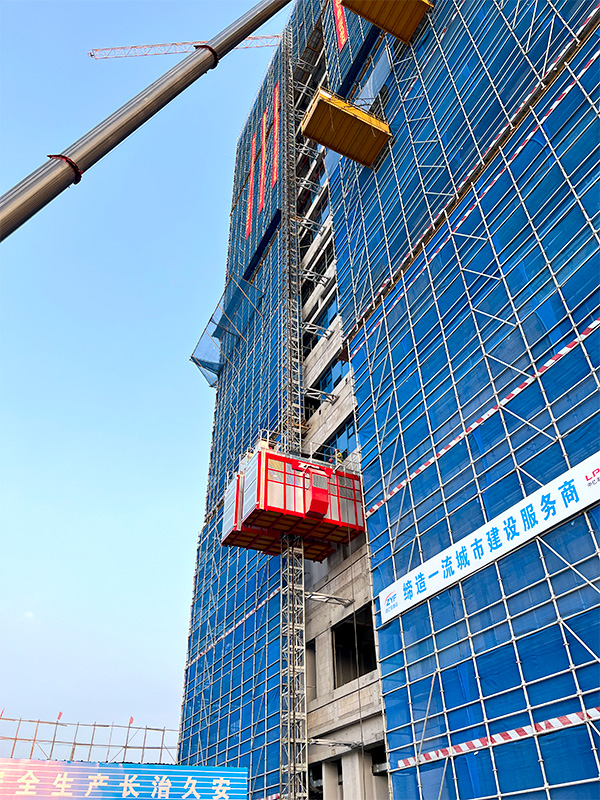
Conversely, the construction hoist remains the preferred choice for high-rise projects exceeding 50–100 m, where no hydraulic system can compete on lifting height, and where VFD technology and proper maintenance can bring noise into an acceptable range. For tall building construction, the noise trade-off is generally accepted as unavoidable given the operational necessity.
The construction hoist is moderately louder than the hydraulic construction lift during active operation, particularly during acceleration and full-load travel, with peaks potentially reaching 90 dB(A) versus the hydraulic lift's typical ceiling of 85 dB(A). However, with VFD control, proper maintenance, and strategic site placement, the gap narrows considerably. Project teams should evaluate noise output not in isolation, but alongside lifting height requirements, duty cycle, regulatory exposure limits, and proximity to sensitive land uses — only then can the right equipment choice be made confidently.
