



Please leave your email address, So that we can get in touch with you as soon as possible.
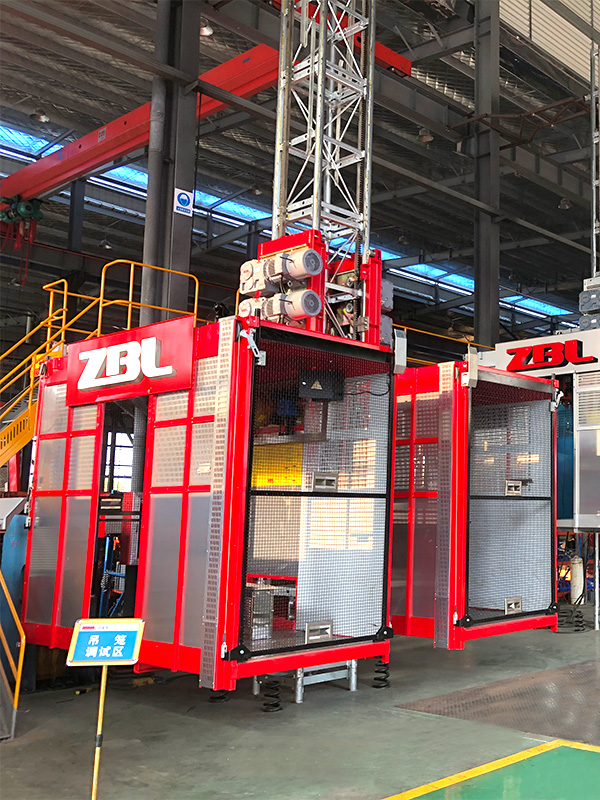
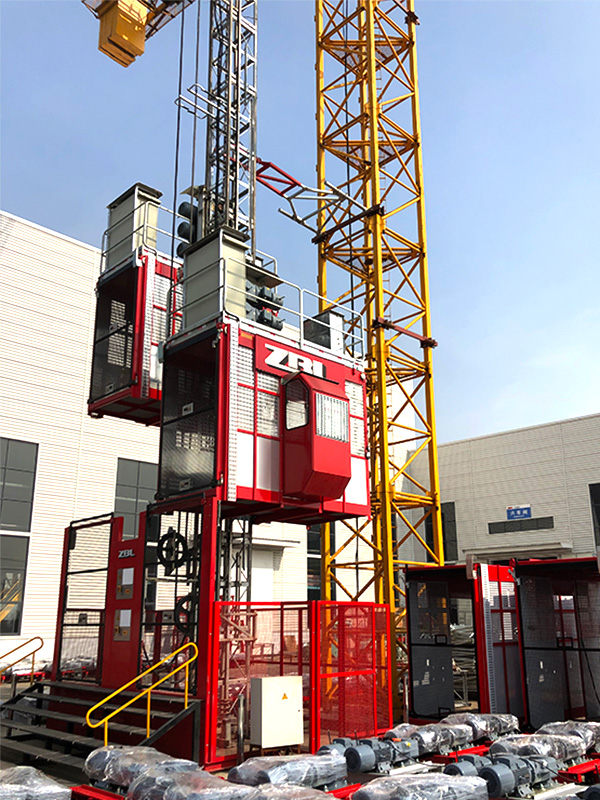
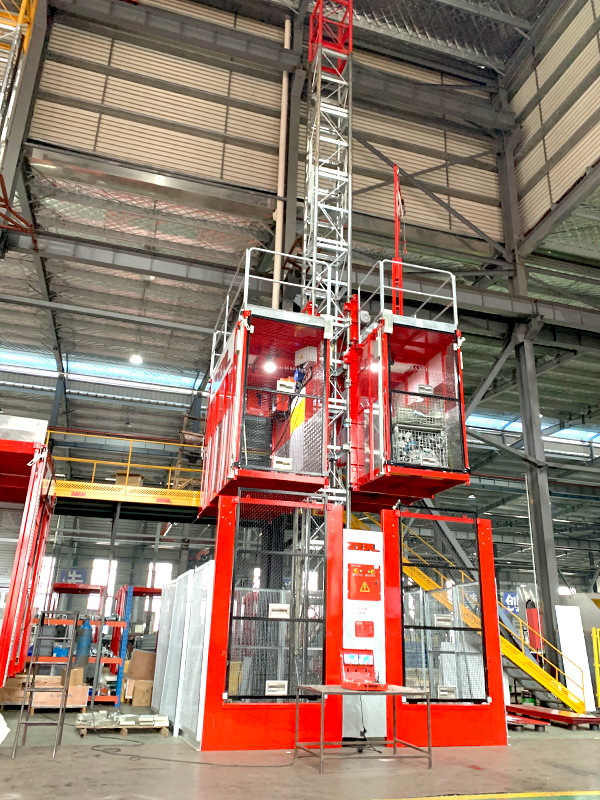
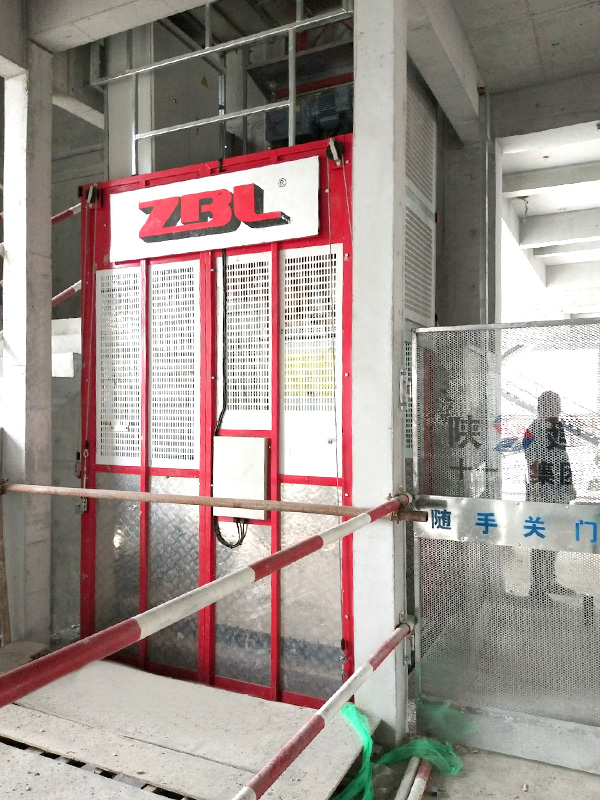
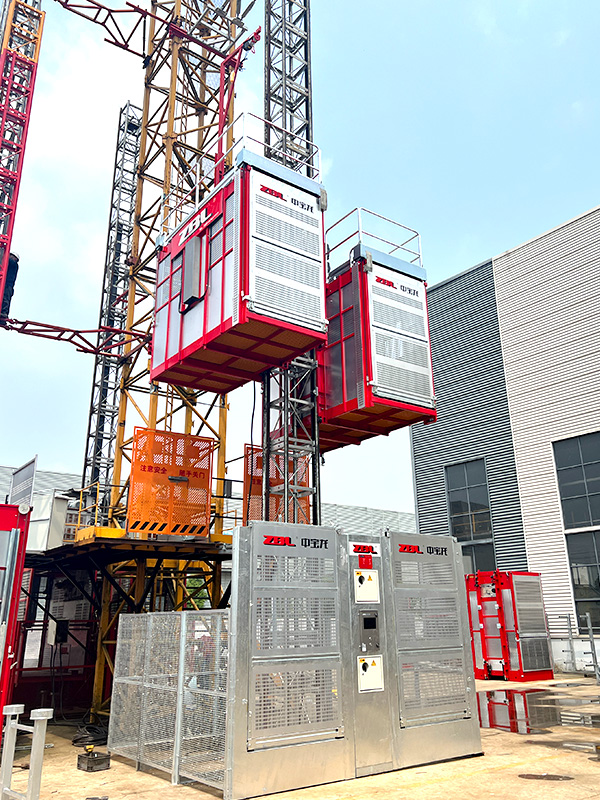
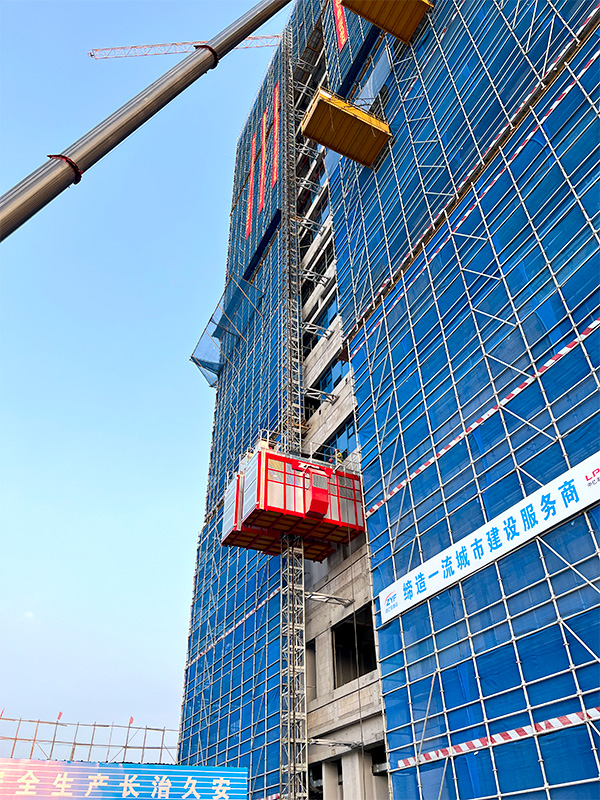
When planning vertical access on a construction site, installation and dismantling time is often as important as the machine's lifting performance. A standard Construction Building Hoist — such as the SC200/200D twin-cage model — typically requires 3 to 5 days to install and 2 to 3 days to dismantle at a height of 100 m, while a self-climbing mast hoist of similar capacity can take 7 to 14 days or more for full setup, depending on integration complexity. That difference of one to two weeks has a direct bearing on project mobilization schedules, crane availability, and overall site logistics.
This article compares both machine types in detail — covering setup procedures, crew requirements, critical path impact, and the scenarios where each system's installation profile works in your favor.
What Each System Involves at Installation
Understanding what goes into each installation clarifies why the time gap exists. The two systems differ fundamentally in how they attach to the structure, how they gain height, and how much civil preparation they require.
Construction Building Hoist Installation Process
A Construction Building Hoist uses a ground-anchored concrete base (typically a pre-cast or poured-in-place foundation pad rated at 15–25 kN/m²), from which a modular mast is erected section by section. Each standard mast section is 1.508 m in length and weighs approximately 130–150 kg, allowing a crew of 4 to 6 technicians to add sections using the hoist's own cage as a work platform — a process known as self-climbing mast addition. Wall ties are installed at every 6–9 m of mast height to transfer lateral loads into the building structure. Electrical connection, safety device calibration (SAJ), and door interlock testing complete the commissioning phase.
For a typical 100 m installation, the full sequence — base preparation, mast erection, tie installation, cage commissioning, and final inspection — takes 3 to 5 working days with a standard crew. At 200 m, the timeline extends to approximately 7 to 10 days due to the increased number of tie brackets and mast sections involved.
Self-Climbing Mast Hoist Installation Process
A self-climbing mast hoist — such as those produced by Alimak or similar manufacturers — does not use a ground base in the traditional sense. Instead, it climbs the building structure using a climbing frame anchored to pre-installed climbing brackets cast into or bolted onto the concrete core or slab edge. This requires structural pre-planning during the concrete pour schedule, coordination with the formwork contractor, and often a structural engineer sign-off on each bracket position.
The initial installation of the climbing frame, guide rail, drive unit, and first set of brackets typically takes 7 to 14 working days, depending on building geometry and the number of anchor points required. Each subsequent climbing cycle — triggered as the structure rises — adds 1 to 2 days of repositioning work per jump. Dismantling requires crane access at the top of the building, which adds scheduling dependency not present in the Construction Building Hoist's top-down dismantle procedure.
Side-by-Side Time Comparison
The table below presents realistic timeframes for installation, climbing/extension, and dismantling across comparable project heights for both machine types.
|
Table 1: Installation, extension, and dismantling time comparison between the Construction Building Hoist (SC200/200D) and a self-climbing mast hoist of similar capacity. |
||
|
Activity |
Construction Building Hoist (SC200/200D) |
Self-Climbing Mast Hoist (Similar Capacity) |
|
Initial installation (to 100 m) |
3–5 days |
7–14 days |
|
Height extension per 30 m |
0.5–1 day (self-climbing mast addition) |
1–2 days per climbing jump |
|
Crew size required |
4–6 technicians |
6–10 specialists + structural coordination |
|
Crane dependency at installation |
Only for base frame; hoist self-extends |
Required for each climbing jump |
|
Dismantling time (from 100 m) |
2–3 days |
4–8 days |
|
Pre-construction civil prep required |
Foundation pad only |
Embedded climbing brackets, structural drawings |
|
Relocation to another project |
Straightforward; fully modular |
Complex; climbing brackets are structure-specific
|
Why the Construction Building Hoist Installs Faster
The speed advantage of the Construction Building Hoist at installation comes down to three key structural differences in how the system is designed.
No Embedded Structural Preparation
A Construction Building Hoist requires only a level, load-rated concrete pad for its base — typically 4.0 m × 3.2 m × 0.3 m for an SC200/200D. This can be prepared independently of the main structure's pour schedule. A self-climbing mast hoist, by contrast, demands that climbing brackets or sleeves be cast into the concrete core walls or slab edges during the original pour — a coordination requirement that must be resolved weeks before the hoist is even on site. If this step is missed or mispositioned, costly re-drilling and bracket retrofitting adds days to the schedule.
Self-Extending Mast Without External Crane
Once the base frame of a Construction Building Hoist is in place and the initial mast sections are erected, the cage itself becomes the work platform for adding further mast sections. A trained crew of 4 can typically add a full 6-section mast extension (approximately 9 m) in under 3 hours. This means the tower crane — always a contested resource on busy sites — is freed from hoist duties and can focus on structural work. The self-climbing mast hoist, despite its name, requires crane assistance at each climbing jump to lift and position the climbing frame, consuming crane time at the exact moment when the structure's rising floors demand the most crane activity.
Standardized, Modular Components
The Construction Building Hoist's mast sections, wall tie brackets, and cage assemblies are fully interchangeable across projects. An experienced crew familiar with the system can work efficiently because each component is identical regardless of building geometry. Self-climbing hoist components, particularly the climbing brackets and guide rail configurations, are frequently customized to the specific building's structural layout — meaning every new installation has a learning curve and requires project-specific engineering review.
Dismantling: Where the Gap Narrows but Doesn't Close
Dismantling a Construction Building Hoist is essentially the reverse of installation — mast sections are removed from the top downward, wall ties are released floor by floor, and the base frame is broken down last. For a 100 m unit, a crew of 4 to 6 can complete full dismantling in 2 to 3 working days, and the components are ready for immediate transport and reuse on another project.
Dismantling a self-climbing mast hoist is more complex. The machine must be lowered or craned down from its final elevated position, the climbing brackets must be unbolted or — in the case of cast-in anchors — cut out and the concrete made good. On a 30-floor building where multiple climbing cycles occurred, this process can involve 4 to 8 days of work, plus additional concrete patching time. The embedded anchors, if not specified for reuse, become waste material with no residual value.
When the Self-Climbing Mast Hoist Justifies Its Longer Setup
Despite its more demanding installation, the self-climbing mast hoist has a clear operational niche that makes it the right choice in specific project conditions:
- Extremely confined sites:Where there is no ground footprint available for a Construction Building Hoist base and mast, a self-climbing system mounted to the building core eliminates the ground-level space requirement entirely.
- Supertall structures (300 m+):At heights beyond 300 m, the lateral deflection of a free-standing mast hoist becomes a structural and safety concern. Self-climbing systems that integrate directly into the core walls are better suited to extreme heights.
- Long-duration projects:On projects lasting 3 or more years, the additional installation time is amortized across a far longer operational period — making the upfront time cost relatively insignificant compared to the operational advantages the system offers on certain building forms.
- Permanent elevator shaft integration:Some self-climbing systems are designed to be converted into or replaced by the building's permanent elevator system, making the installation time an investment that serves both construction and long-term building operations.
Practical Advice for Project Planners
When scheduling vertical access for a mid-to-high-rise project, consider the following checklist before committing to either system:
- Confirm ground footprint availability:If at least 15 m² of clear ground is available adjacent to the building face, a Construction Building Hoist base can be accommodated without impacting site traffic.
- Review the structural engineer's drawings early:If a self-climbing system is under consideration, climbing bracket positions must be designed into the slab or core wall pour sequence — a decision that cannot be retrofitted cheaply once concrete is placed.
- Map crane availability against hoist extension needs:A Construction Building Hoist adds mast sections independently; a self-climbing system competes with structural craneage. On crane-critical projects, the Construction Building Hoist reduces scheduling conflict.
- Calculate total mobilization cost, not just machine cost:The shorter installation time of the Construction Building Hoist translates directly into lower preliminary costs — fewer labor days, less crane hire, and faster achievement of first productive lift.
- Plan dismantling into the project program:Both systems require dedicated crane and labor time at the end of the project. For the Construction Building Hoist, 2 to 3 days at 100 m should be built into the practical completion window; for the self-climbing system, allow 5 to 8 days minimum plus concrete reinstatement time.
For the majority of mid-rise and high-rise projects where ground access exists, the Construction Building Hoist delivers a clear and measurable advantage in installation and dismantling speed — typically completing setup in 3 to 5 days versus 7 to 14 days for a self-climbing mast hoist of comparable capacity. Its modular design, crane-independent mast extension method, and straightforward dismantling process make it the lower-risk, faster-mobilizing choice for projects where time-to-first-lift and schedule certainty are priorities.
The self-climbing mast hoist earns its longer setup time on supertall, space-constrained, or structurally integrated projects where its operational advantages over the full project lifecycle outweigh the upfront time investment. Matching the right system to the project's actual constraints — not simply defaulting to the cheaper or more familiar machine — is where experienced project managers consistently recover both time and cost on complex builds.
