



Please leave your email address, So that we can get in touch with you as soon as possible.
When evaluating vertical transportation on a job site, speed under full load is one of the most critical performance metrics. A modern Construction Building Hoist — whether deployed as a personnel-and-material construction hoist or a dedicated material lift — typically operates at 0–96 m/min, while a traditional construction elevator (friction-drum or older rack-and-pinion type) averages 0–63 m/min under rated load — a meaningful difference that directly impacts cycle time, labor productivity, and project schedules. The gap widens further when you factor in acceleration control, load sensitivity, and drive technology.
This article breaks down that comparison with real performance data, explains the engineering reasons behind the speed difference, and helps site managers decide which solution fits their operational profile.
Defining the Two Machine Types
Before comparing speeds, it is important to clarify what each machine actually is, because terminology varies by region and the confusion can distort purchasing decisions.
Construction Building Hoist (SC-Series Rack-and-Pinion Hoist)
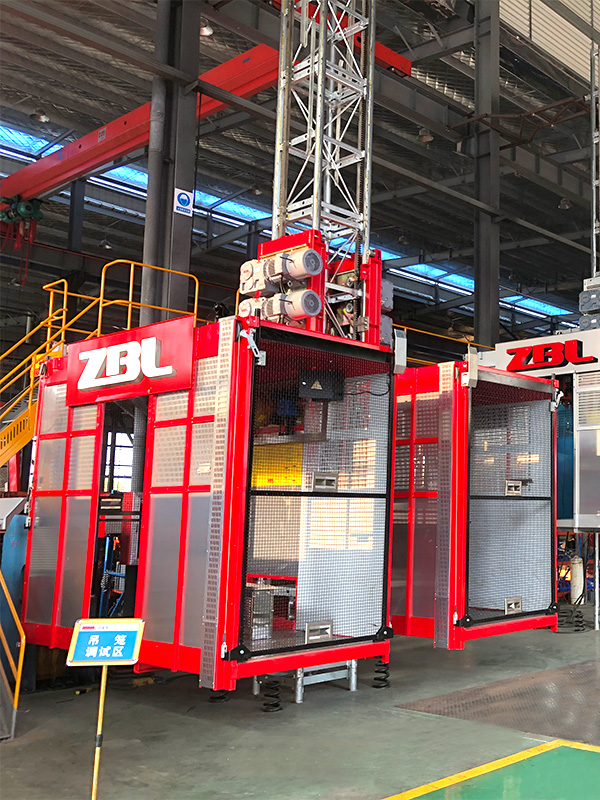
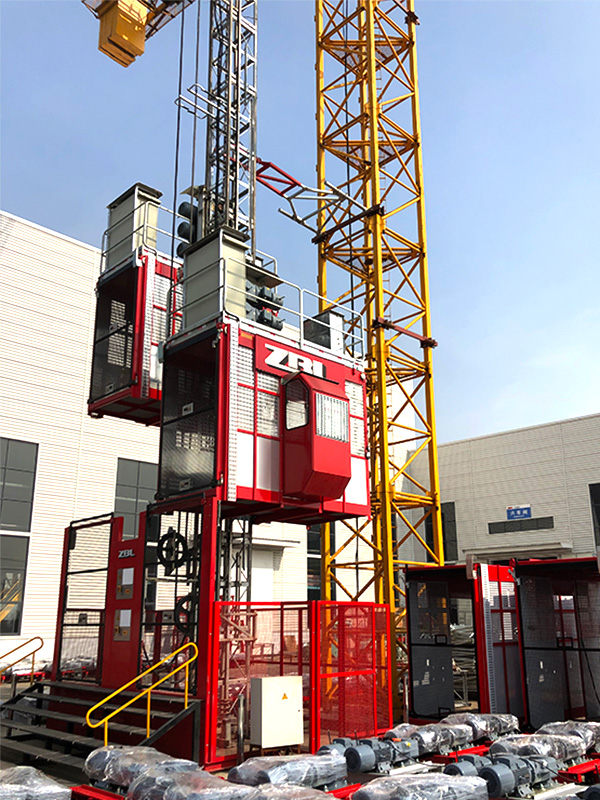
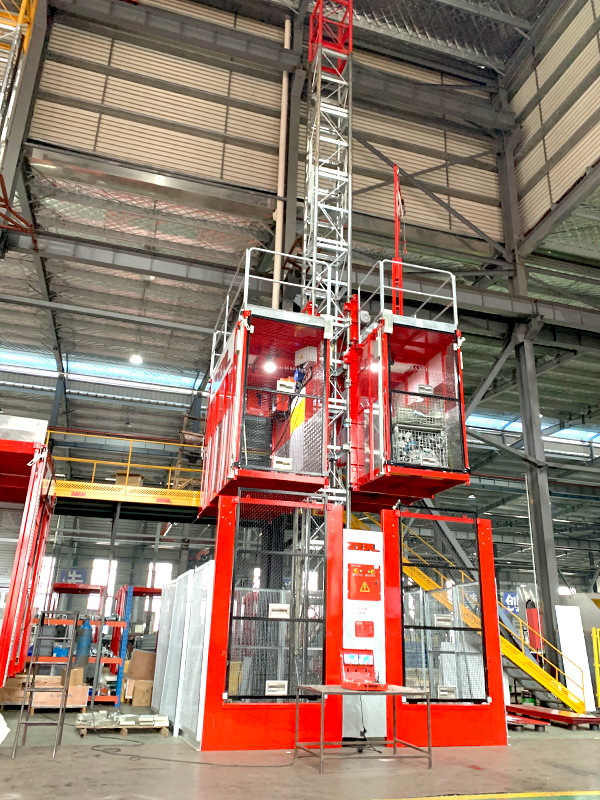
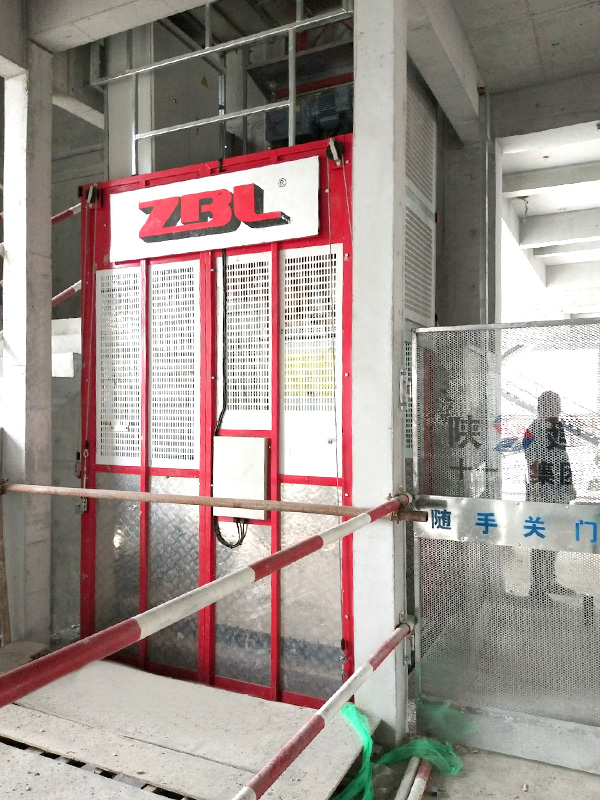
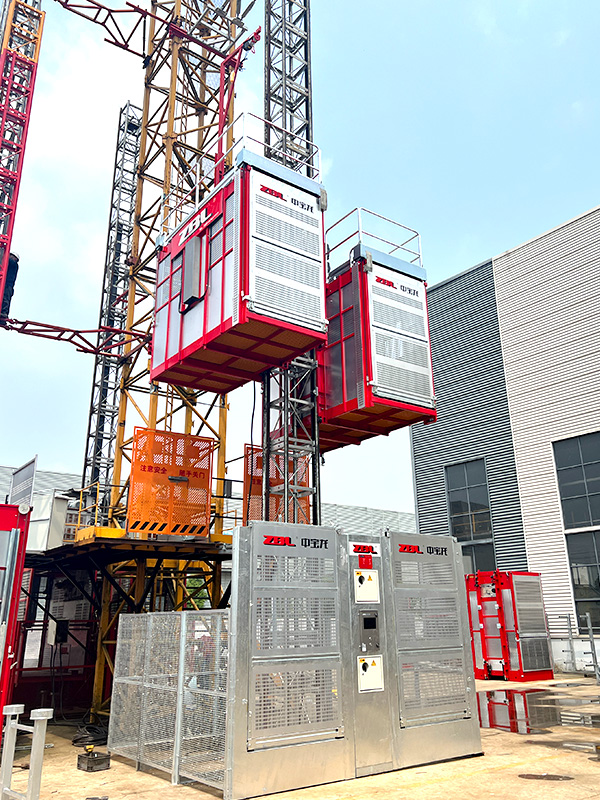
A Construction Building Hoist — most commonly the SC200/200D or SC100/100 twin-cage model — uses a motorized pinion gear running along a toothed mast rack. The SC200/200D, one of the most widely deployed construction hoist configurations globally, is rated at 2×2,000 kg payload and supports lift speeds up to 96 m/min with a VFD drive system. It is engineered for both personnel and material transport, is certified under EN 12159 or GB 10054, and is designed to reach heights exceeding 450 m with modular mast extensions. The drive system in modern units is typically a variable frequency drive (VFD) motor, enabling smooth acceleration and precise floor leveling.
Traditional Construction Elevator
The term "traditional construction elevator" generally refers to older-generation rack-and-pinion hoists with contactor-based (non-VFD) motor control, or friction-drum cable hoists used primarily for material lifting. Unlike a modern construction hoist such as the SC200/200D, these construction elevator units are simpler in design, lower in capital cost, and widely still used on low-to-mid-rise sites in developing markets. Their speed ceiling is constrained by motor torque characteristics and the absence of intelligent load-sensing systems.
Speed Data: Construction Building Hoist vs Traditional Elevator Under Full Load
The table below compares key speed and performance metrics across representative models of both machine types under rated full-load conditions.
| Parameter | Construction Building Hoist (SC200/200D, VFD-Driven) | Traditional Construction Elevator (Contactor-Driven) |
|---|---|---|
| Rated Lifting Speed (full load) | 63–96 m/min | 33–63 m/min |
| Speed Under 100% Rated Load | Minimal speed loss (<5%) | Noticeable drop (10–20%) |
| Acceleration Control | Smooth (VFD-controlled ramp) | Jerky (contactor step switching) |
| Floor Leveling Accuracy | ±5 mm | ±20–50 mm |
| Typical Cycles per Hour (10-floor building) | 18–24 cycles | 10–15 cycles |
| Maximum Tested Mast Height | 450+ m | 100–150 m typical |
| Personnel Transport Certification | Yes (EN 12159 / GB 10054) | Material only (many models) |
Why the Construction Building Hoist Maintains Speed Under Load
The speed advantage of a Construction Building Hoist under full load is not simply a matter of motor power — it is primarily a function of drive system architecture and torque management.
Variable Frequency Drive (VFD) Technology
Modern Construction Building Hoists use VFD-controlled three-phase induction motors. The VFD continuously adjusts output frequency and voltage to maintain constant torque across the full speed range. This means that when the SC200/200D construction hoist cage is loaded to its full 2,000 kg rated capacity, the motor compensates automatically, sustaining rated lift speed without the mechanical stress spikes common in contactor-controlled systems.
Traditional construction elevator units using contactors switch between fixed electrical states (star-delta or direct-on-line), which causes torque dips during load transitions. Under full load, this results in measurable speed reduction — often 15–20% below the nominal rating — and mechanical shock that accelerates rack-and-pinion wear. This is a key structural difference when comparing any legacy construction elevator against a VFD-equipped construction hoist like the SC200/200D.
Anti-Fall Safety Device (SAJ) Integration
The Construction Building Hoist's onboard SAJ (centrifugal governor-type safety device) is rated specifically for its operating speed range — for example, the SAJ50-1.2 activates at 1.2 m/s overspeed. This allows the machine to operate at higher base speeds with confidence, because the safety margin is calibrated to match the drive profile. Traditional elevators without matched SAJ units must operate conservatively to remain within safe deceleration envelopes.
Practical Impact on Construction Productivity
Speed data in isolation is only part of the story. What matters on a live job site is how speed translates to throughput — the number of workers, cubic meters of concrete, or tons of rebar moved per shift.
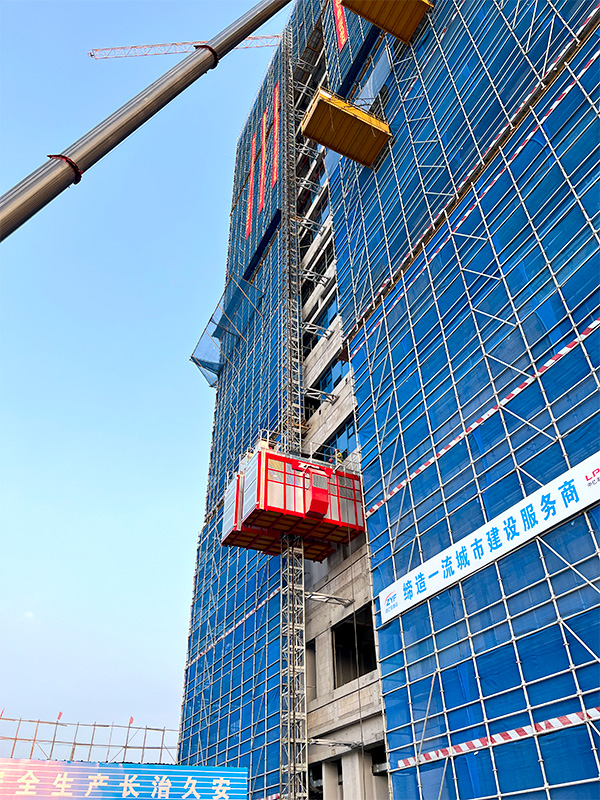
Consider a 30-floor residential tower with a floor-to-floor height of 3 m (total lift: ~90 m). An SC200/200D construction hoist running at 96 m/min completes a one-way ascent in under 60 seconds. A traditional construction elevator at 45 m/min takes approximately 2 minutes for the same run. When you factor in door operations, acceleration ramp time, and loading/unloading, the effective cycle time difference per trip is roughly 90–120 seconds.
Across a 10-hour shift with a twin-cage SC200/200D construction hoist running 20 cycles per hour, that translates to 200 full-load cycles per cage per shift, versus approximately 130 cycles for a traditional construction elevator — a ~54% throughput advantage. On a large project with 300+ workers per floor, this gap is the difference between bottlenecks and flow.
Where Traditional Construction Elevators Still Compete
Despite the clear speed advantage of the Construction Building Hoist, traditional construction elevators remain relevant in specific use cases:
- Low-rise projects (under 10 floors): On short lifts, the speed differential between 45 m/min and 96 m/min produces only seconds of difference per cycle — insufficient to justify the higher capital cost of a premium Construction Building Hoist.
- Material-only transport: Where personnel lifting is not required, a simpler drum hoist or low-spec rack-and-pinion unit is often adequate and more economical to operate.
- Remote or power-limited sites: A traditional construction elevator with lower kW motor requirements (e.g., 2×11 kW vs the SC200/200D's 2×30 kW) is better suited to sites with restricted generator capacity or unreliable grid power.
- Short-duration contracts: Rental availability, simplified maintenance, and faster setup make traditional units attractive for projects under 3 months where ROI on a high-speed hoist cannot be realized.
Key Selection Criteria: Speed Is One Factor Among Several
When specifying a Construction Building Hoist versus a traditional construction elevator, project managers should evaluate speed alongside the following parameters:
- Building height: Above 100 m, only a Construction Building Hoist with modular mast sections is practically viable.
- Personnel vs material use: If workers must be transported, the Construction Building Hoist with EN 12159 certification is mandatory in most jurisdictions.
- Cycle frequency: High-density sites (500+ workers) require maximum throughput — only VFD-driven Construction Building Hoists deliver it reliably.
- Power infrastructure: Confirm that site power (typically 380V/50Hz three-phase) can support the motor demand of a high-speed hoist without voltage drop issues.
- Total cost of ownership: The higher upfront cost of a Construction Building Hoist is frequently offset by reduced labor hours, fewer delays, and lower downtime — particularly on projects over 18 months.
The SC200/200D construction hoist outperforms the traditional construction elevator on lift speed under full load by a measurable and operationally significant margin — typically 35–50% faster at equivalent rated capacities. This advantage is driven by VFD motor technology, precision rack engagement, and integrated safety systems that allow higher operating speeds without compromising safety compliance.
For high-rise projects, dense workforce environments, or sites where schedule compression is critical, investing in a construction hoist — particularly a proven model like the SC200/200D — is the technically and economically sound choice. For shorter structures or simpler material-only applications, a traditional construction elevator remains a cost-effective alternative — provided its speed limitations are factored into the project schedule from day one.
