



Please leave your email address, So that we can get in touch with you as soon as possible.
Site Logistics
What Is a Buck Hoist in Construction?
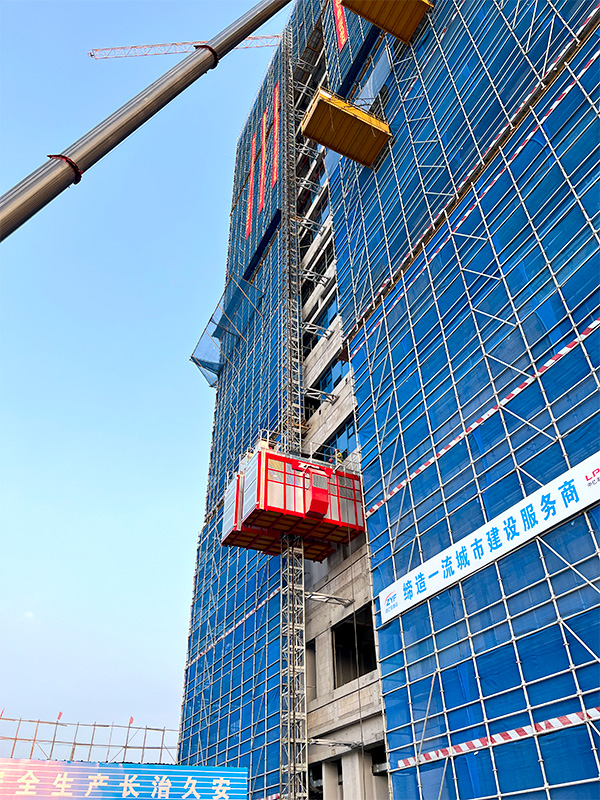
A buck hoist is the temporary elevator that keeps a high-rise site moving: it lifts crews, tools and materials up the side of a building months before the permanent lifts exist. What is inside one explains almost every decision you will make about capacity, speed, cost and safety.
The Short Answer
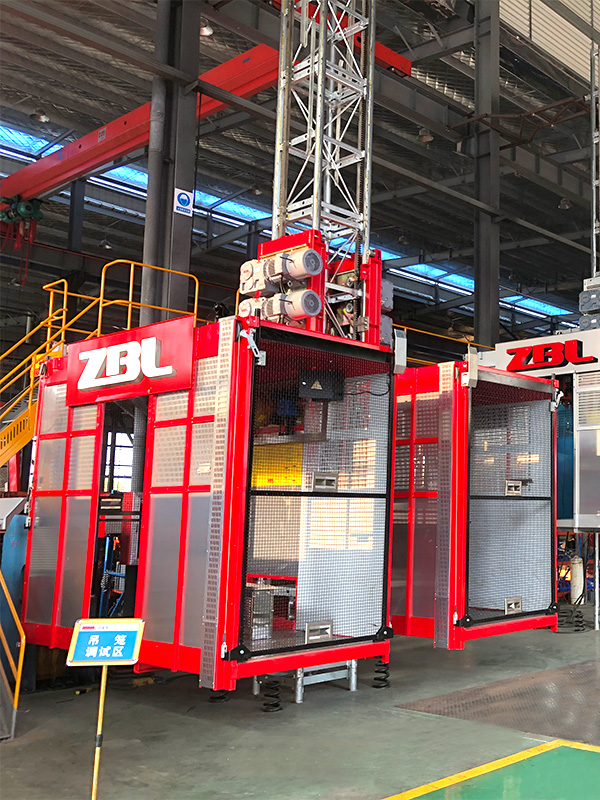
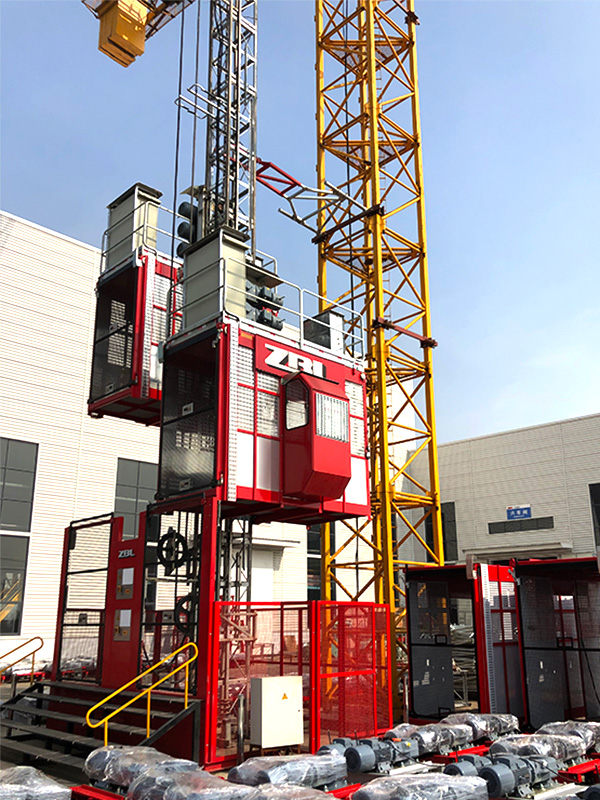
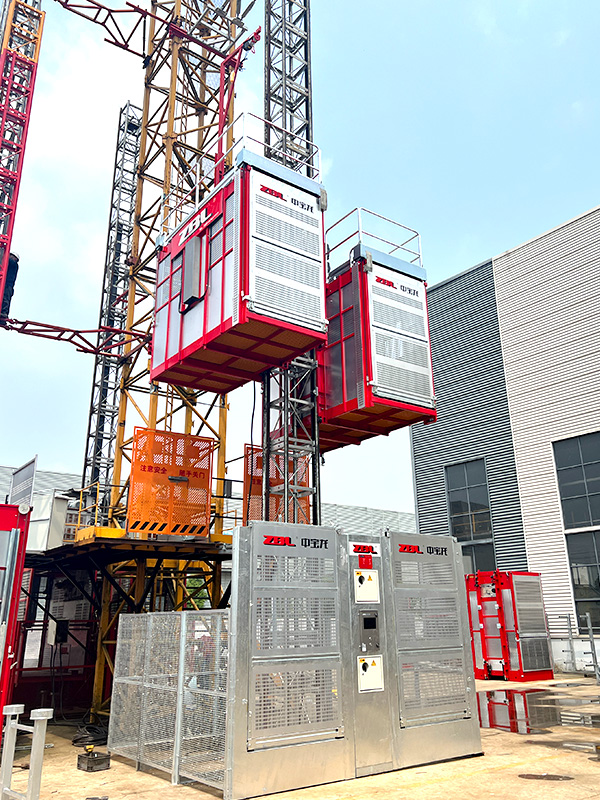
A buck hoist is a temporary, electrically driven vertical transport system that runs on a steel mast tied back to a building under construction, carrying workers, tools and materials between the ground and the active working floors. In North America "buck hoist" is the everyday site term, and it is used loosely for both material-only machines and machines rated to carry people. In Europe, Asia and most equipment catalogues the same machine is sold as a construction hoist, construction elevator or builder's hoist. The words overlap; the machines do not. A material hoist and a personnel hoist are built, tested and regulated differently, and that difference matters the moment someone steps inside the cage.
What separates a buck hoist from everything else on site is that it is fixed in one place. A tower crane serves the whole site and every trade queues for hook time. A buck hoist serves one vertical line all day, lifting the same crew to the same floor, and it keeps running in weather that stops most picks.
- Drive: rack and pinion on virtually all modern machines; light-duty or older units may use rope traction or winch drive.
- Mast: steel standard sections bolted or pinned together and extended as the structure rises.
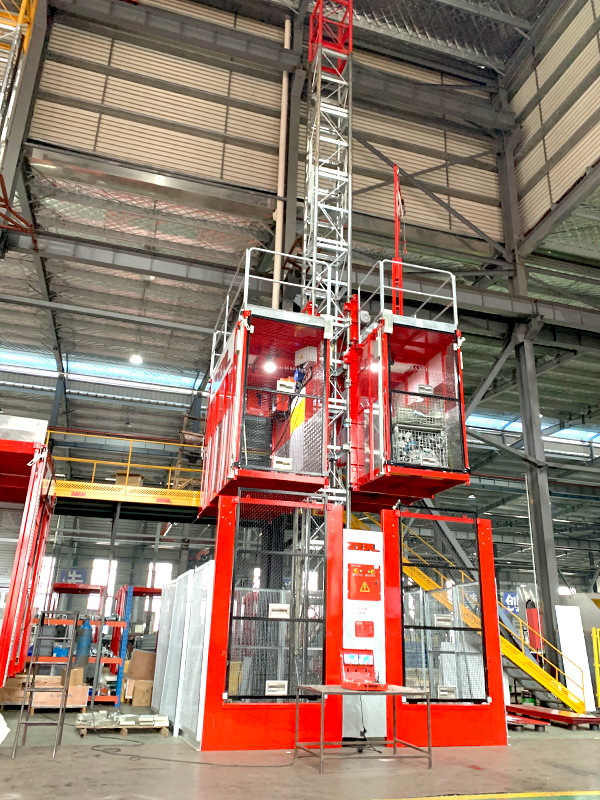
- Cages: one or two cars on a single mast, so a two-cage layout doubles payload without a second mast.
- Power: three-phase site supply, commonly 380 V to 440 V.
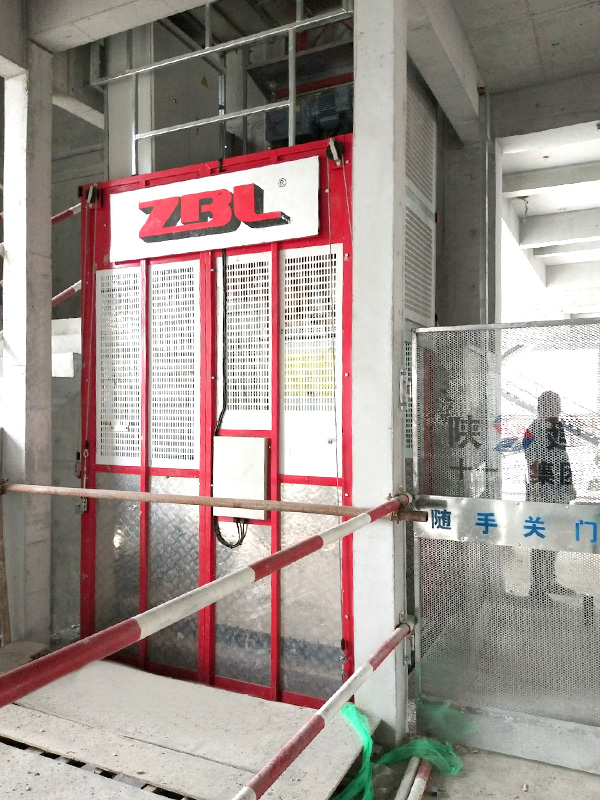
- Structure interface: base frame, tie-ins to the slab or shaft, and enclosed landings with interlocked gates.
Inside a Buck Hoist: Mast, Cage and Drive
The mast is more than a tower. On a typical two-tonne machine each standard section is roughly 1.5 m long, and the rack is welded to one corner tube. The rack is the track the machine climbs, so mast alignment and rack wear are maintenance items, not cosmetic ones. Sections are added as the building rises, and every new section must be tied back before the cage runs above it.
The cage carries the drive unit: motor, gearbox and pinion meshing with the rack. Because the drive climbs the rack instead of winding a rope, there is no drum to spool and no free fall caused by a parted line. Two other systems make the machine safe rather than merely functional: an overspeed governor with a progressive safety device that grips the rack when descent speed exceeds the trip threshold, and a chain of limits and interlocks that stop the cage before geometry decides what happens next. If a car feels rough or hunts at a landing, the fault is usually in the mast, the ties or the drive rather than in the motor, which is why explanations of why a construction hoist stays stable are worth reading before blaming the machine.
Speed Is a Drive Decision, Not Just a Motor Decision
Single-speed machines run at roughly 34 to 40 m per minute, and every start and stop lands on the rack and pinion as a shock. Variable-frequency drives change the shape of that load: they ramp up gently, brake electrically and level at the floor within about 10 mm. Low-speed variable-frequency units suit tight shafts and passenger-heavy traffic, while medium and high-speed units reach 60 to 96 m per minute and pay back on tall towers where the round trip itself becomes the bottleneck.
Buck Hoist or Something Else?
On a mid-rise or high-rise site you usually have four or five ways to move something upward. They are not interchangeable, and picking the wrong one shows up later as crane queues, idle crews and unsafe improvisation.
| Method | Carries people | Typical capacity | Strongest use | Main constraint |
|---|---|---|---|---|
| Tower crane | No, hook only | 5 to 20 t, radius dependent | Structure, steel, precast | Hook time is shared and costly |
| Material hoist | No | 1 to 3 t | Bricks, boards, tiles, tools | Crews still climb the stairs |
| Buck hoist, personnel rated | Yes | 1 to 2 t per cage, 8 to 24 people | Crew access plus mixed loads | Needs mast, tie-ins and a trained operator |
| Mast climbing platform | Yes, as a work deck | Several tonnes on a wide deck | Facade and cladding work | Slow travel, not a logistics route |
| Early-use permanent lift | Yes | 0.6 to 1.6 t | Late fit-out | Rarely available before the envelope closes |
What the Numbers on the Nameplate Really Mean
Model codes look cryptic, but they are a specification. In the widely used SC family, the letters identify a rack-and-pinion construction hoist and the first number is the rated load in kilograms per cage, so an SC200 lifts 2,000 kg in one car; an SC200-200 is the same machine with two cages on a shared mast; an SCH100-100 is a cargo-oriented pair rated at 1,000 kg each. A 2,000 kg rating is not simply "two pallets". It is the maximum gross load and usually covers a mix of people, tools and materials, so ten workers at 80 kg leaves roughly 1,200 kg of material. Cage platform size then decides whether that material actually fits: standard cages sit around 3 m by 1.5 m, while large combination cages of about 4.8 m by 2 m exist for long panels and pallet loads. Overload limiters are normally set near 110 percent of rated load, which is a protection threshold, not a working allowance.
Safety: The Failures That Actually Happen
Buck hoists are mechanically robust; incidents are usually human. The recurring causes are a landing gate left open or deliberately bypassed, a cage door interlock defeated to speed up loading, a missing or late tie-in after the mast was extended, and overloading during a concrete or drywall push. Wind is the other routine factor: operation generally stops at wind speeds around 20 m per second, the cage parks at the base and the power is isolated.
The machine rarely fails first. Almost every serious buck hoist incident begins with an interlock that somebody decided was slower than the schedule.
Before the first lift each day
Test the cage door and landing gate interlocks, the travel and final limits, the emergency stop and the overspeed trip lever. Look for rack wear, oil leaks, cracked glass and loose mast bolts. Monthly and annual third-party inspections, plus safety device calibration, are not paperwork for its own sake: they are the record that keeps a machine insurable.
Smart control is shifting part of that discipline into the machine. Monitoring systems log running hours, overload events, door interlock activity and fault codes, and unmanned well-shaft models take the operator out of the car for repetitive material runs. That helps, but it does not replace the tie-in schedule or the person who signs the inspection sheet.
Buying or Renting: What to Check Before You Commit
Most bad buck hoist decisions are made on price and cage size alone. The specification questions that actually protect a program are shorter than most buyers expect.
- Rated load against a real traffic study, not against the heaviest load anyone can imagine.
- Cage size measured against your longest panel, not your average pallet.
- Drive type: variable frequency or single speed, and whether the site power supply can take the starting current.
- Tie-in spacing per floor height, with written anchorage details rather than verbal instructions.
- Safety device certification and the last calibration record, with a defined re-calibration interval.
- Consumables and spares: pinions, door rollers, mast sections and gate hardware available within days.
- Scope of supply: who installs, who dismantles, who inspects, and how fast a service technician can reach the site.
Practical note
A hoist that arrives with a load test certificate, an inspection report and a named service contact is usually cheaper over a twelve-month program than a slightly lower-priced machine that arrives without them.
Where a Buck Hoist Fits in a Project
The sequence is fairly standard. The base frame and ground enclosure go in during the early structure stages, one cage runs to the highest available floor, mast sections are added in step with the slabs, and every new section gets its ties before the cage climbs above it. A second cage is commissioned once traffic justifies it. During envelope and fit-out work the hoist becomes the busiest vertical corridor on site, carrying tiles, drywall, glazing units, tools and dozens of workers per shift. When the permanent lifts are commissioned, the hoist is dismantled and the openings are closed.
Irregular buildings complicate that plan. Public venues with deep stages, double-height foyers and non-repeating floor plates, such as the grand theatre project in Nantong, force the tie-in and landing plan to follow the structure rather than a standard floor grid, and that planning usually has to happen before the first mast section is ordered.
The Bottom Line
A buck hoist is a temporary, mast-mounted construction elevator, normally rack-and-pinion driven, that gives a site a dedicated vertical route for people and materials long before permanent lifts exist. The technical detail matters less than six practical questions: rated load per cage, cage size, drive type, tie-in spacing, safety device certification, and who will service the machine within a day's drive of the site. Answer those honestly and the hoist will quietly do more for the schedule than any crane on the project.
