



Please leave your email address, So that we can get in touch with you as soon as possible.
Core Space and Structural Requirements
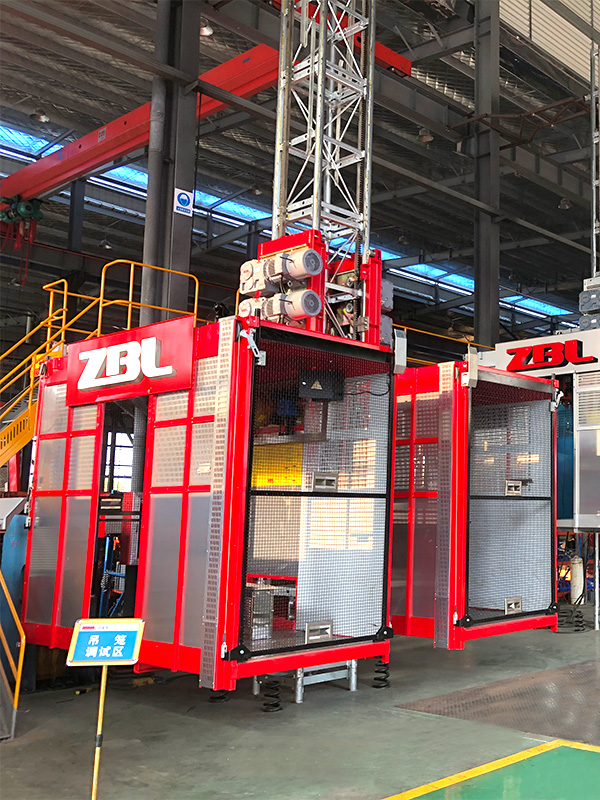
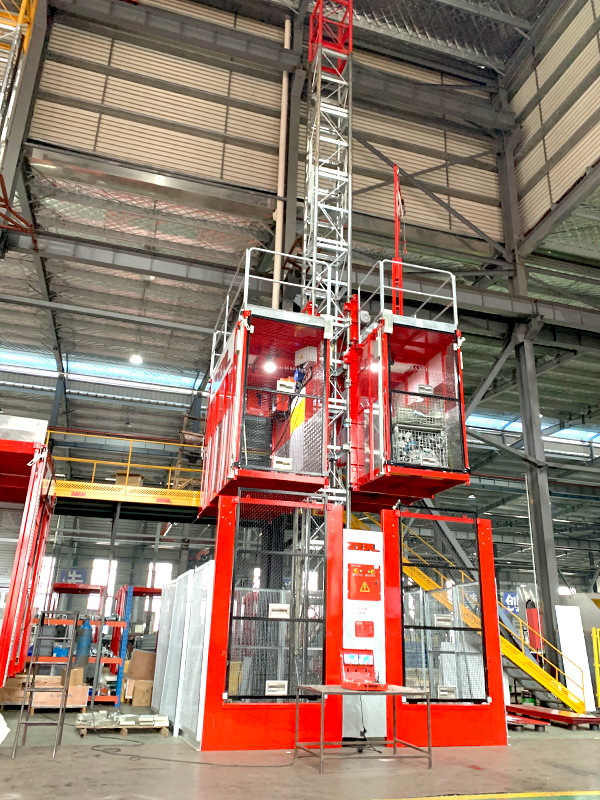
Installing a Low Speed Construction Hoist requires adequate ground space, a stable reinforced foundation, sufficient vertical and horizontal clearance, and a structurally sound anchoring system connected to the building. Typically, the base area must support loads exceeding 2–3 times the hoist’s rated capacity, while tie-ins must be installed at regular height intervals (usually every 6–9 meters). Additionally, safe access zones and material loading areas must be planned to ensure efficient and hazard-free operation.
Ground Space Requirements
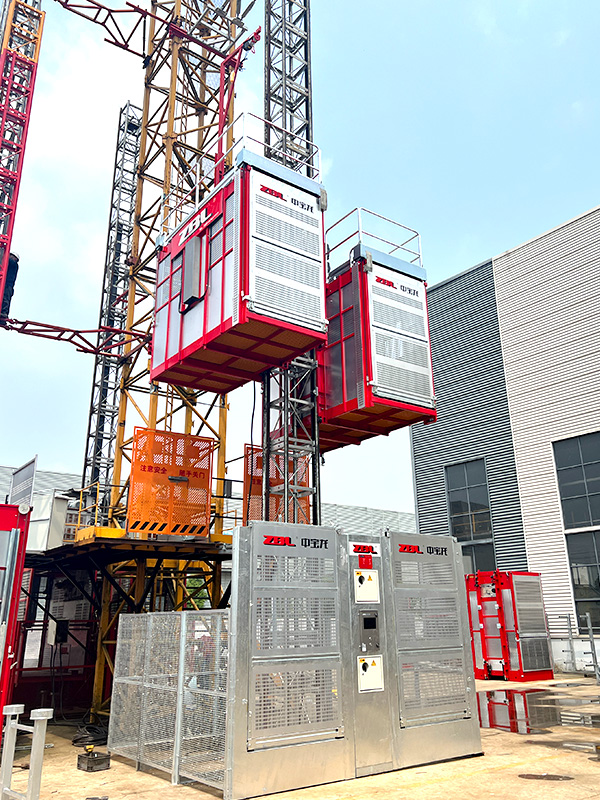
The footprint of a Low Speed Construction Hoist is relatively compact compared to high-speed systems, but it still demands careful spatial planning. The required ground area includes the hoist base, safety buffer zones, and loading/unloading zones.
- Base footprint typically ranges from 3m × 3m to 5m × 5m
- Minimum clearance of 1.5–2 meters around the hoist for safe operation
- Dedicated loading area for materials and personnel access
For congested urban construction sites, space constraints often require vertical optimization and precise layout planning to avoid interference with cranes, scaffolding, or other equipment.
Foundation and Load-Bearing Capacity
A Low Speed Construction Hoist must be installed on a solid foundation capable of supporting both static and dynamic loads. The foundation is usually made of reinforced concrete.
The foundation must support at least 2–3 times the maximum rated load to account for dynamic forces such as starting, stopping, and wind loads.
| Parameter | Typical Value |
|---|---|
| Concrete Grade | C25–C35 |
| Thickness | 300–500 mm |
| Load Capacity | ≥ 150 kN |
Structural Tie-Ins and Building Integration
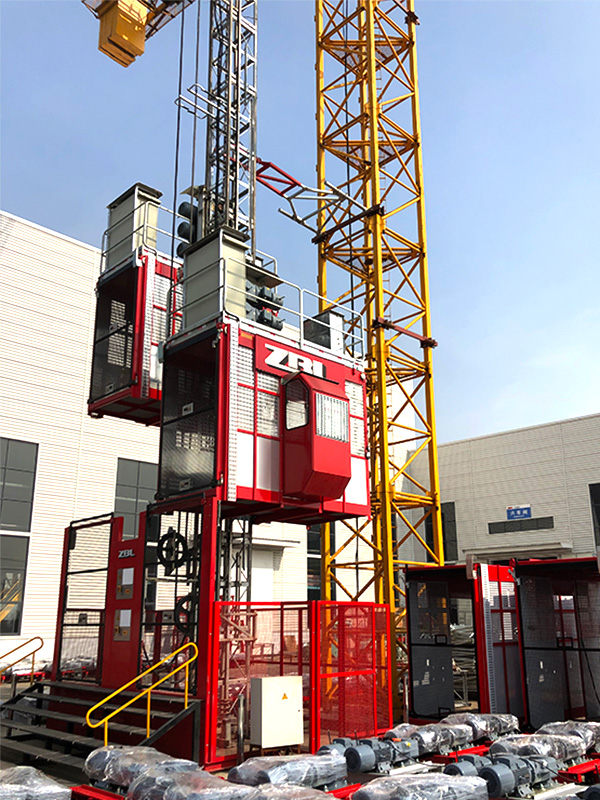
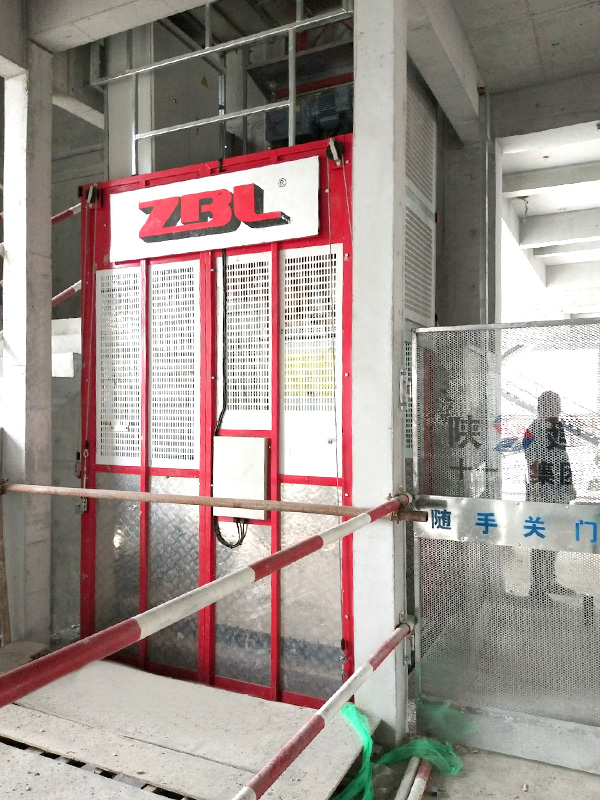
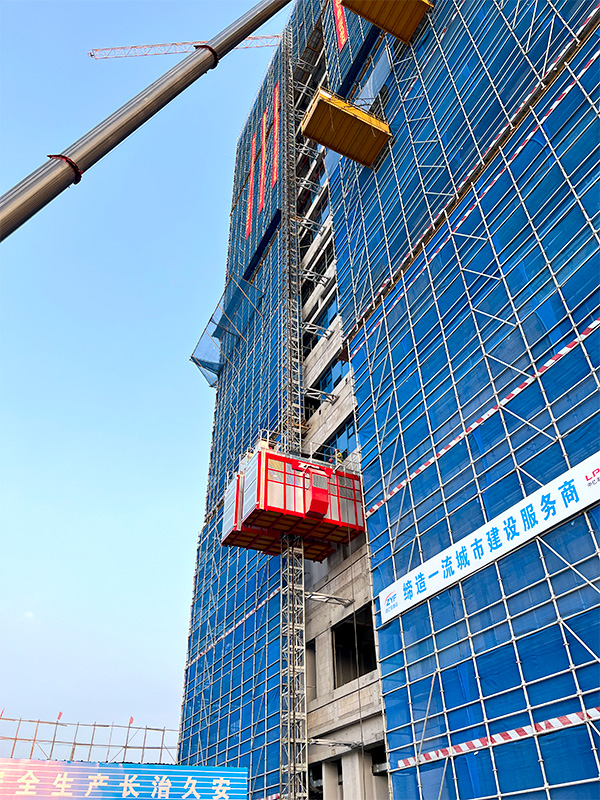
As the height of a Low Speed Construction Hoist increases, structural stability becomes critical. The mast must be anchored to the building at regular intervals using tie-in systems.
- Tie-in intervals are typically 6–9 meters vertically
- Anchors must connect to structurally sound elements such as concrete slabs or columns
- Wind load calculations must be considered for taller installations
Improper anchoring can lead to excessive vibration or even structural failure, making engineering verification essential during installation.
Vertical and Horizontal Clearance
Clearance requirements ensure safe operation and prevent collisions with nearby structures or equipment. A Low Speed Construction Hoist must have unobstructed travel along its entire height.
Vertical Clearance
The hoist must extend beyond the highest landing point by at least 3–6 meters to ensure safe stopping and braking.
Horizontal Clearance
A minimum gap of 0.5–1 meter between the hoist and building facade is required to avoid friction and allow maintenance access.
Access and Operational Zones
Efficient use of a Low Speed Construction Hoist depends on well-designed access areas for workers and materials. Poor planning can significantly reduce productivity.
- Safe pedestrian access paths separated from material loading zones
- Clear signage and barriers around the hoist base
- Adequate lighting for night operations
For example, on a mid-rise project (10–15 floors), improper access design can reduce lifting efficiency by up to 20–30% due to congestion and delays.
Environmental and Site Constraints
External factors such as soil condition, weather, and surrounding structures also influence installation requirements for a Low Speed Construction Hoist.
- Soft soil may require deeper or reinforced foundations
- High wind areas require additional tie-ins and bracing
- Urban sites require noise and vibration control measures
In coastal or high-wind regions, additional structural reinforcement can increase installation costs by 10–15%, but significantly improves safety and reliability.
Successfully installing a Low Speed Construction Hoist depends on aligning spatial planning with structural integrity. A stable foundation, sufficient clearance, proper anchoring, and well-designed access zones are non-negotiable requirements. Ignoring any of these factors can lead to safety risks, operational inefficiencies, and increased project costs.
By following engineering guidelines and adapting to site-specific conditions, construction teams can ensure that the hoist operates safely, efficiently, and reliably throughout the project lifecycle.
