



Please leave your email address, So that we can get in touch with you as soon as possible.
Hoist selection
Types of Construction Hoist: A Field Guide for the People Who Have to Choose One
Passenger or material-only. Rack and pinion or wire rope. Fixed speed or variable frequency. Each of those forks changes the cage, the inspection routine, the power supply and the cost of every metre your crew rides.
Here is the conclusion first. On a multi-storey building where people will ride, the default choice is a rack-and-pinion construction hoist with variable frequency control, sized around the cage load you actually carry rather than the headline capacity in the brochure. Material-only hoists earn their place when nobody rides. Wire-rope hoists still make sense in shafts, indoors, and on low-rise work where a geared mast would be overkill.
The rest of this guide explains why, and where the exceptions genuinely bite.
The two families that do most of the work
Almost every hoist on a high-rise site belongs to one of two mechanical families, and the difference is not cosmetic.
Rack and pinion
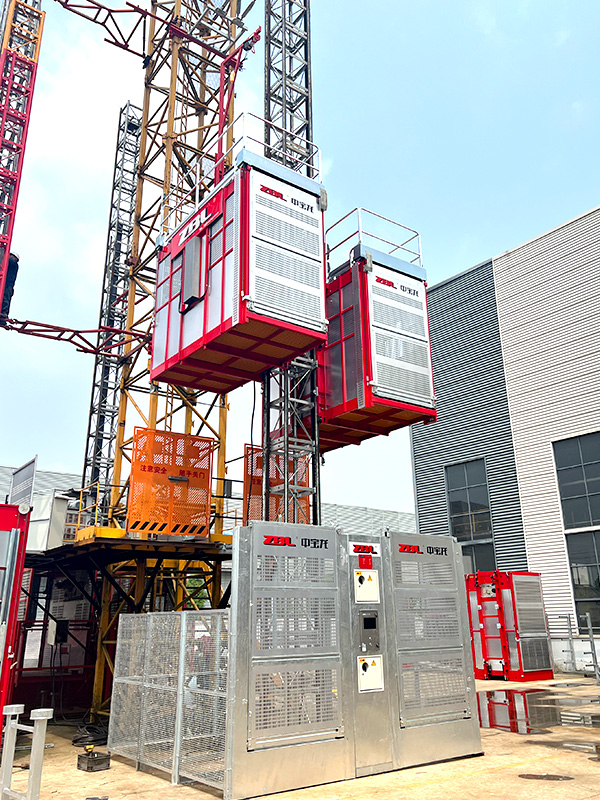
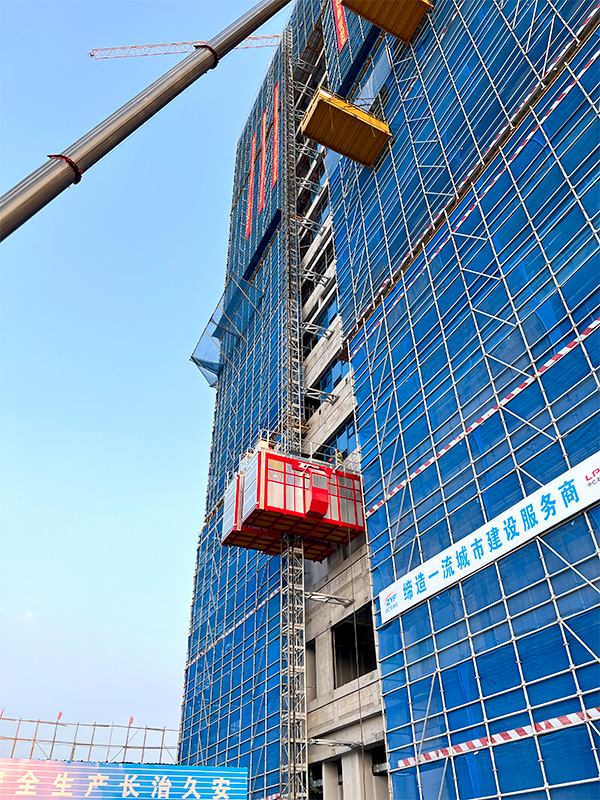
The cage runs on a mast assembled from stacked sections, each carrying a machined gear rack, and motor-driven pinions climb that rack. The drive is positive, steel tooth on steel rack, so the cage cannot slip, and the mast doubles as the guide rail. That is why the layout dominates facade access on concrete and steel frames, and why it can be tied back to the structure every few floors as the building rises.
Wire rope
A drum or traction sheave winds steel rope instead. Rope hoists are compact and quiet, and they remain common in lift shafts, indoor work and low-rise sites where a mast would be impractical. The trade-off is a rope that is a wear item under continuous inspection, plus headroom and a proper foundation above the load.
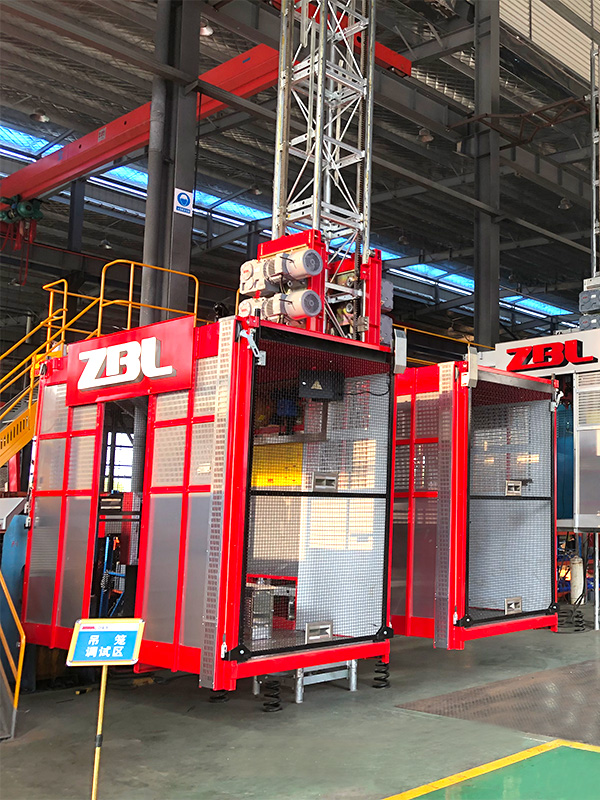
Most high-rise ranges follow the rack-and-pinion layout, built on a common platform and then differentiated by drive, speed and cage size. The SC200-class machine is the typical starting point, carrying both people and materials before any options are added.
 SC200 Series Rack-and-Pinion Construction HoistA typical starting point for high-rise people and material transport, with assembled cage and rack-and-pinion layout; worth checking before specialized variants.View Product →
The table sets the main types side by side, including the situations where each one is normally the wrong answer.
| Type | How the load is carried | Where it fits | Check before you buy |
|---|---|---|---|
| Rack-and-pinion passenger and material hoist | Pinions climb a racked mast; the mast also guides the cage | Facade access on multi-storey concrete and steel frames | Passenger rating, anti-fall device, tie plan, drive type |
| Rack-and-pinion material-only hoist | Same drive train, longer and heavier cage, no passenger rating | Brick, block, tiles, formwork and mortar on busy sites | Door width and interlocks; confirm nobody can ride it by habit |
| Wire-rope hoist | Drum or sheave winds steel rope | Shafts, indoor work, low-rise sites with limited mast space | Rope inspection schedule, headroom, brake design |
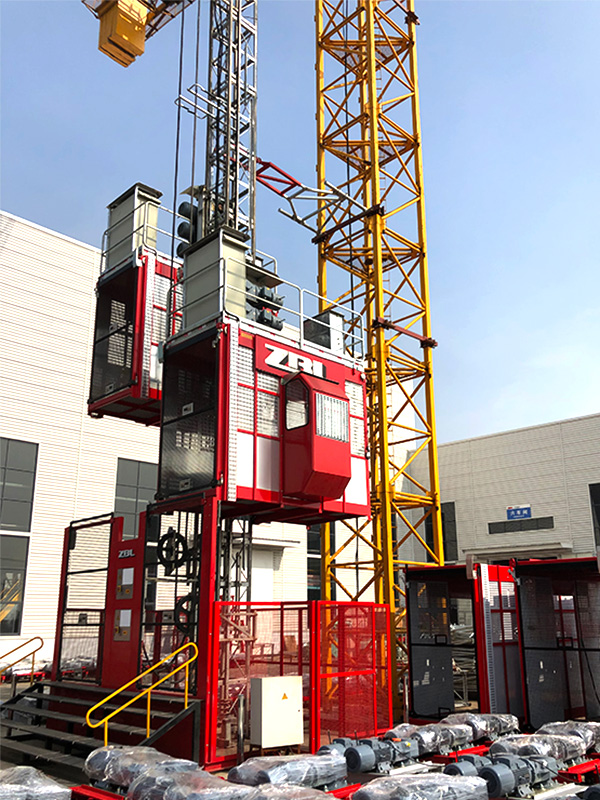
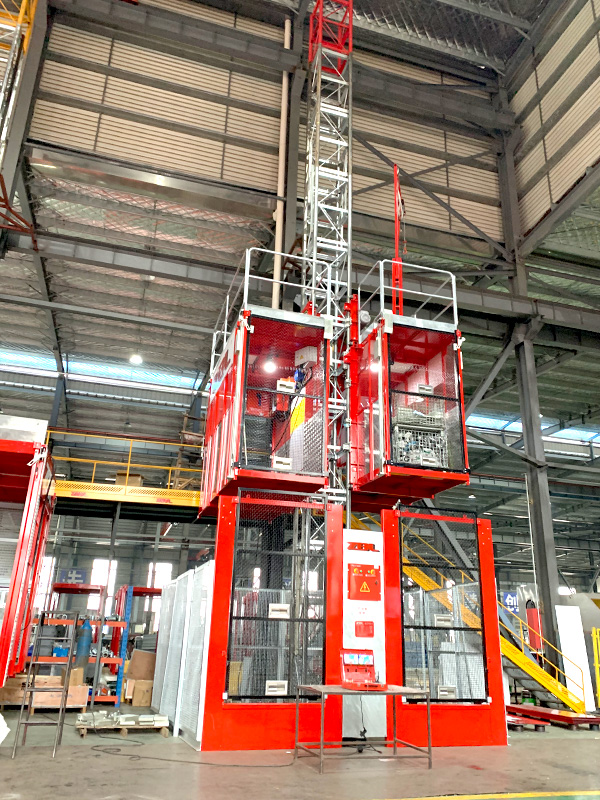
| Large-cage and multi-cage combination | Longer cage or twin cage, often on a doubled mast | Curtain wall, finishing trades, oversized panels | Mast loading, power demand, base bearing pressure |
Passenger-material versus material-only: the line you must not blur
A passenger-material hoist is rated and documented for people. That means interlocked cage doors with mechanical and electrical verification, an over-speed governor and anti-fall device, limit switches, buffers, overload sensing, and a load test recorded at commissioning.
A material-only hoist can look almost identical from the ground and still be a different machine. Cages are longer and heavier, doors are wider to swallow pallets and boards, and the passenger rating is absent by design. Treating it as a roughly equivalent personnel lift is the most common and most expensive misreading in this category.
Warning
If people ride, the machine must be passenger-rated with the paperwork to prove it. Cage size, motor rating and paint colour tell you nothing about that rating.
Where a site moves brick, block, tiles, mortar and formwork all day, a dedicated cargo machine is the more honest choice. The SCH100-100 series, for instance, is built as a variable frequency cargo hoist with wide loading access, a heavier cage and a duty cycle aimed at materials rather than shift-change crowds.
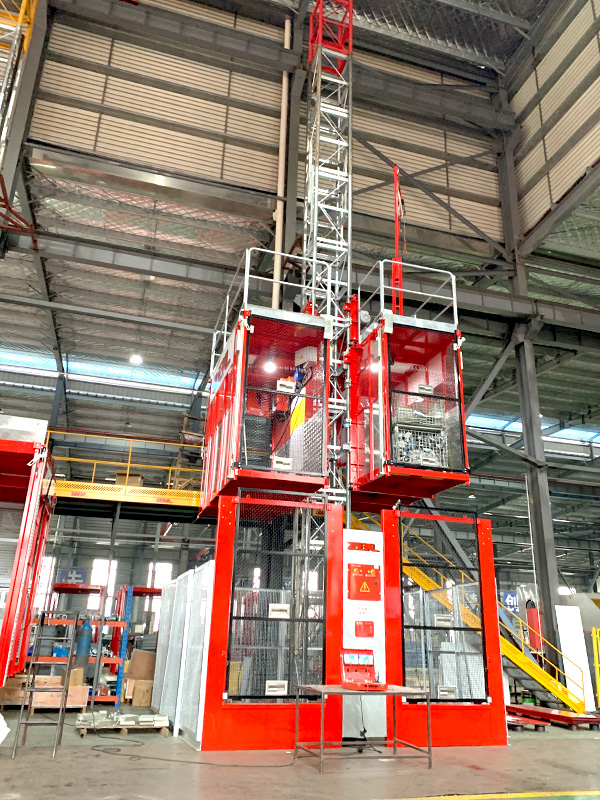 SCH100/100 Variable Frequency Cargo Construction HoistDedicated non-passenger cargo hoist with 1000 kg rated load and variable frequency drive for smoother lifting on low-rise material-handling duties.View Product →
Drive choices: fixed speed, variable frequency low speed, or medium-high speed
The motor and its control shape how a hoist feels far more than the capacity plate does. A fixed-speed two-speed motor starts with a jolt and stops with one. A variable frequency drive ramps torque in and out, which shows up as less mast sway, less cage bounce, more accurate levelling and gentler wear on pinions and racks.
Low-speed variable frequency variants trade travel speed for torque margin and softer starts, which suits heavy or awkward loads, tight shafts and retrofits anchored to finished structure. Medium and high-speed variants compress cycle time on tall towers where the hoist, not the crane, has become the logistics bottleneck. A common SC200-200 variable frequency machine runs a drive in the 37 kW class; the value is controlled torque from zero, not a bigger number on the data sheet.
One caveat worth stating plainly: a drive is only as good as its commissioning. Ask who sets the parameters, and whether they will re-set them on site once real loads are in the cage.
Cage configuration is where specifications quietly go wrong
Rated load is the number everyone compares and the one that explains least about throughput. What moves a crew is cage floor area, door opening, loading height and how fast a trolley can be turned around. A cage rated for two tonnes takes four-metre boards only if it is long enough, and it loads quickly only if the door and ramp suit the cart.
That is why a hoist should be specified as a configuration rather than a model number. The parts that decide daily usability usually appear as options:
- Mast sections: rack and tube quality, and how many metres you own per metre of building height
- Cage matching: internal dimensions, wall panels, ramps and load distribution
- Cage doors: single or double leaf, opening direction and interlock type
- Wall-mounted option for sites where the cage cannot stand off the facade
- Transmission mechanism and brake package
- Cable guiding section, which keeps the trailing cable tidy and out of the wind
Buy the accessory set with the machine, not after the first breakdown, because accessories are where lead times hurt. The lift accessories range shows how far a base model can be adapted before it becomes a special build.
When an intelligent hoist earns its premium
Intelligent covers a spectrum, from automatic floor selection and fault logging through to unmanned operation in a dedicated well shaft with remote monitoring. The premium is easiest to justify when the lift pattern is repetitive, the tower is tall enough that cycle time dominates, operators are scarce, or several machines on one site need watching from a single screen.
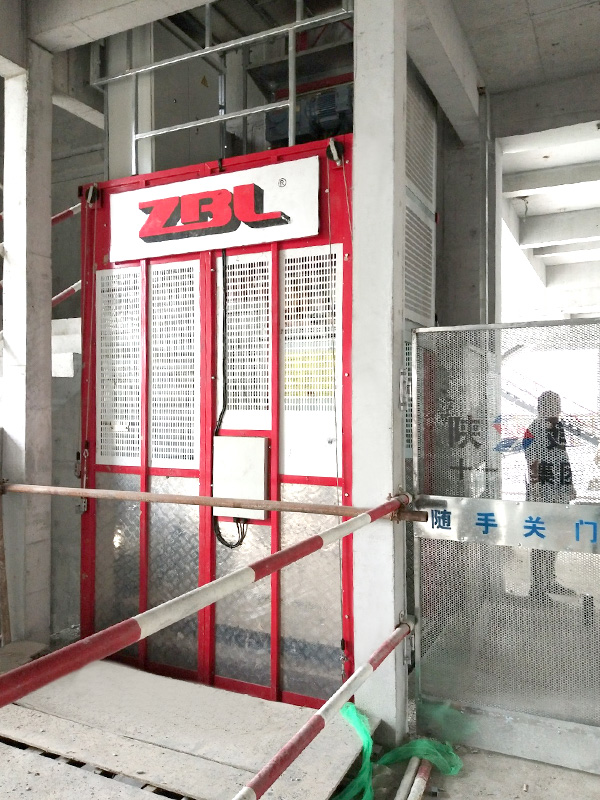
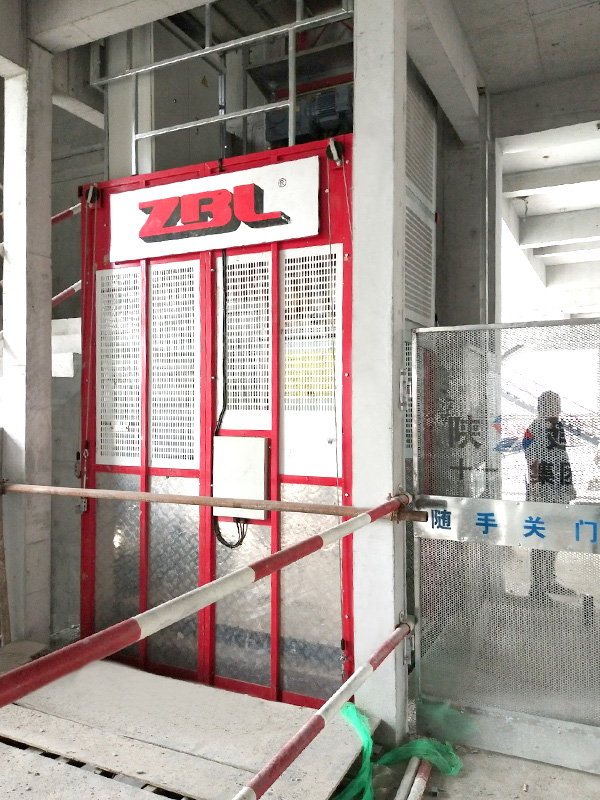
It is harder to justify on a low-rise job with two stops and one shift. The honest test is whether the automation removes a person from the cage or a delay from the schedule. If it does neither, you are buying instrumentation. Machines such as the SC200-200ZN intelligent construction hoist layer control and monitoring onto the same rack-and-pinion basis, and the idea has reached real sites, including the unmanned well-shaft installation at a Xi'an innovation centre project.
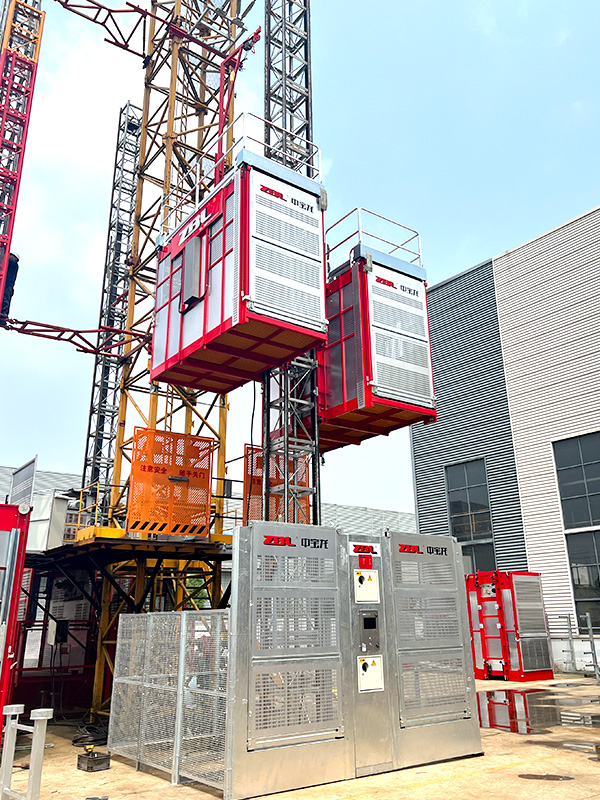 SC200/200ZN Intelligent Rack-and-Pinion Construction HoistAdds intelligent control, real-time monitoring and remote diagnostics to the SC platform; relevant where automation must reduce driver reliance or schedule delay.View Product →
Matching the hoist to the building, not to the catalogue
Four numbers decide most of the specification: total lift height, payload per trip, the cycle time the programme needs, and the power actually available at the base. Everything else is detail layered on top. Then check the constraints that are easy to miss:
- Tie plan: free-standing height above the top tie, anchor spacing, and who designs the wall connections
- Foundation: point loads from the base frame into slab or pad, plus drainage
- Power: starting current, cable run and size, and whether the board can carry a second machine later
- Environment: coastal salt, dust, heat, cold and altitude, where thin air reduces motor cooling and derates output
- Duty cycle: starts per hour matters more than load, especially on a materials machine
Note
Ask for a cycle-time calculation with the quotation, not a top-speed figure. A fast hoist that hesitates at every landing loses to a slower one with clean interlocks and a trained operator.
Safety and inspection: what to insist on before sign-off
Type matters less than the safety chain around it. Whatever the family, the same devices should be present, independently tested and documented: over-speed and anti-fall protection, upper and lower limit switches, door interlocks, overload protection, buffers, and a working emergency descent or escape route.
The routine is unglamorous and it is where most incidents are prevented: a daily pre-use check by the operator covering doors, interlocks, limits and brakes; a weekly inspection by site engineering covering ties, bolts, mast verticality and foundation; a thorough examination by a competent person at the required intervals; and pinion, roller and brake wear measured against the manufacturer's limits rather than against a feeling that it still works.
The documentation package is part of the product: test certificates, load test records, wiring diagrams, an operating manual and a spare-parts list with part numbers.
Purchase, rent or lease: the cost question, answered honestly
The purchase case is utilisation. If the machine will work most of the year across a rolling programme, ownership wins on cost per lift, and a well-maintained rack-and-pinion hoist holds its resale value. For one machine on one eleven-month programme, renting usually wins, because installation, dismantling, spares and inspection liability come with it. Either way, ask about the parts that fail: pinions, guide rollers, door locks, brake pads and cable guide rollers. Their lead time decides how many days a hoist stands idle.
Good practice
A hoist is only as good as its spares list. Confirm part numbers, local stock and delivery times in writing, and keep one spare pinion set and a door lock on site.
What to send in a request for quotation
A useful enquiry is short and specific. Include:
- Building height, floor spacing and the wind condition you will work in
- Passengers, materials, or both
- Maximum payload and the largest single item, with length, width and weight
- Required cycle time, or the number of trips per shift
- Power available at the base, including cable distance
- Tie-in responsibility and any facade constraints
- Delivery date, installation scope and who commissions the machine
- Documentation, operator training and the spare-parts package
The types of construction hoist on a modern site are few, and the differences between them are structural rather than stylistic: how the load is held, who is allowed to ride, how the drive delivers torque, and how the cage is configured. Get those four right and the specification largely writes itself.
It also helps to buy from a manufacturer that makes the mast, cage, drive package and accessories in one plant, because the parts that wear are the parts that must arrive quickly. Jiangsu Zhongbaolong builds rack-and-pinion hoists and their accessories in Dongtai, Jiangsu, and quotes a configuration against a specific building rather than a generic model.
