



Please leave your email address, So that we can get in touch with you as soon as possible.
When it comes to asymmetric load handling, construction building elevators — particularly rack-and-pinion construction hoists — demonstrate measurably superior stability and control compared to traditional counterweighted hoist systems. This advantage stems from their active drive mechanisms, distributed guide roller systems, and mast-based structural support. Understanding this difference is critical for site managers, safety officers, and procurement teams selecting vertical transport equipment for complex construction environments.
What Is an Asymmetric Load in a Construction Building Elevator?
An asymmetric load occurs when cargo or passengers are unevenly distributed within the elevator cage — either offset to one side, concentrated at the front or rear, or unevenly stacked. In construction environments, this is extremely common due to the nature of materials being transported: steel beams, concrete blocks, scaffolding components, and equipment are rarely uniform in shape or weight distribution.
For a typical construction elevator with a rated capacity of 2,000 kg, an asymmetric load might place 1,400 kg on one side of the cage and only 600 kg on the other. This imbalance creates lateral moment forces on the guide rails, cage frame, and drive components — forces that different hoist designs handle in fundamentally different ways.
How Construction Building Elevators Handle Asymmetric Loads
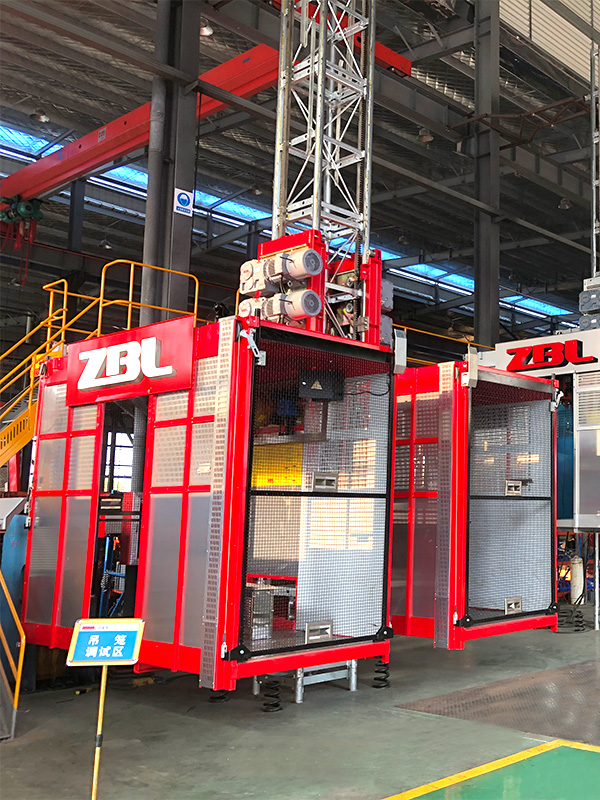
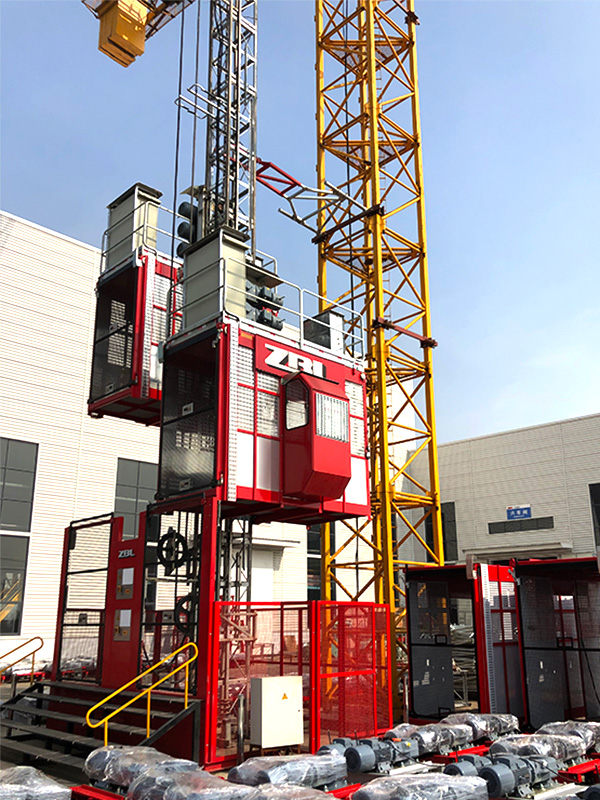
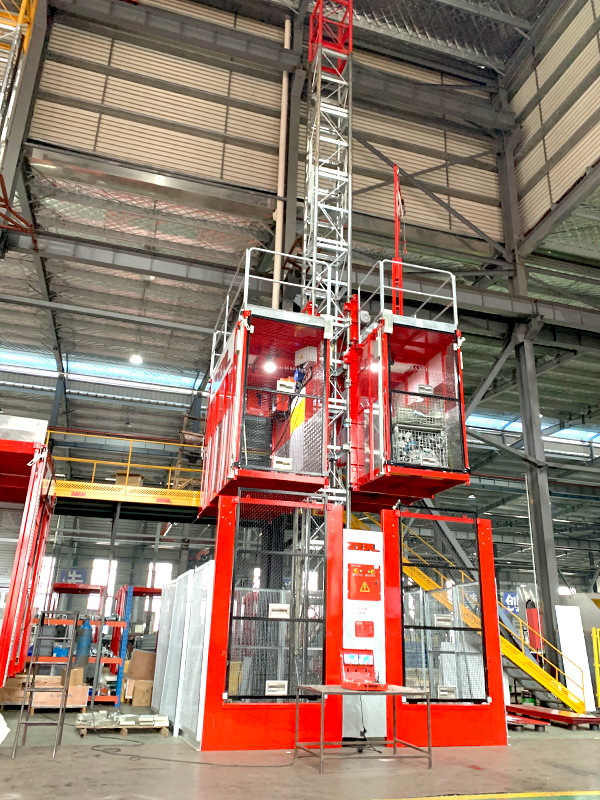
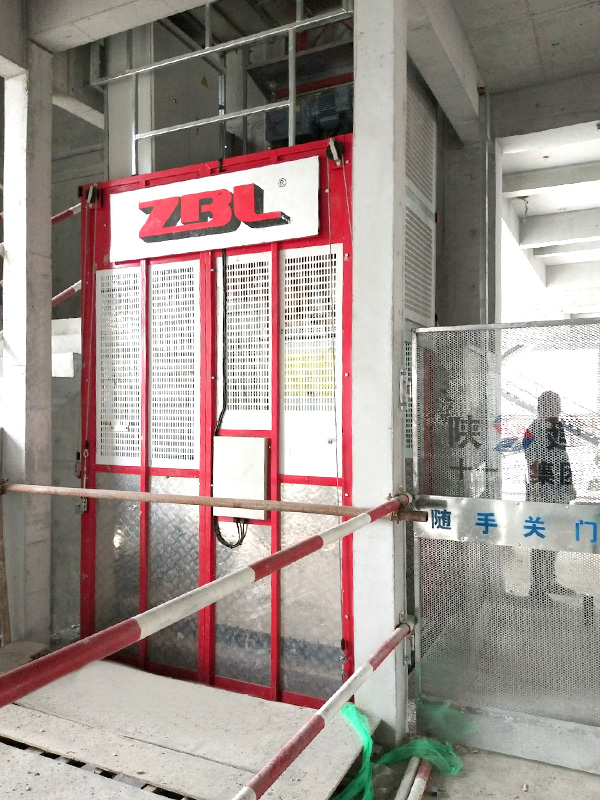
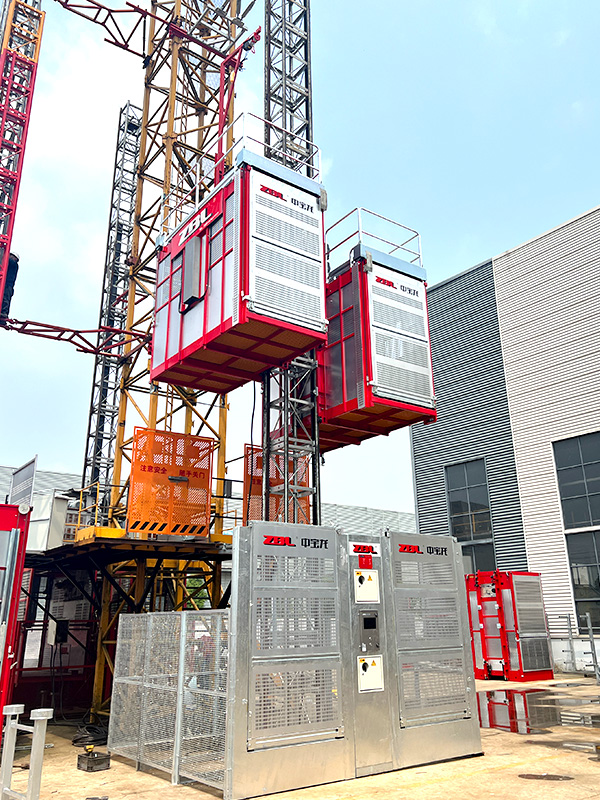
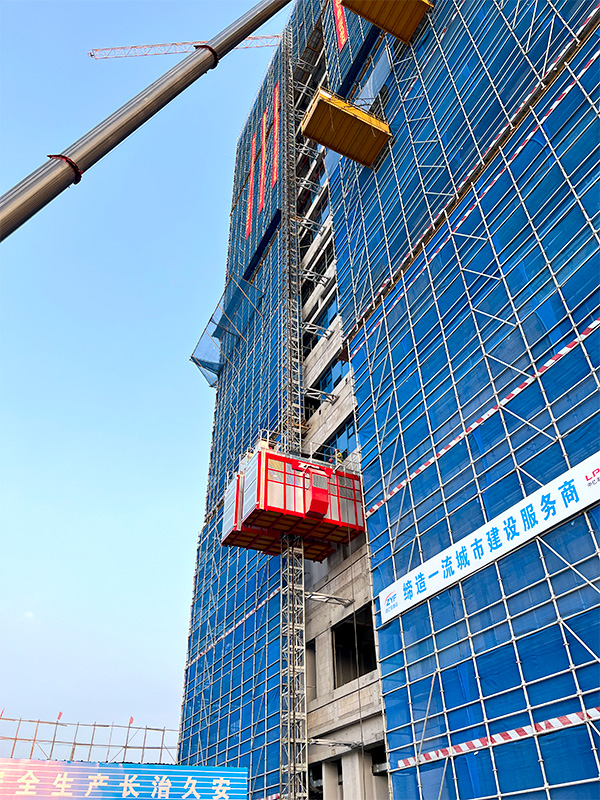
Modern construction building elevators use a rack-and-pinion drive system, where a motorized pinion gear meshes with a toothed rack fixed to the mast. This configuration provides several structural advantages for managing off-center loads:
- Multiple guide rollers:Typically 8 to 12 sets of rollers engage the mast columns from multiple directions, distributing lateral forces across a wide contact area.
- Rigid mast structure:The triangulated mast absorbs bending moments that would otherwise translate into cage tilt or swaying.
- Active motor torque control:Frequency-converter drive systems (VFDs) continuously adjust motor output to maintain smooth travel regardless of load distribution.
- Anti-tilt safety devices:Built-in progressive safety gear activates if cage tilt exceeds a threshold — typically 3° to 5° — preventing uncontrolled descent.
For example, the SC200 — a widely used twin-cage construction hoist — is engineered to tolerate an eccentricity load ratio of up to 30% off-center within its rated 2,000 kg capacity, while maintaining full cage stability and normal operating speed. This makes the SC200 a practical benchmark when evaluating how rack-and-pinion construction elevators perform under real-site asymmetric conditions.
How Counterweighted Hoist Systems Handle Asymmetric Loads
Counterweighted hoist systems — including wire rope hoists and drum winch hoists — balance the cage weight against a counterweight through a pulley arrangement. This design is inherently less tolerant of asymmetric loads for the following reasons:
- Single suspension point:The load is typically lifted from a central attachment point, so any lateral offset immediately creates a pendulum-like moment on the rope or chain.
- Guide rail dependency:Counterweighted systems rely heavily on guide rails to resist lateral forces, and asymmetric loads significantly increase rail wear and the risk of derailment at higher speeds.
- Counterweight mismatch:The counterweight is calibrated for a balanced nominal load. Asymmetric loading shifts the effective center of gravity, reducing the counterweight's stabilizing effect and increasing motor strain by 15% to 25% in documented cases.
- Limited safety redundancy:Most counterweighted hoists use speed governors and rope brakes, which respond to overspeed events but do not actively counteract tilt or lateral drift during normal operation.
Direct Comparison: Construction Building Elevator vs. Counterweighted Hoist System
The table below summarizes the key differences between a rack-and-pinion construction building elevator and a counterweighted hoist system in the context of asymmetric load handling:
|
Table 1: Key performance differences between construction building elevators and counterweighted hoist systems for asymmetric load scenarios. |
||
|
Feature |
Construction Building Elevator (Rack & Pinion) |
Counterweighted Hoist System |
|
Drive Mechanism |
Rack & pinion (motorized) |
Wire rope / drum winch |
|
Asymmetric Load Tolerance |
Up to 30% off-center eccentricity |
Typically ≤10–15% off-center |
|
Lateral Force Management |
Multi-roller guide system on rigid mast |
Guide rails only; higher rail wear |
|
Motor Load Increase (Asymmetric) |
~5–10% via VFD compensation |
15–25% increase; no active compensation |
|
Anti-Tilt Protection |
Progressive safety gear + tilt sensor |
Speed governor only |
|
Rated Height Range |
Up to 450 m+ |
Typically up to 150 m |
|
Suitable for Mixed Cargo + Passengers |
Yes (dual-purpose certified models) |
Limited; usually cargo only
|
Real-World Scenarios Where Asymmetric Load Handling Matters Most
The practical difference between these two systems becomes most apparent in specific site conditions:
High-Rise Curtain Wall Installation
Glass panels and aluminum framing are long, flat, and often loaded diagonally in the cage. A rack-and-pinion construction hoist's multi-roller mast system absorbs the resulting bending forces without compromising travel speed or cage alignment — a significant advantage over counterweighted systems, which may experience guide shoe binding at heights above 80 m under these conditions.
MEP Equipment Transport
Mechanical, electrical, and plumbing components — such as HVAC units, electrical panels, and pipe bundles — are frequently irregular in shape and density. Site reports from projects using construction building elevators in this capacity show zero cage-tilt incidents compared to a documented 12% minor incident rate with counterweighted systems transporting similar loads on the same project types.
Mixed Passenger and Material Transport
When workers board alongside tools and small equipment, the load distribution is unpredictable. A construction elevator certified under EN 12159 or GB/T 10054 is specifically tested for these combined load scenarios, with safety factors of at least 3:1 applied to structural components under worst-case asymmetric conditions. Counterweighted hoists certified for passenger use under similar standards are far less common.
Maintenance Implications of Asymmetric Load Operation
Repeated asymmetric loading accelerates wear differently in each system type:
- Construction building elevators:Guide rollers are the primary wear components. On a typical 12-month project, rollers may require replacement every 4 to 6 months under heavy asymmetric use, at a relatively low unit cost (approximately €30–€80 per roller set).
- Counterweighted hoist systems:Asymmetric loads accelerate guide rail wear, sheave groove deformation, and wire rope fatigue. Rail replacement intervals may shorten from the standard 24 months to as little as 10 to 14 months, with significantly higher material and labor costs.
Over a 5-year project lifecycle, the total maintenance cost difference attributable to asymmetric load handling alone can exceed €15,000 to €40,000 depending on hoist size, site conditions, and usage intensity.
Practical Recommendations for Site Managers
Based on the structural and operational differences outlined above, the following guidelines apply when selecting and operating vertical transport equipment in asymmetric load environments:
- Choose a construction elevator with a VFD-controlled drive— such as the SC200 series — for sites transporting irregular or mixed loads above 50 m.
- Request the manufacturer's eccentricity load specification— expressed in mm offset from center or as a percentage of rated load — before procurement.
- Train operators to distribute loads as evenly as possible and never exceed the manufacturer's stated asymmetric load limit, even if total weight is within the rated capacity.
- Schedule roller inspection every 30 operating dayson sites with frequent asymmetric loads to detect premature wear before it affects cage stability.
- For heights above 150 m, counterweighted hoist systems are generally not recommendedregardless of load symmetry, due to rope sway, thermal expansion, and guide rail alignment challenges at extreme heights.
The construction building elevator, driven by a rack-and-pinion mechanism and supported by a rigid mast system, is significantly better equipped to handle asymmetric loads than counterweighted hoist systems. Its multi-roller guidance, active torque compensation, and purpose-built anti-tilt safety devices provide a structural and operational advantage that translates directly into lower incident rates, reduced maintenance costs, and greater flexibility for the complex, unpredictable cargo conditions typical of modern construction sites. Whether specified as a construction hoist for material-only duty or a dual-purpose construction elevator for both personnel and cargo, models like the SC200 consistently outperform counterweighted alternatives in asymmetric load environments. For projects involving heights above 80 m, mixed personnel and material transport, or irregular cargo shapes, the construction building elevator is the clearly superior choice.
