



Please leave your email address, So that we can get in touch with you as soon as possible.
Mechanical Engineering · Lifting Systems
The Force Behind the Rise — How a Construction Elevator Lifts What Gravity Refuses to Give Up
Torque, gear ratios, and a rack bolted to a rising mast — the mechanics behind every vertical foot a hoist climbs. Here is the drivetrain logic that turns rotational force into thousands of kilograms moving skyward, safely and on schedule.
The Direct Answer
A construction elevator generates the lifting force needed to move heavy loads vertically through an electric motor driving a rack and pinion mechanism, where a toothed gear climbs along a fixed rack mounted on the mast. The motor's rotational torque is converted into vertical thrust as the pinion gear meshes with the rack teeth, propelling the cage upward or controlling its descent. This system typically produces enough force to lift between 1,000 kg and 3,000 kg depending on the model, with motor power ratings commonly ranging from 11 kW to 30 kW per drive unit.
construction elevator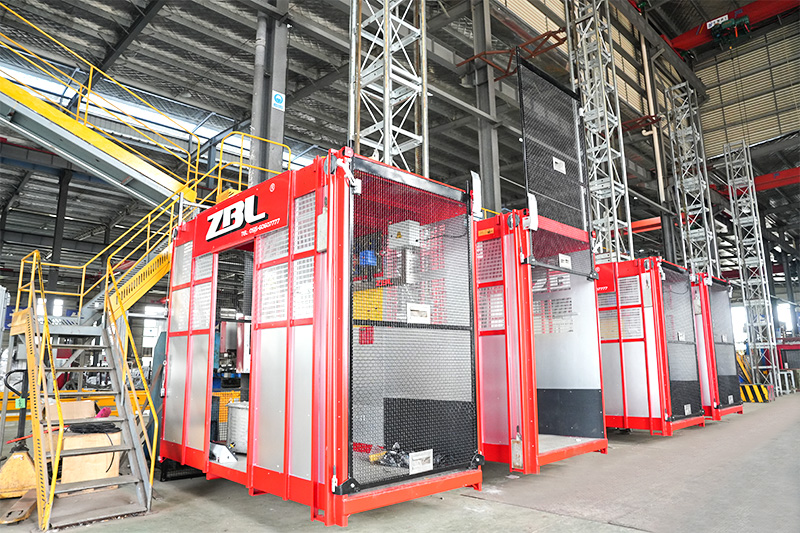
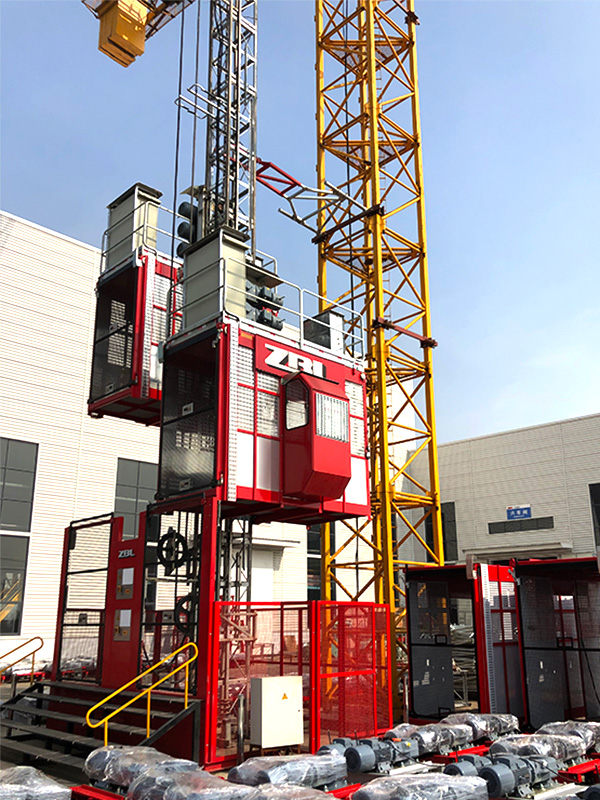
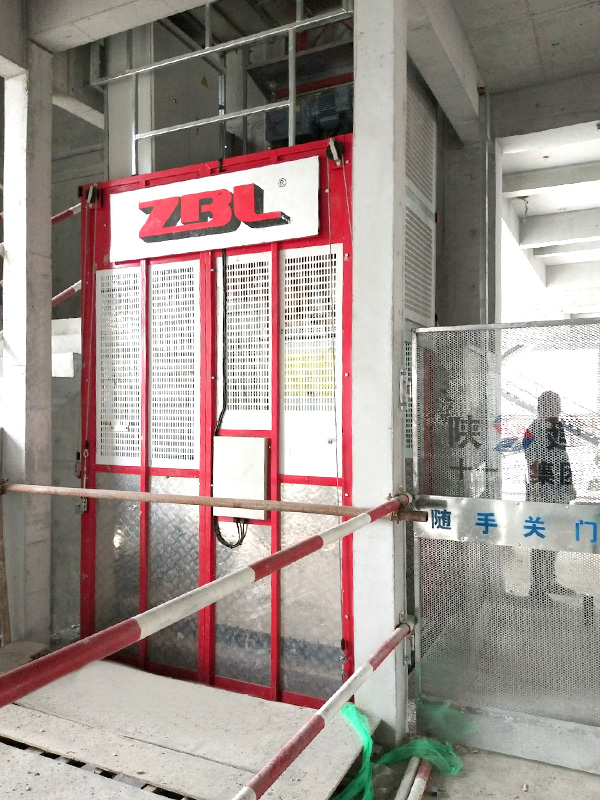
Unlike traditional rope-and-pulley elevators, a construction hoist relies on this positive mechanical engagement to maintain precise control even at significant heights, making it a reliable choice for both material transport and as a construction personnel hoist carrying workers safely between floors.
This mechanical arrangement is not accidental. It reflects decades of engineering refinement aimed at solving one specific problem — how to move heavy, unpredictable loads up an unfinished structure without the counterweight systems built into permanent passenger elevators.
The Role of the Electric Drive Motor
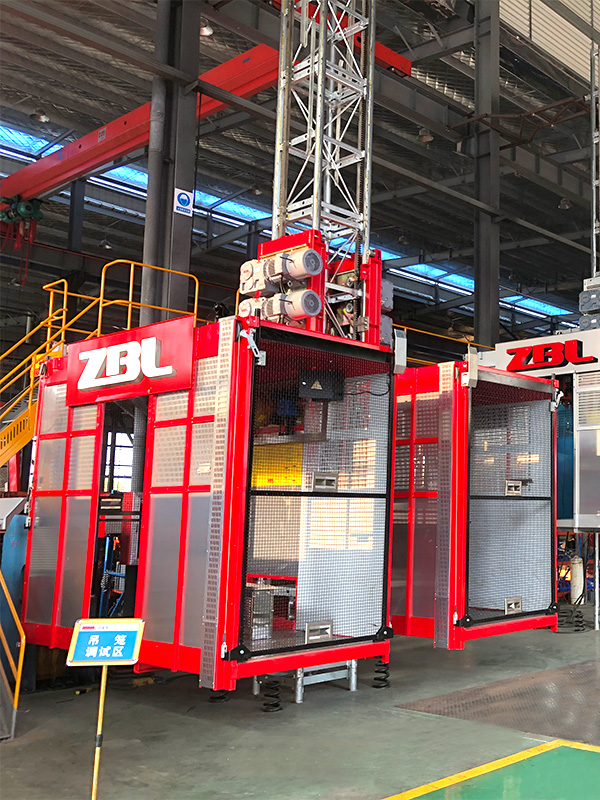
At the core of every construction elevator's lifting system is one or more electric motors mounted on the cage itself. These are typically three-phase asynchronous units, chosen for their ability to deliver consistent torque under variable load conditions. As the motor shaft spins, it drives a reduction gearbox that lowers rotational speed while multiplying torque — a necessary step, since raw motor speed alone would be far too fast and lack the force to lift heavy materials.
Key Motor Specifications
- Power output typically between 11 kW and 30 kW per motor unit
- Dual or quad motor configurations for larger twin-cage models
- Frequency inverter control for smooth acceleration and deceleration
- Thermal overload protection to prevent motor burnout under sustained use
Many modern units use variable frequency drives, letting the motor ramp up gradually rather than engaging at full torque instantly. This reduces mechanical shock on the drive train and provides a smoother ride — which matters considerably when an elevator for construction sites is also functioning as a construction personnel hoist, transporting workers rather than only materials.
Rack and Pinion: Converting Rotation Into Vertical Movement
The rack and pinion system is the mechanical heart of the lifting process. A steel rack — essentially a long toothed bar — runs the full height of the mast, section by section, as the structure rises. The pinion gear, mounted on the motor's output shaft, meshes directly with these teeth. As the motor turns the pinion, the gear teeth climb along the fixed rack, pulling the entire cage upward with it.
This positive engagement design offers a distinct advantage over friction-based or rope-driven systems: there is virtually no slippage. Because the pinion teeth are physically locked into the rack teeth, lifting force transmits directly and predictably, regardless of load fluctuations — one reason rack and pinion designs became the industry standard for hoists lifting substantial tonnage to heights that can exceed 200 meters on tall building projects.
Info
In a friction-drive system, pulling force depends on friction between rope and drive sheave — if the cable is wet or worn, that friction can drop sharply. The rack and pinion mechanism removes this risk entirely through mechanical interlock.
Gearbox Reduction and Torque Multiplication
Between the motor and the pinion gear sits a reduction gearbox, critical to generating usable lifting force. Electric motors naturally spin at high speeds, often around 1,400 to 1,500 revolutions per minute — far too fast to control a loaded cage directly, and lacking the torque to move it. The gearbox reduces this rotational speed through internal gearing, typically achieving reduction ratios between 1:20 and 1:50 depending on the model.
| Reduction Ratio | Resulting Lift Speed | Typical Application |
|---|---|---|
| 1:20 | 0.8 – 1.0 m/s | Light material hoisting |
| 1:35 | 0.5 – 0.7 m/s | Standard mixed-use hoist |
| 1:50 | 0.3 – 0.5 m/s | Heavy duty material transport |
A lower final speed with higher torque output is generally preferred for hoists carrying heavier loads, allowing the motor to generate greater lifting force at the pinion without exceeding its rated capacity.
Multiple Drive Units for Heavier Loads
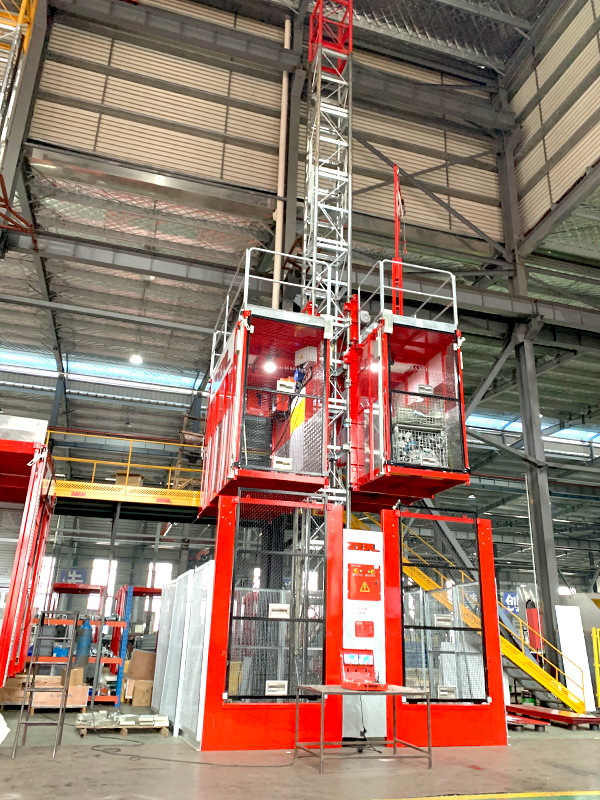
Larger construction elevators — particularly twin-cage models or those rated for heavier tonnage — often distribute lifting force across two or four separate motor and pinion assemblies working in tandem. Rather than relying on a single oversized motor, this distributed approach shares total lifting force across multiple points of engagement with the rack, reducing stress on any single gear assembly while building in redundancy.
Advantages of Distributed Drive Systems
- Reduced load on individual gear teeth, extending component lifespan
- Continued operation at reduced capacity if one motor fails
- More even force distribution along the rack, reducing wear patterns
- Ability to scale lifting capacity by adding motor units rather than redesigning the drive system
Success
This redundancy matters most when the unit doubles as a construction personnel hoist — continued safe operation, even in a reduced-speed emergency mode, can be critical if a drive component faults while workers are aboard.
Counter-Torque and Braking During Descent
Generating lifting force is only half the equation. Controlling the cage during descent requires the same motor and gearbox system to work in reverse, applying counter-torque to prevent free-fall acceleration under gravity. The motor acts as a controlled brake, regulating how the pinion rotates backward along the rack teeth, letting the cage descend at a steady, predictable speed rather than accelerating under its own weight plus cargo.
Frequency inverters play an important role here too, modulating motor resistance dynamically based on load weight and desired descent speed. In more advanced models, this regenerative braking effect can even recover a portion of electrical energy back into the system, improving overall efficiency.
How Load Weight Affects Required Lifting Force
The lifting force required is directly proportional to the combined weight of the cage structure, the cargo or passengers, and friction losses within the drive system. Engineers calculate this from the relationship between torque, gear radius, and load weight, then apply a safety margin — commonly a factor of 5 to 1 or higher — ensuring the drive system never operates near its absolute limit during normal use.
A hoist rated to lift 2,000 kg at 0.6 meters per second, for instance, requires substantially more instantaneous torque during acceleration than during steady-state travel — which is why motor sizing accounts for peak transient loads, not just average operating conditions. This is a key reason an elevator for construction applications carries considerable reserve capacity beyond its stated rated load.
Power Supply Requirements for Consistent Lifting Force
Reliable lifting force depends heavily on a stable, adequately sized electrical supply. Most construction elevators run on three-phase power at 380V to 415V, with the site's main panel needing enough amperage to handle startup current surges that can briefly reach several times the motor's rated running current.
Common Power Supply Considerations
- Dedicated circuit breakers sized for peak startup current
- Voltage stabilizers on sites with fluctuating grid power
- Backup generator compatibility for continued operation during outages
- Cable sizing calculated for the full run length from site panel to hoist base
Warning
Insufficient power supply is a common cause of reduced lifting performance. A motor starved of adequate voltage cannot generate full rated torque, potentially triggering overload protection even when the mechanical load itself is within normal limits.
Maintenance Factors That Preserve Lifting Efficiency
Over time, wear on the rack teeth, pinion gears, and gearbox internals can gradually reduce lifting efficiency, even when the motor itself remains fully functional. Regular lubrication of the rack and pinion interface reduces friction losses, while periodic inspection for tooth wear helps catch problems before they escalate into reduced load capacity or unexpected downtime.
| Component | Maintenance Task | Frequency |
|---|---|---|
| Rack and pinion teeth | Lubrication and wear inspection | Weekly |
| Gearbox oil | Level check and replacement | Every 3–6 months |
| Motor bearings | Vibration and heat inspection | Monthly |
| Electrical connections | Tightness and corrosion check | Monthly |
Danger
Neglecting routine checks tends to show first as reduced lifting speed under load, followed by rising motor temperature and, in severe cases, premature gear failure. Since a construction personnel hoist carries workers, maintaining full lifting efficiency is a safety priority, not just an operational one.
Key Takeaways on Lifting Force Generation
The lifting force behind a construction elevator comes down to a well-coordinated sequence: an electric motor generates rotational torque, a gearbox multiplies that torque while reducing speed to a manageable rate, and a rack and pinion mechanism converts rotation into direct, slip-free vertical movement. Distributed multi-motor configurations add redundancy for heavier loads, while frequency inverters smooth both acceleration and controlled descent. Understanding this chain helps site managers appreciate why proper power supply, routine lubrication, and gear inspection aren't optional extras — they're what keeps an elevator for construction projects operating at its full rated lifting capacity, day after day, load after load.
