



Please leave your email address, So that we can get in touch with you as soon as possible.
Reinforced Structural Design:
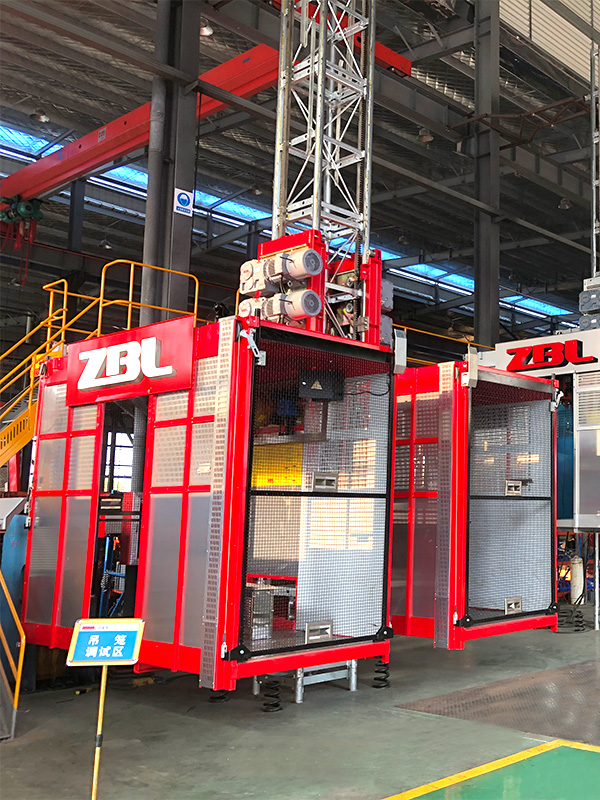
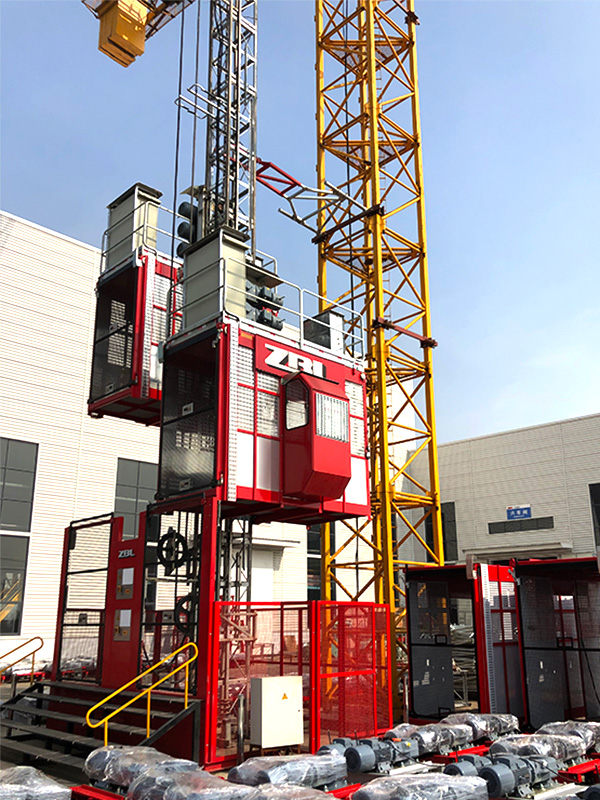
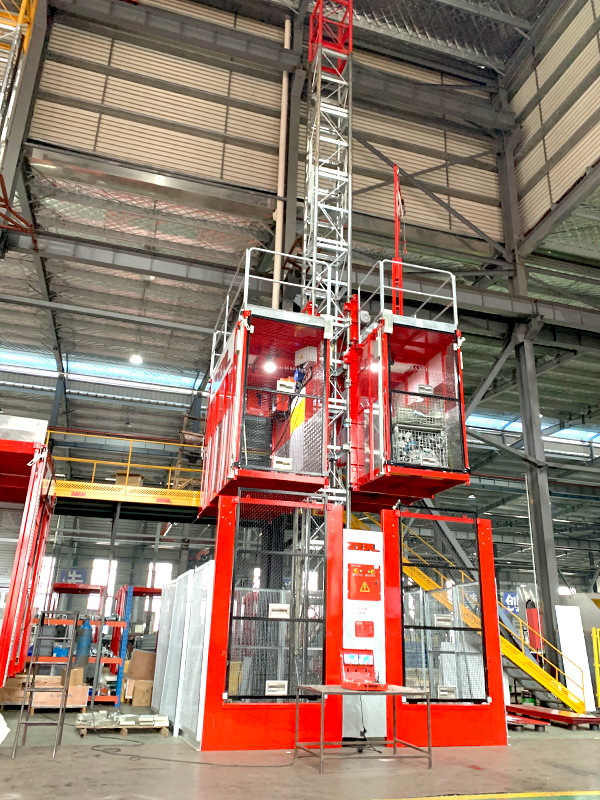
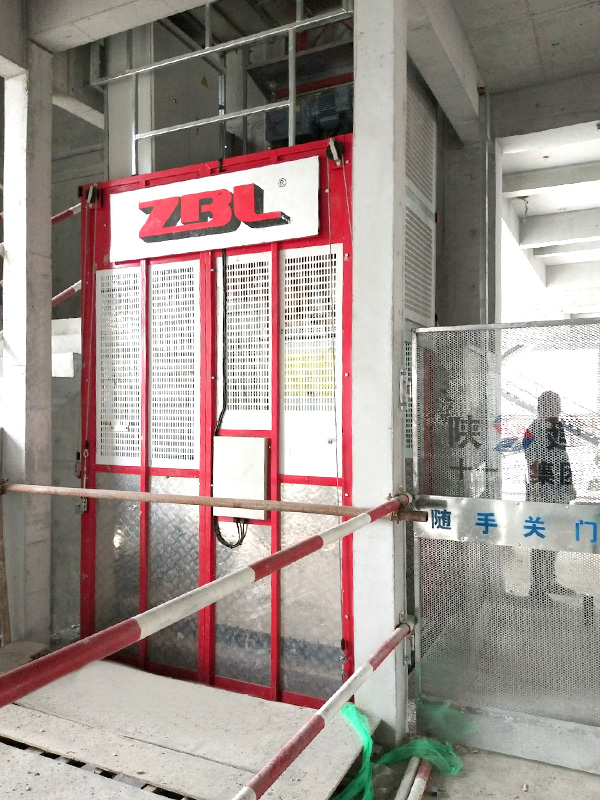
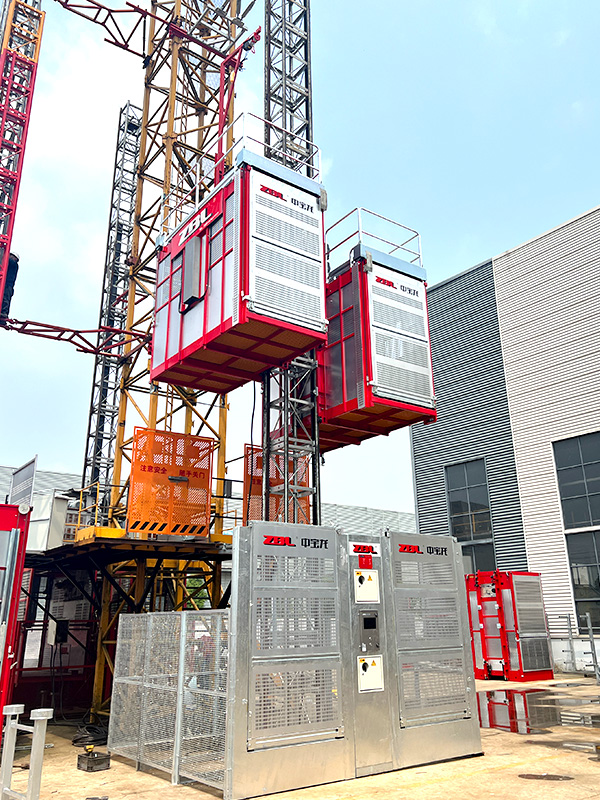
Construction building elevators (hoists) are built to endure the harsh environments of a construction site. The structural design of these hoists is made from heavy-duty, high-strength materials, such as reinforced steel or alloy frames, to ensure that the elevator frame, platform, and components can bear the weight of extremely heavy loads. This robust construction prevents deformation or failure when lifting materials that can weigh tons, such as pre-cast concrete elements, steel beams, or construction machinery.
Platform Size and Configuration: The platforms of construction hoists are designed to accommodate large and irregularly shaped items that cannot be transported by conventional elevators. These platforms are often open-sided to allow for easy loading and unloading, but they are reinforced with side rails, support structures, or extended platforms to prevent the load from shifting. Some platforms are extendable, allowing for greater space to accommodate oversized materials such as long steel rods, construction scaffolding, or large boxes of building materials.
Heavy-duty Cables and Motors: The hoists are equipped with reinforced steel cables and powerful electric motors capable of lifting heavy loads without risk of snapping or malfunction. These components are selected for their ability to withstand the high forces exerted when lifting large or oddly shaped loads.
Load Distribution and Balance:
One of the primary concerns when lifting irregularly shaped or heavy loads is ensuring that the weight is distributed evenly across the platform to avoid tilting, swaying, or instability. Construction hoists address this issue through sophisticated load distribution techniques:
Load Distribution Mechanisms: These hoists may use multiple anchor points on the platform to tie down and secure materials. For example, materials like steel beams or bricks can be secured at several points across the platform to prevent shifting during transport. By properly securing the load at several strategic locations, the hoist ensures that the weight is balanced and that materials do not become unsteady during the ascent or descent.
Balanced Lifting Mechanisms: Hoists equipped with hydraulic lifts or counterweights work to balance the platform as the load is being lifted. For example, counterweights positioned on the opposite side of the platform can neutralize the torque created by lifting heavy or unevenly distributed materials. This helps maintain the level alignment of the platform and prevents unnecessary sway or tipping.
Safety Mechanisms for Irregular Loads:
When lifting large or irregularly shaped materials, there are additional risks of shifting, tipping, or falling materials. To mitigate these risks, construction hoists are equipped with a range of safety mechanisms that keep materials secure and prevent accidents.
Guardrails and Safety Barriers: Safety is of paramount concern, especially when lifting long and narrow items such as metal rods, pipes, or scaffolding. Construction hoists feature high-strength guardrails and mesh barriers that enclose the sides of the platform, effectively preventing materials from sliding off or falling. These guardrails are typically height adjustable, ensuring that they are the proper size for each load and can be used to contain smaller or oddly shaped items like bags of cement or building tools.
Anti-Sway Mechanisms: One of the challenges when lifting long, bulky, or loose materials is preventing them from swaying or swinging during transport. Anti-sway systems installed on construction hoists help limit lateral movement, ensuring a stable ride for materials, even when there is wind or turbulence caused by movement in the structure. These systems include load dampers or cables that restrict horizontal movement, which effectively reduce the risk of cargo swaying off balance and causing damage or injury. For longer materials like beams, guide ropes may also be used to ensure the load remains centered and moves straight up and down.
Advanced Hoisting Mechanisms and Controls:
In modern construction hoists, advanced hoisting mechanisms and control systems are integral in maintaining stability and precision during operation.
Variable Speed Controls: The hoist’s speed can be adjusted based on the weight and type of materials being lifted. Slower speeds are especially beneficial when lifting heavy or irregularly shaped materials, as this reduces the chance of sudden jerks or unstable movements. A smooth, gradual lift prevents stress on the materials being transported and ensures that the hoist’s mechanical components don’t experience unnecessary strain. This is particularly critical when lifting delicate materials or when transporting materials across narrow spaces.
Load Sensors and Safety Stops: Many construction hoists come with load sensors that continuously monitor the weight being carried by the platform. If the load exceeds the maximum rated capacity of the hoist, the system automatically engages a safety stop, preventing further lifting and reducing the risk of overloading. These sensors also help the operator determine if the load is centered and balanced, ensuring that the elevator’s performance remains stable during operation.
Wind and Environmental Stability:
Construction sites, especially those on high-rise buildings, are often subject to environmental challenges, including wind, rain, and extreme temperatures. Construction hoists are designed with these factors in mind to ensure that the hoist can continue functioning safely and effectively in adverse conditions.
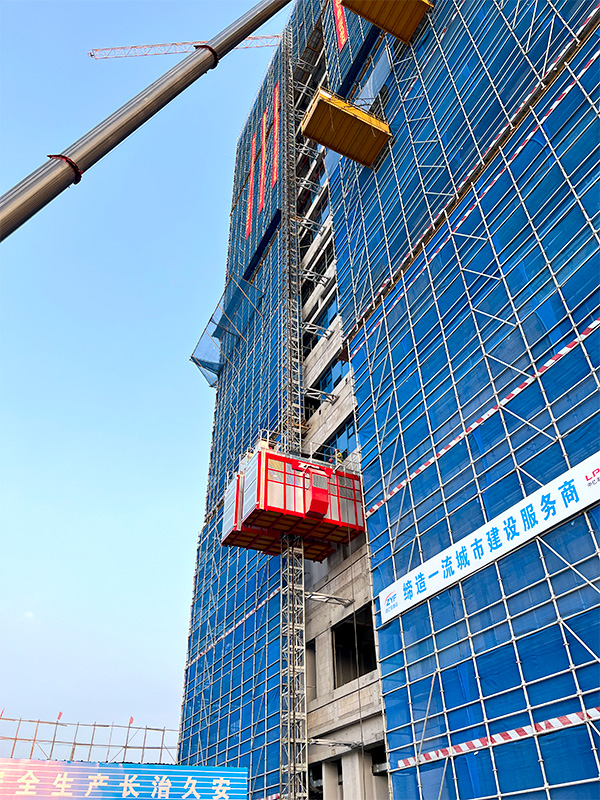
Wind Resistance: When hoists are used at elevated heights, wind can create significant challenges by causing the hoist platform to sway or destabilize, especially when carrying large, bulky loads. To address this, some modern construction hoists are equipped with wind speed sensors that automatically halt operation when wind speeds exceed a predetermined safe limit. Additionally, some hoists have enclosed platforms or shielding to reduce the impact of wind on the load. For high-rise projects, wind-resistant designs are incorporated to ensure that lifting continues smoothly without external disruption.
Weatherproofing: To protect against rain, snow, or extreme heat, construction hoists are built with weather-resistant materials in their electrical components and structural elements. For example, the motor housing and control panels may be sealed against moisture to prevent electrical failures. Anti-corrosion coatings are often applied to metal parts to ensure longevity even in challenging outdoor environments.
Mechanical and Electrical Safety Features:
Modern construction hoists incorporate advanced mechanical and electrical safety systems that reduce the likelihood of failure or accidents during lifting operations.
Overload Protection: To prevent damage to the hoist, its components, and to maintain operational safety, construction hoists come with overload protection mechanisms. These systems are designed to detect when the load exceeds the hoist’s safe working limit, automatically engaging the hoist's safety brakes and cutting off power. This feature is vital when lifting heavy or irregularly shaped loads, which may cause the operator to misjudge the load's weight or dimensions.
Fail-Safe Braking Systems: Fail-safe braking systems are integrated into construction hoists to prevent any accidents in the event of a power failure or mechanical issue. These brakes engage automatically if the hoist begins to descend too quickly or experiences a loss of power, holding the platform in place. Redundant braking systems ensure that even if one brake fails, the load remains safely secured until maintenance can be conducted.
