



Please leave your email address, So that we can get in touch with you as soon as possible.
Vertical transport systems
Construction Hoist System Planning: What Decides Whether Your Tower Gets Fed on Time
A construction hoist system is not one machine picked off a catalogue. It is a matched set of decisions about drive type, speed class, cage geometry, mast configuration and safety devices, and most of them are fixed weeks before the first cage moves.
Picture a 32-storey residential tower on a tight programme. The site hires a low-speed, single-cage hoist because the monthly rate is lower. Three weeks later the finishing trades are queuing at ground level, the cage is completing far fewer trips per hour than the programme assumed, and the saving has quietly moved into overtime. Nothing is broken; the system was sized by price instead of demand.
The opposite mistake costs just as much: a variable-frequency machine specified for a 40 m low-rise job, where the extra speed is never used but the price and the spares complexity are. Size the hoist against three things instead: the height and shape of the building, the number of trades it must serve, and the tonnage that has to move every day.
What a Construction Hoist System Actually Includes
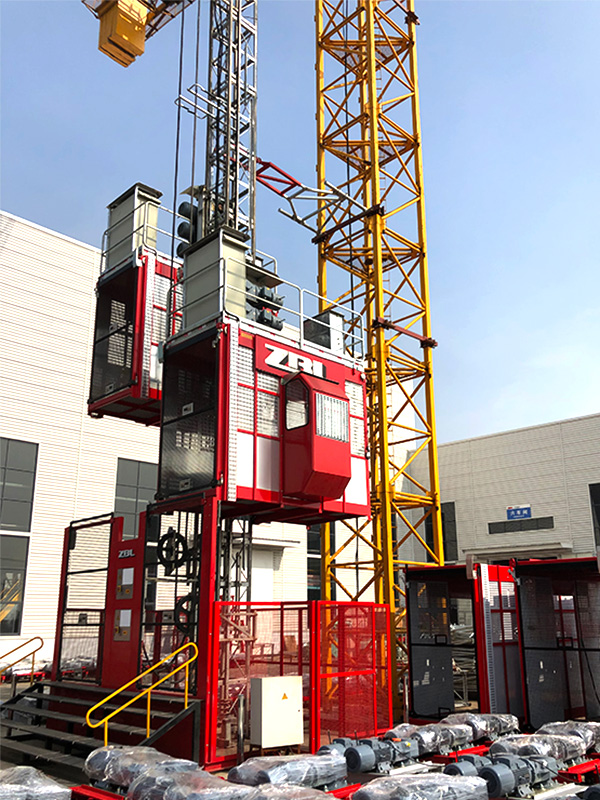
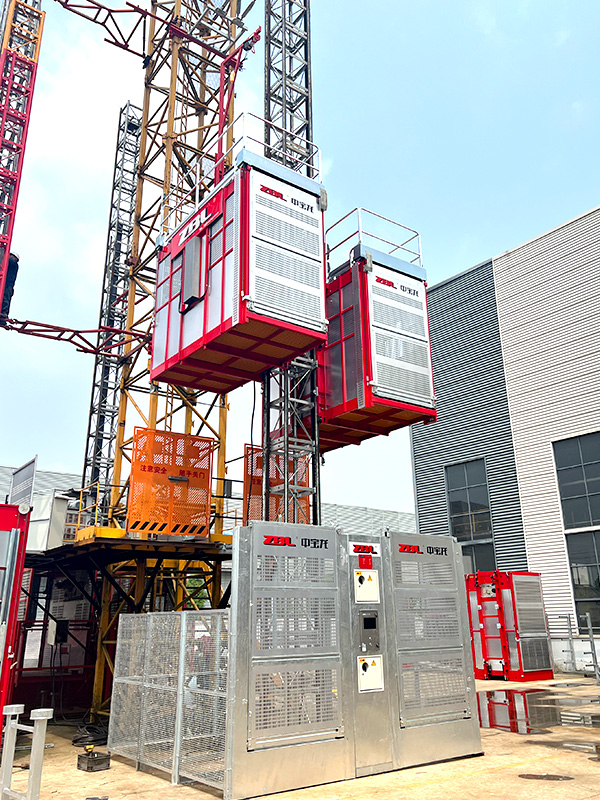
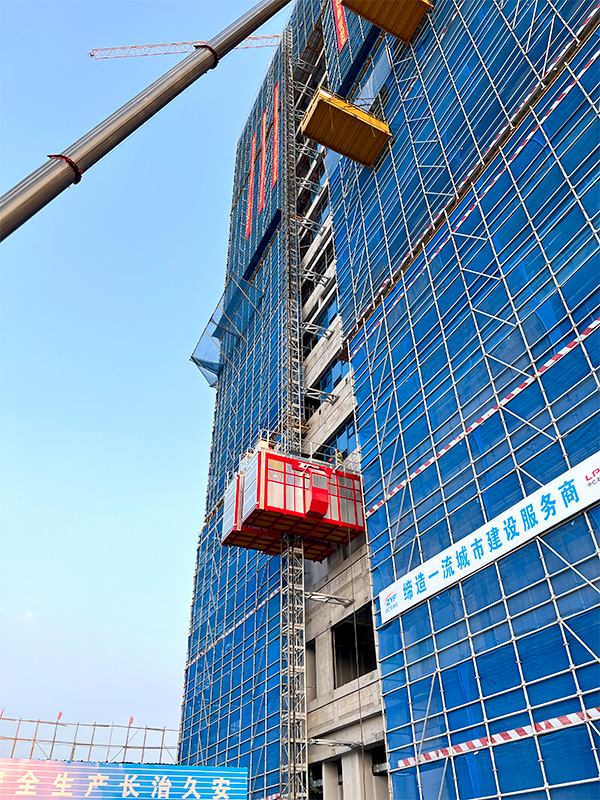
On a rack-and-pinion construction hoist, the cage is the only part anyone photographs. The parts that decide uptime are rarely visible from the site gate.
- Mast sections, bolted or pinned to form the vertical track and carry load down to the foundation.
- Drive unit and pinion, where motor and gearbox turn electrical input into lifting force on the rack.
- Cage, floor and doors, whose geometry sets what can be loaded and how quickly it is secured.
- Progressive anti-fall safety gear, which grips the rack if the cage exceeds its trip speed.
- Limit switches and interlocks for upper, lower, deceleration and final limits, plus door monitoring and overload sensing.
- Cable guiding sections, which manage the trailing cable over long travel heights.
- Tie-ins, base frame and landing gates, the interface between the hoist, the building and the people using it.
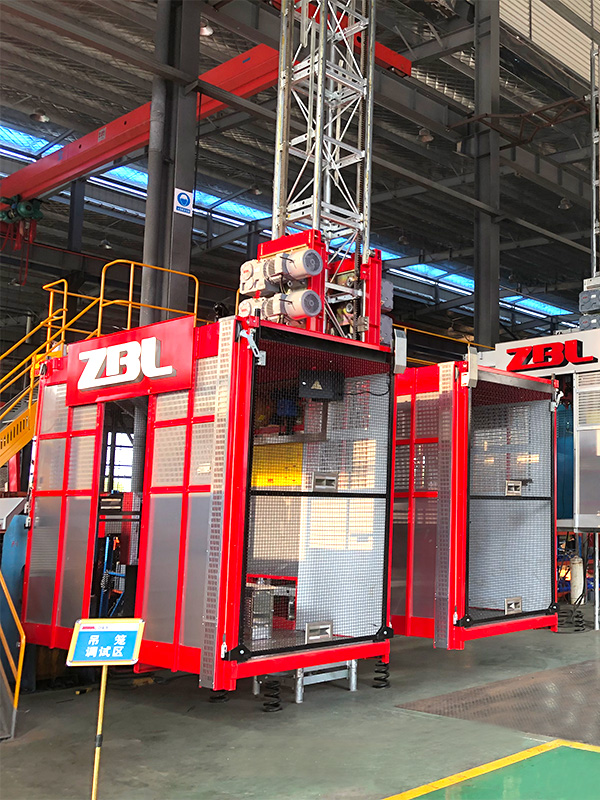
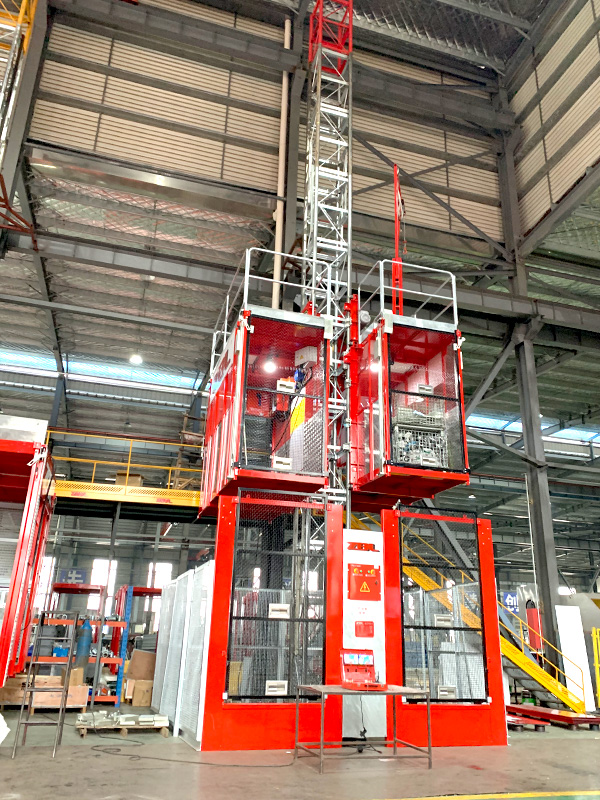
The SC200 platform is the shape most of these systems take: a rack-and-pinion cage on a bolted mast, configured by speed, cage size and control type rather than redesigned for every project.
When a site reports that the hoist keeps stopping, the cause is more often a tie-in detail, a cable guiding problem or a damaged door interlock than the motor. Those are system decisions, not brand decisions.
Rack-and-Pinion Hoists vs. Other Vertical Transport Options
Before comparing suppliers, confirm the equipment category suits the job. These four options are often quoted against each other on the same tender.
| System | Best fit | Main limits |
|---|---|---|
| Rack-and-pinion construction hoist | Personnel and materials on multi-storey and high-rise sites | Higher capital cost; mast, tie-ins and foundation work required |
| Rope-suspended material hoist | Materials only, low to medium heights, short programmes | Not rated for carrying people; rope and guidance wear |
| Winch or gin wheel | Single-point lifting of small loads | No cage, no fall protection, limited height and speed |
| Mast climbing work platform | Facade access and finishing work | Built for working from, not for material throughput |
The decisive question is usually whether people will ride in it.
If people ride in the hoist, the equipment class, the safety devices and the inspection routine are governed by personnel-lifting requirements rather than materials-only rules, and the site has to keep the records that go with them.
Speed Class and Drive Type: Where Cycle Time Is Won or Lost
Cycle time decides whether a hoist can actually feed the trades above it. A rough estimate is travel time plus load handling plus waiting, multiplied by the trips the programme needs.
Take a 100 m building with no intermediate stops. A low-speed machine at about 34 m/min spends roughly three minutes covering the full height one way; a variable-frequency medium or high speed machine at around 60 m/min does it in about 1.7 minutes. Add four minutes of gate work and load handling, and the round trip falls from about ten minutes to about seven and a half. On a single cage that is on the order of fifteen extra trips in an eight-hour shift.
Real sites add intermediate stops, so treat those figures as a direction rather than a promise. The speed class, not the badge on the panel, sets the ceiling on how much work one cage can do.
Variable frequency also changes how the machine behaves: soft starts and controlled deceleration reduce shock loading on the rack and pinion, cut cage sway at the landing and make levelling easier. The explanation of variable-frequency speed regulation for medium and high speed hoists is worth reading before comparing quotations.
Matching speed class to the building
- Low-rise work: a low-speed machine is usually the economical answer, because the height never gives extra speed room to pay for itself.
- Mid-rise residential and commercial: variable-frequency low speed is the common default; medium and high speed earns its cost once travel passes roughly 60 to 80 m.
- High-rise with several trades: speed and acceleration matter more than purchase price, because the hoist becomes the site's main artery.
- Cargo-dominant sites: a wider cage and higher rated load keep pallets and blockwork out of passenger traffic.
Cage Geometry, Doors and Landing Logistics
Cage length is easy to under-specify and expensive to live with. A 3.2 m cage takes pallets, barrows and small carts comfortably. Once crews need scaffold boards, formwork panels or long duct runs, a 4.83 m combination-assembly platform moves them in one lift instead of three, and that changes trips per shift more than a small speed increase would.
Door design is a safety decision as much as a logistics one. Interlocks mean the cage cannot move with a gate open, and a gate that is slow or awkward to close is a gate someone will eventually tie open. Pick the door type that is quick, visible and unambiguous for people who use it twenty times a day.
Safety Devices to Verify Before the First Lift
The safety architecture is layered on purpose: if one device fails, the next one brings the cage to a controlled stop.
- Progressive anti-fall safety gear on each cage, locking onto the rack when trip speed is exceeded.
- Service brake and motor brake, holding the cage at rest and stopping it in normal operation.
- Upper, lower, deceleration and final limit switches, so a cage cannot overrun its travel.
- Cage and landing door interlocks, preventing movement with any gate open.
- Overload protection, blocking a lift attempt beyond the rated load.
- Emergency stops on the cage and at ground level, independent of the normal controls.
Two failures cause most of the incidents worth worrying about: a safety device bypassed to keep a shift moving, and replacement parts that are not to the original specification. A door tied open, a limit switch taped down or a non-original pinion turns a certified system into an unverified one, and the paperwork no longer describes the machine on the mast.
A five-minute pre-shift walk-around catches most practical risks: lubrication where it belongs, no visible cracking at rack and mast joints, bolts and pins in place, doors closing and interlocking, cable guiding intact, manual controls responding.
Installation, Tie-Ins and Site Interfaces
Installation quality decides how the first year goes, and most early problems trace back to interfaces the hoist supplier does not control.
- Foundation and base frame: level, drained and built to the load case in the manual rather than to habit.
- Tie-ins: spacing and heights taken from the manufacturer's documentation and coordinated with the frame before slabs are poured.
- Landing openings and gates: sized, guarded and consistent at every level, so operators never face a non-standard stop.
- Power supply: rating, protection and earthing sized for the drive type, which matters most on variable-frequency machines.
- Cable guiding and buffers: anchored properly so the trailing cable and base stop work over the full travel height.
Intelligent Control and Diagnostics
On larger projects the control system earns its place. Landing call, floor selection, load display, fault codes and remote monitoring shorten the gap between a fault appearing and the person who can fix it knowing about it. Where the hoist is the only way to reach the upper floors, that is programme protection rather than convenience.
Machines in this class are usually described by what the operator sees: a clear panel, position and load information, and diagnostic messages instead of a silent stop.
Buying, Renting or Leasing
The commercial model should follow utilisation, not habit.
- Rent when the hoist serves one short phase, or when transport, storage, maintenance and operator training are better handled elsewhere.
- Buy when the machine will work across several projects and you have workshop capacity to inspect masts and overhaul drive units.
- Lease or rent-to-own when the programme is uncertain but the site still needs a guaranteed service response.
Whichever route you take, put the delivery scope in writing. Mast sections, tie-ins, cable guiding, landing gates, buffers and the panel are frequently assumed by one party and excluded by the other, and accessory lead times can idle a machine that is already standing on site. Order mast sections to the same specification as installed stock so extensions match, size cable guiding to the final travel height rather than the current one, and hold landing gates and safety devices as consumables instead of ordering them after a failure.
The practical way to approach a construction hoist system is to start from the building and work backwards. How high, how many trades, how much tonnage, how many trips per shift, and will people ride in it. Drive type and speed class answer the cycle-time question. Cage geometry answers the loading question. Safety devices and installation details answer the risk question. Accessories and service support answer the uptime question.
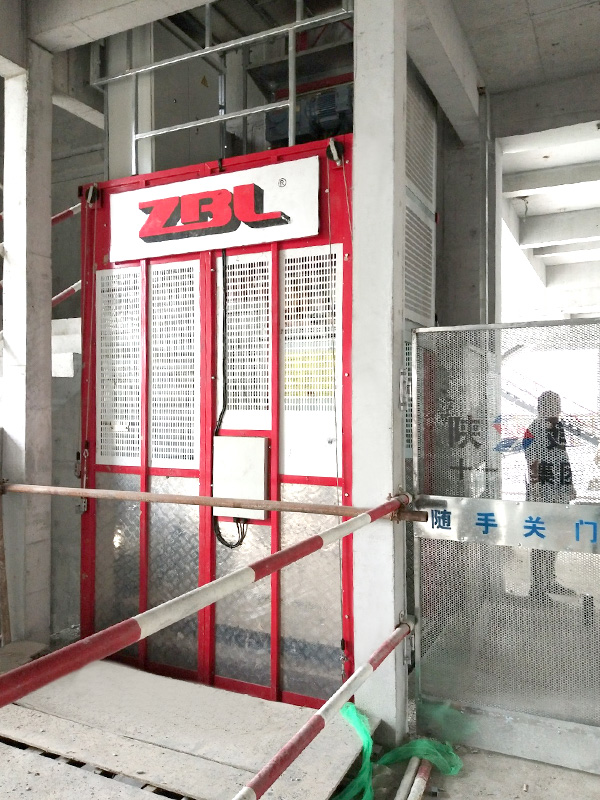
Align those four and the hoist stops being a monthly argument and becomes part of the programme. Miss one and the site pays for it every shift, usually in the most expensive currency on site: waiting labour. Building-specific configurations such as the unmanned well-ladder installation at the Xi'an Caojiatan Innovation Center project show the same logic at the upper end, where the transport system is shaped around the building it serves rather than around a catalogue page.
If the hoist is the only way up, specify it as critical infrastructure. Speed class, cage size, spares availability and service response usually matter more than the lowest monthly figure on the table.
