



Please leave your email address, So that we can get in touch with you as soon as possible.
Most modern construction hoists use a rack-and-pinion drive system, not a cable-driven one. While cable-driven hoists exist and still serve certain applications, rack-and-pinion technology has become the dominant standard for personnel and material hoisting on construction sites worldwide — and for good reason. It offers superior height capability, more precise control, and a stronger safety profile. Understanding both systems in depth will help you make the right procurement or rental decision for your project.
How the Rack-and-Pinion Drive System Works
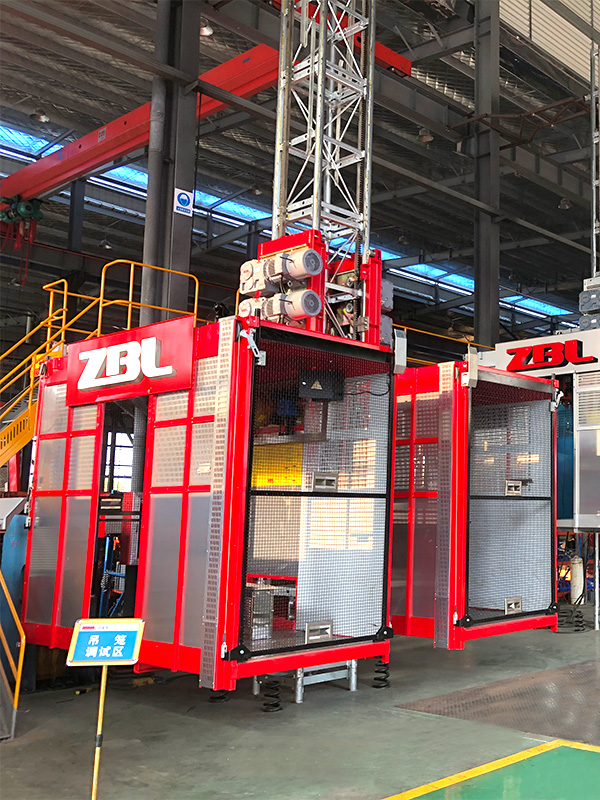
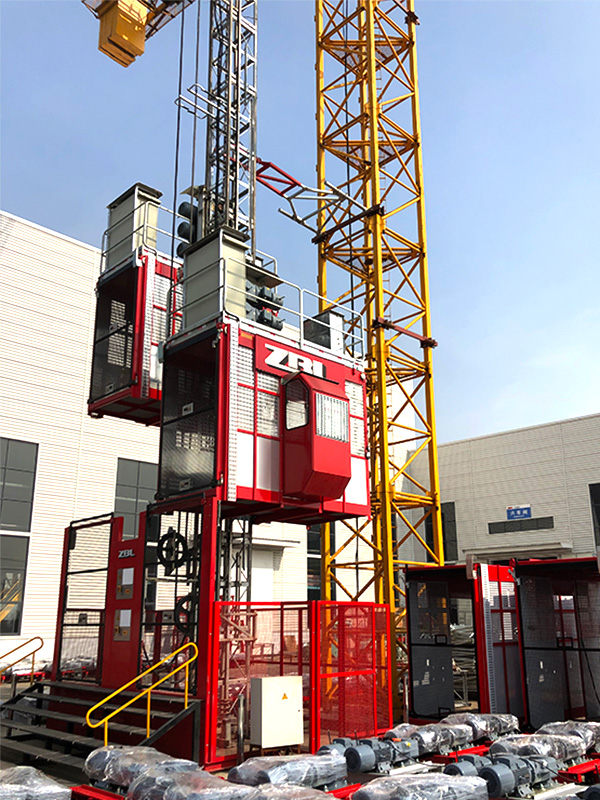
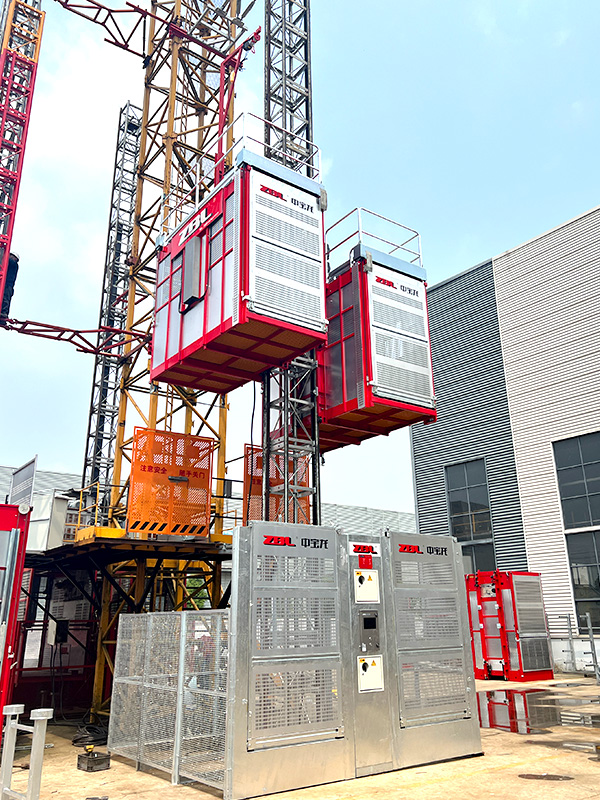
In a rack-and-pinion construction hoist, a toothed rack is fixed vertically along the mast (the tower structure), and one or more electric motor-driven pinion gears engage directly with this rack. As the motor rotates the pinion, it climbs or descends the rack, carrying the cage with it. There is no rope, cable, or drum involved in the primary lifting mechanism.
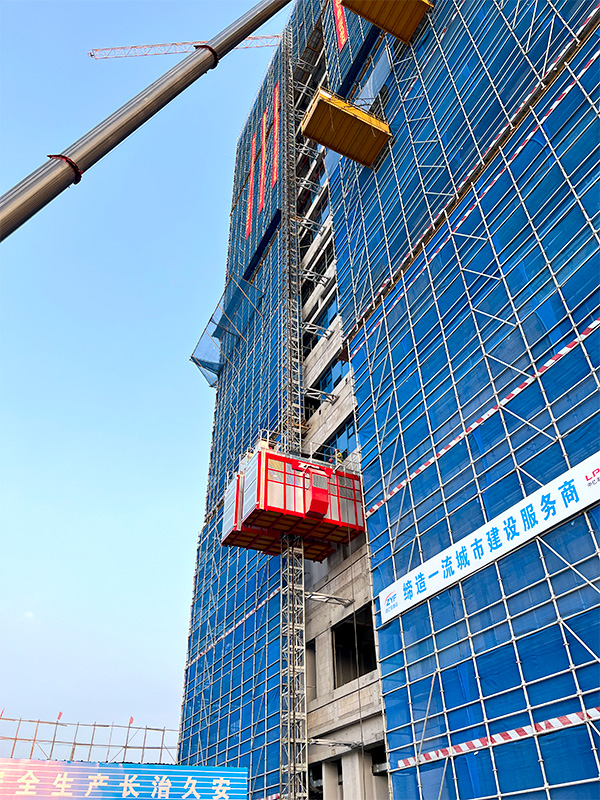
This mechanical engagement is what gives rack-and-pinion hoists their key advantage: there is no theoretical height limitation imposed by rope length or drum capacity. The mast can simply be extended with additional sections, allowing the hoist to serve buildings of virtually any height. In practice, rack-and-pinion construction hoists are routinely deployed on towers exceeding 300 meters (approximately 1,000 feet), with some specialized models rated for up to 450 meters.
Standard rack-and-pinion construction hoists typically feature:
- Lifting speeds between 0–96 m/min(variable frequency drive models)
- Load capacities ranging from 1,000 kg to 3,200 kgper cage
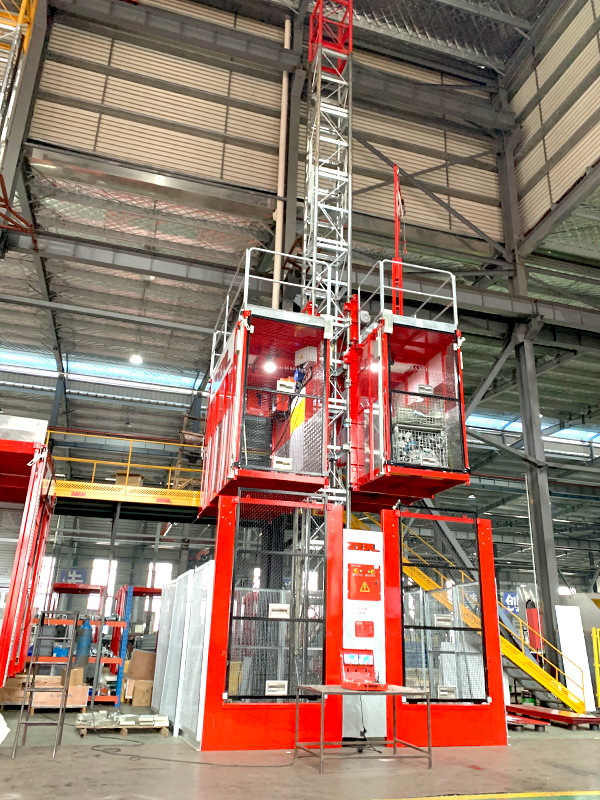
- Single or dual cage configurations
- Progressive safety gear (centrifugal governor-triggered) as a standard fall-arrest device
- Compliance with EN 12159 (Europe) or ANSI A10.4 (North America)
How the Cable-Driven Drive System Works
A cable-driven construction hoist — sometimes called a drum hoist or winch hoist — operates by winding and unwinding steel wire ropes on a powered drum or sheave system. The cage is suspended from the rope, and movement is controlled by the drum motor. This is the same fundamental principle used in traditional elevators and mining hoists.
Cable-driven hoists are generally simpler in mechanical design, which historically made them less expensive to manufacture. However, they carry inherent limitations: rope length is finite, rope wear and fatigue require frequent inspection, and the risk of rope failure — however mitigated by safety factors — introduces a failure mode that rack-and-pinion systems simply do not have.
Typical cable-driven hoist parameters include:
- Maximum lift heights generally limited to 100–150 metersin most standard configurations
- Load capacities typically between 500 kg and 2,000 kg
- Rope inspection required every 200–300 operating hoursdepending on standards
- More common in material-only hoisting applications rather than personnel transport
Side-by-Side Comparison: Rack-and-Pinion vs Cable-Driven Construction Hoist
|
Table 1: Key performance and operational differences between rack-and-pinion and cable-driven construction hoists. |
||
|
Feature |
Rack-and-Pinion Hoist |
Cable-Driven Hoist |
|
Maximum Height |
300–450 m |
100–150 m (typical) |
|
Typical Load Capacity |
1,000–3,200 kg |
500–2,000 kg |
|
Lifting Speed |
Up to 96 m/min (VFD) |
Up to 40–60 m/min |
|
Personnel Transport |
Yes (standard) |
Limited / materials only |
|
Primary Failure Risk |
Gear/pinion wear |
Rope fatigue / breakage |
|
Maintenance Complexity |
Moderate |
Low to Moderate |
|
Initial Cost |
Higher |
Lower |
|
Suitable for High-Rise |
Yes |
No |
Why Rack-and-Pinion Has Become the Industry Standard
The global shift toward rack-and-pinion construction hoists is not accidental. Several converging factors — technical, regulatory, and operational — have made it the default choice for serious construction projects.
Safety Regulations Favor Rack-and-Pinion
Most national and international safety standards for personnel hoisting on construction sites now explicitly require or strongly favor rack-and-pinion mechanisms. For example, EN 12159:2012 (the European standard for builders' hoists for persons and materials) is specifically written around rack-and-pinion technology. The integrated progressive safety gear, which activates automatically if the cage exceeds its rated descent speed by more than 15%, is a mandatory feature that is far easier to implement reliably in a rack-and-pinion system.
Variable Frequency Drives Enhance Performance
Modern rack-and-pinion construction hoists equipped with Variable Frequency Drive (VFD) motors offer smooth acceleration and deceleration, dramatically reducing mechanical shock on the structure and improving passenger comfort. VFD-controlled hoists can also achieve precise floor leveling within ±10 mm, which is critical for loading heavy equipment or wheelbarrows without ramp plates.
Dual Cage Configurations Increase Productivity
Rack-and-pinion construction hoists can be configured with two independent cages on a single mast, operating simultaneously in opposite directions. On a high-rise project with 500+ workers on site, a dual-cage hoist running at 63 m/min can transport approximately 100–120 persons per hour per direction, a throughput rate that cable-driven systems simply cannot match.
When a Cable-Driven Construction Hoist Still Makes Sense
Despite the dominance of rack-and-pinion systems, there are specific scenarios where a cable-driven construction hoist remains a practical and cost-effective choice:
- Low-rise or medium-rise projectsunder 10 floors where height is not a constraint
- Material-only applicationswhere personnel transport is not required and a simpler system reduces cost
- Temporary or short-duration projectswhere rapid installation and low upfront investment are priorities
- Remote siteswhere complex mechanical components like pinion gears and VFD controllers are difficult to service locally
In these cases, a well-maintained cable-driven hoist with properly rated wire rope — typically a minimum safety factor of 8:1 breaking load to working load — can provide reliable service. However, the rope must be inspected rigorously, and any signs of kinking, corrosion, or broken wires beyond the manufacturer's tolerance must trigger immediate rope replacement.
Key Maintenance Differences Between the Two Drive Systems
Understanding maintenance requirements is essential for total cost of ownership calculations. The two systems diverge significantly in their service needs:
Rack-and-Pinion Maintenance Focus Areas
- Pinion gear tooth wear — typically inspected every 250 operating hours
- Rack lubrication — automatic lubrication systems reduce downtime significantly
- Safety gear drop test — mandatory every 3 monthsunder most standards
- Guide roller and brake pad inspection at defined intervals
Cable-Driven Maintenance Focus Areas
- Wire rope inspection — visual check daily, detailed inspection every 200 hours
- Drum and sheave wear assessment
- Rope end termination integrity checks
- Brake system calibration and wear measurement
Over a 12-month operational period, the cumulative cost of wire rope replacement in a cable-driven construction hoist can offset the initial purchase price advantage, particularly on projects requiring two or more daily operational shifts.
Making the Right Choice for Your Project
When evaluating which drive system is appropriate for your construction hoist requirement, consider the following decision criteria:
- Building height:If your project exceeds 10 floors or 30 meters, a rack-and-pinion construction hoist is the only technically sound choice.
- Personnel transport requirement:If workers must be transported, rack-and-pinion with certified safety gear is mandatory in most jurisdictions.
- Project duration:Longer projects justify the higher upfront investment of a rack-and-pinion system through lower lifecycle costs.
- Throughput demand:High-traffic sites with large workforces require the speed and dual-cage capability that only rack-and-pinion construction hoists can provide.
- Regulatory environment:Always verify the applicable local standard — in most markets, personnel-carrying construction hoists are legally required to use rack-and-pinion drive systems.
The rack-and-pinion construction hoist is the right choice for the vast majority of modern construction projects. Its superior height range, built-in safety systems, higher load capacity, and compliance with international standards make it the professional standard. Cable-driven systems retain a niche role in low-rise, material-only, or budget-constrained scenarios — but should not be considered for personnel transport or high-rise applications under any circumstances.
