

Construction Equipment — Field Guide
What Is the Difference Between a Single-Cage and Double-Cage Construction Hoist?
Two mast structures, one shared question — how much vertical traffic can your site actually move, and at what cost. Here's how the two configurations diverge in practice.
The Direct Answer: Single-Cage vs. Double-Cage Hoists
The core difference between a single-cage and a double-cage construction hoist is capacity for simultaneous movement.
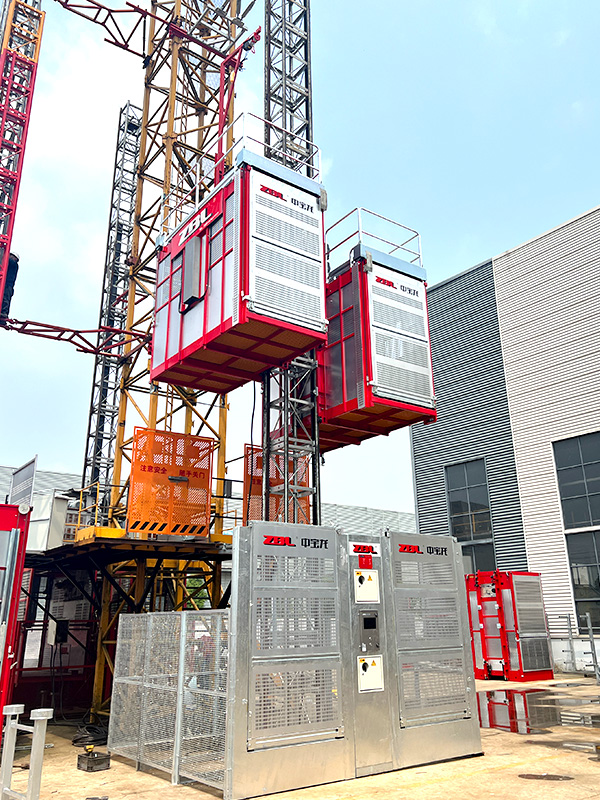
A single-cage hoist operates one car on a dedicated mast, meaning only one load of workers or materials can travel at a time, while a double-cage hoist runs two independent cars on a shared mast structure, allowing two loads to move up and down the building simultaneously and independently of one another.
In practical terms, this makes a double-cage construction hoist lift roughly twice as efficient at moving people and goods vertically, but it also comes with a larger footprint, higher upfront cost, and more complex control logic. A single-cage unit remains the more economical and mechanically simpler choice for smaller projects, while a double-cage system becomes almost essential once a building's height and workforce size create sustained vertical transport demand. The right choice depends entirely on matching hoist capacity to the actual traffic pattern of the job site, not simply choosing the larger option by default.
How Single-Cage and Double-Cage Systems Actually Work
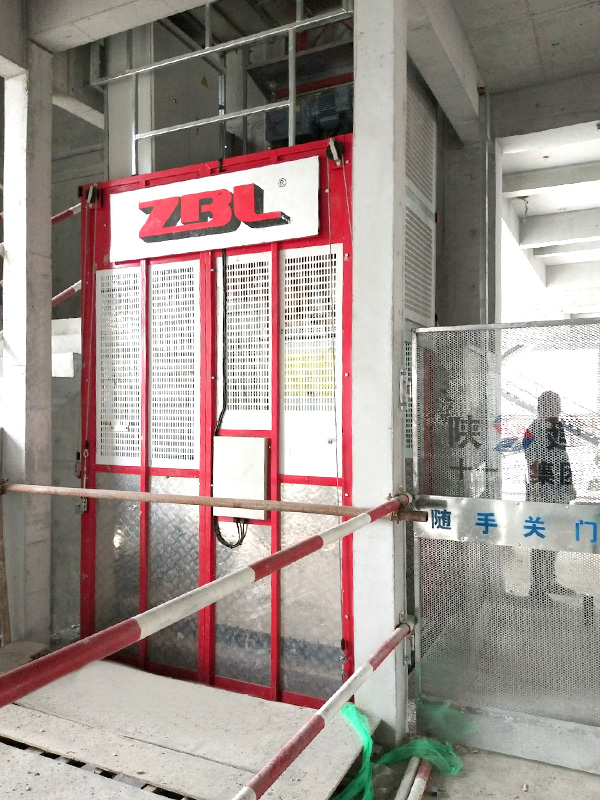
A single-cage hoist consists of one mast, one drive unit, and one cage that travels the full height of the structure. All passenger and material trips are queued sequentially, meaning workers waiting at the third floor must wait for the cage to complete its current trip before it becomes available again.
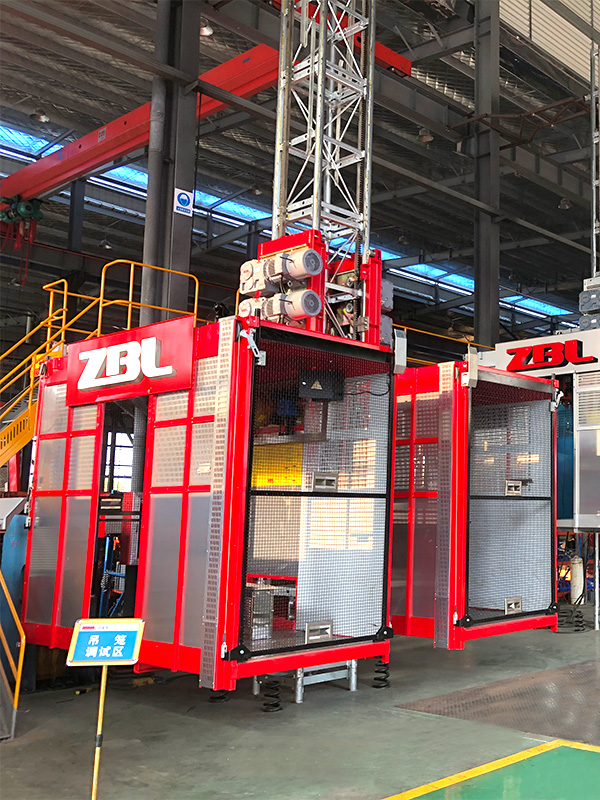
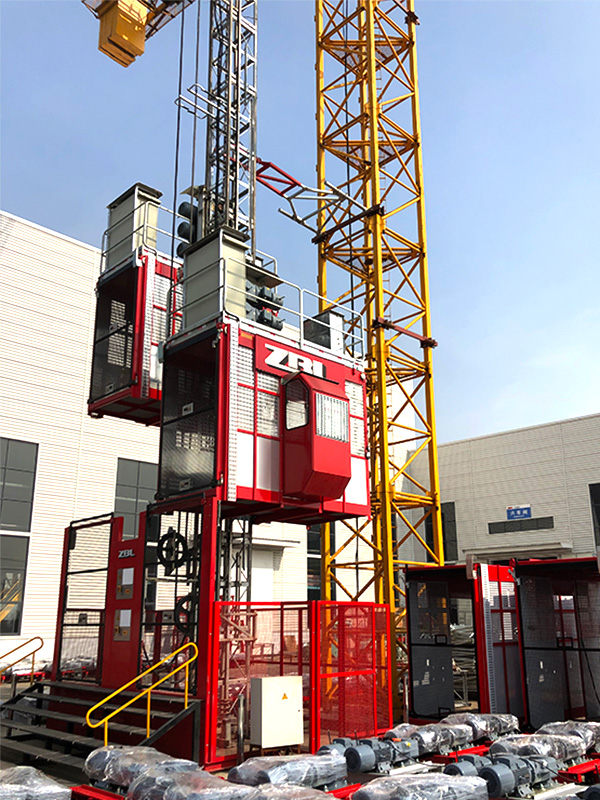
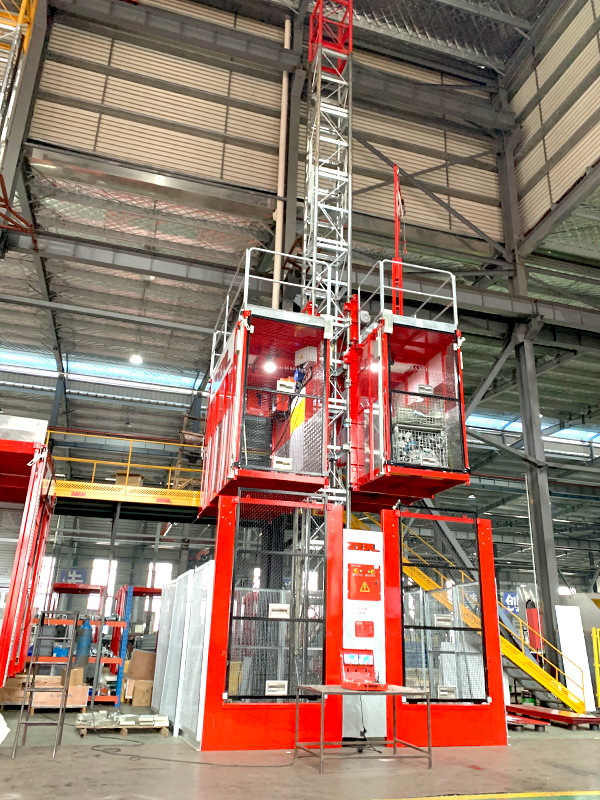
A double-cage hoist shares a single mast footprint but installs two separate rack-and-pinion drive systems, one for each cage, running on parallel guide rails along the same tower. Because each cage has its own motor, brake system, and control panel, the two cars can move in opposite directions at the same time — one ascending with material while the other descends with workers finishing a shift. This parallel operation is what gives a passenger material hoist configured in double-cage form its significant throughput advantage over a single-cage unit of comparable size.
construction hoist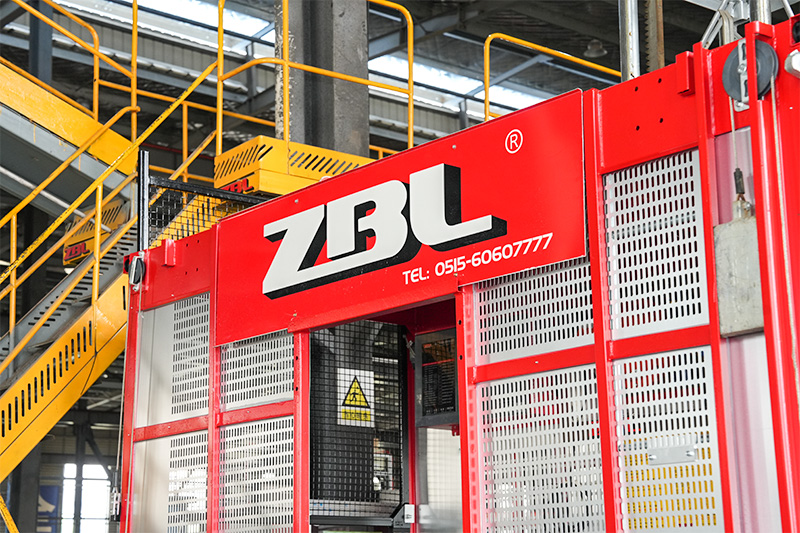
Shared Mast, Independent Mechanics
It is worth noting that while the two cages share the same mast structure, they are mechanically independent. If one cage requires maintenance or experiences a fault, the other typically remains operational, which is a major advantage on sites where hoist downtime directly halts other trades.
Comparing Capacity, Speed, and Throughput
The most measurable difference between the two configurations is throughput — how many people and how much material can move through the hoist system per hour. The table below illustrates typical performance characteristics for both setups on a mid- to high-rise project.
| Metric | Single-Cage Hoist | Double-Cage Hoist |
|---|---|---|
| Typical load capacity per cage | 1,000 to 3,200 kg | 1,000 to 3,200 kg per cage |
| Combined hourly passenger capacity | Around 60 to 100 workers | Around 120 to 200 workers |
| Simultaneous trips | One at a time | Two independent trips at once |
| Typical mast footprint | Smaller, single-track section | Wider, dual-track section |
| Relative rental or purchase cost | Lower | 30% to 60% higher |
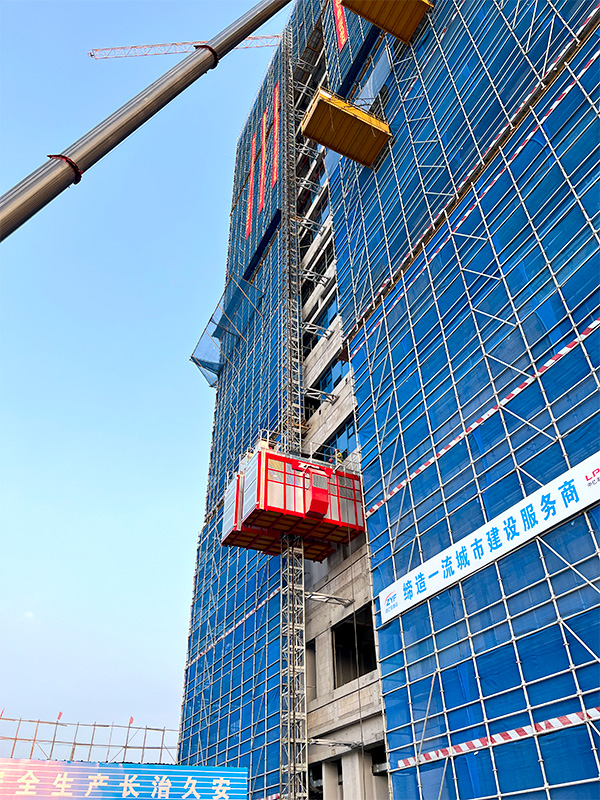
On a project with over 150 workers moving between floors during peak shift-change hours, a single-cage system frequently becomes a bottleneck, with wait times stretching well past acceptable limits. A double-cage construction hoist lift largely eliminates this congestion by allowing continuous parallel movement, which is why most supertall and high-density commercial projects specify double-cage systems as standard.
Structural and Installation Differences
A double-cage hoist places significantly greater demands on the supporting mast and foundation. Because two cages, two counterweights or drive systems, and two independent loads operate on the same structure, the mast must be engineered with wider cross-sections, reinforced rack rails, and more frequent wall tie points to manage the additional dynamic loading.
Foundation Requirements
The base foundation for a double-cage system typically requires a larger concrete pad and deeper reinforcement than a single-cage installation, since the combined static and dynamic loads of two loaded cages moving simultaneously can be substantially higher than a single-cage equivalent.
Site Footprint
Double-cage units also require more ground-level clearance for loading and unloading, since two cages need separate access points or a wider shared landing platform at each floor. On constrained urban sites, this added footprint can be a genuine limiting factor even when project traffic would otherwise justify a double-cage system.
Cost Considerations: Rental, Purchase, and Operating Expense
Cost is often the deciding factor between the two configurations, and the comparison extends well beyond the initial rental or purchase price. A double-cage system generally costs 30% to 60% more to rent or buy than a comparable single-cage unit, reflecting its additional drive components, larger mast sections, and more complex control systems.
When a double-cage system prevents costly labor downtime caused by long wait queues, the higher operating cost is frequently offset by overall project schedule savings.
Operating costs follow a similar pattern. Electricity consumption rises with two motors running independently, and routine maintenance labor roughly doubles since each cage's brakes, safety devices, and drive components must be inspected and serviced separately. This is particularly true on fast-track commercial builds where every day of delay carries a real financial penalty.
Safety and Redundancy Advantages
Beyond throughput, safety redundancy is one of the most underappreciated advantages of a double-cage passenger material hoist. Because the two cages operate on independent drive and braking systems, a mechanical fault or scheduled inspection on one cage does not necessarily take the entire vertical transport system offline.
- Continued vertical access remains available even if one cage requires emergency servicing
- Evacuation capacity is effectively doubled in emergency scenarios
- Material and passenger trips can be separated onto different cages to reduce mixed-load risk
- Peak-hour congestion at landing platforms is reduced, lowering the chance of overcrowding incidents
Danger
A single-cage system has no built-in redundancy. If the cage goes offline for any reason, all vertical transport on that hoist stops until repairs are complete, which can significantly disrupt schedules on projects without a backup lifting method.
When to Choose a Single-Cage Hoist
A single-cage hoist remains the right choice for a large share of construction projects, particularly those where traffic volume and building height do not justify the added cost and footprint of a dual system.
- Low-rise to mid-rise buildings, typically under 15 to 20 floors, with moderate daily traffic.
- Projects with a smaller on-site workforce, generally under 100 to 150 workers per shift.
- Sites with limited ground-level space where a wider dual-cage footprint is not practical.
- Renovation or shorter-duration projects where the higher cost of a double-cage system is difficult to justify against the compressed rental period.
When to Choose a Double-Cage Hoist
A double-cage system becomes the more sensible investment once building height, workforce size, or material flow reach a threshold where a single cage simply cannot keep pace. High-rise commercial towers, hospitals, and large residential developments with hundreds of workers moving during concentrated shift windows are the clearest candidates.
Success
Projects with tight construction schedules benefit disproportionately from a double-cage construction hoist lift, since reduced worker wait time directly translates into more productive labor hours across the entire site.
In these scenarios, the higher rental or purchase cost is typically justified by measurable gains in daily productivity and reduced risk of schedule slippage.
How to Decide: A Practical Checklist
Before specifying either configuration, project teams should evaluate a short list of practical factors that directly determine which system will perform better on site.
- Total building height and number of floors requiring hoist access
- Peak number of workers moving during shift-change windows
- Volume and weight of materials that must move alongside personnel
- Available ground-level space for the hoist base and landing platforms
- Overall project duration and whether higher rental costs can be justified over that period
- Tolerance for downtime risk if a single cage were to require unscheduled maintenance
Info
Running through this checklist with a hoist supplier or structural engineer before finalizing equipment selection helps ensure the chosen system matches actual site demand rather than defaulting to either the cheapest or most powerful option available.
Maintenance Differences Between the Two Systems
Maintenance requirements scale with the number of independent mechanical systems on the mast. A single-cage hoist requires inspection of one motor, one brake assembly, and one set of safety devices, keeping routine service relatively straightforward and predictable in both time and cost.
Warning
A double-cage hoist effectively doubles this workload, since each cage's drive unit, safety brake, and overload sensor must be tested and certified independently. Site managers planning maintenance windows for a passenger material hoist should budget roughly double the technician time compared to single-cage equivalents.
On the other hand, because the two cages are mechanically separate, maintenance teams can often service one cage while the other continues normal operation, which is a scheduling advantage that partially offsets the higher total maintenance burden.
Final Takeaway
Choosing between a single-cage and double-cage construction hoist ultimately comes down to matching equipment capacity to real project demand. A single-cage system offers simplicity, lower cost, and a smaller footprint, making it well suited to smaller and mid-rise projects. A double-cage system delivers substantially higher throughput, built-in mechanical redundancy, and measurable productivity gains on large, high-traffic sites, at the expense of higher upfront and operating costs. Evaluating building height, workforce size, material flow, and site space against this comparison gives project teams a clear, data-driven path to the right decision.